It’s hard to scroll through your feed without spotting the emerald swirl of a matcha latte or a scoop of collagen in someone’s morning ritual. One promises calm focus, the other youthful glow.
But what happens when the two wellness icons meet in the same cup?
Many are asking, can you add collagen to matcha and still keep both ingredients effective or is it just another pretty trend?
Let’s unpack what science and experts actually say, so your wellness choices serve longevity, not hype.
What Exactly Is Matcha and Why It’s Loved

Matcha isn’t your regular green tea. It’s made by stone-grinding whole shade-grown tea leaves into a fine powder, so you consume the entire leaf, nutrients, antioxidants, chlorophyll, everything.
That’s why matcha delivers a steady, calm alertness without the caffeine crash of coffee. L-theanine, an amino acid in matcha, smooths the stimulating effect of caffeine and promotes relaxed focus.
Research says matcha is rich in catechins, particularly EGCG (epigallocatechin gallate), which supports metabolic, cardiovascular and brain health (NIH). Another review found it improves antioxidant capacity and cognitive performance (Kochman et al., 2020).
Matcha, then, is both ritual and nutrient-dense nourishment, a clean, slow form of energy that aligns perfectly with longevity living.
What Collagen Does and How It Works

If matcha feeds your mind, collagen feeds your structure.
Collagen is the body’s most abundant protein, it keeps your skin plump, joints cushioned, and connective tissues strong. Over time, natural collagen production drops, starting as early as your mid-20s. That’s when fine lines, slower recovery, and stiffness start to appear.
Enter collagen peptides. These are hydrolysed (pre-digested) forms of collagen that dissolve easily in hot or cold liquids and are more bioavailable.
Research says oral collagen supplements improve skin elasticity by 13.6% and hydration by 12.5% in 8 weeks (NIH).
So, when people wonder can you add collagen to matcha, the question isn’t just about mixing, it’s about sustaining the habit in a way your body can truly use.
Can You Add Collagen to Matcha?

Yes, you can. Collagen peptides are designed to blend easily into both hot and cold beverages. The important part is choosing a hydrolysed collagen that dissolves cleanly without clumping.
Mixing collagen into your morning matcha is a simple, efficient way to layer multiple wellness benefits; energy, focus, antioxidant protection, and skin support, in one cup.
Think of it as a longevity ritual rather than a trend. But the real question is should you mix matcha and collagen and how well will it work?
Common Questions With Adding Collagen To Matcha

Does Heat or Frothing Destroy Collagen Peptides?
This is a common worry, but science offers reassurance.
Hydrolysed collagen peptides are already broken down into smaller amino acid chains during manufacturing. That process makes them heat-stable up to 300°F (about 150°C).
Your matcha latte is nowhere near that hot, typically 160–175°F, so whisking collagen into it won’t destroy its integrity or bioavailability.
In other words: your collagen will survive your morning whisk.
Will Matcha’s Compounds Help or Hinder Collagen Benefits?
Here’s where the synergy gets interesting.
Matcha brings powerful antioxidants (catechins) that fight oxidative stress, the same process that degrades collagen in skin and joints (NIH). So, theoretically, pairing them may have a complementary effect: collagen provides building blocks, matcha reduces breakdown triggers.
That’s longevity nutrition in practice, supporting structure and reducing damage simultaneously.
Safety and Timing: Who Should Pause Before Pouring
A ritual only serves you if it fits you. While can you add collagen to matcha usually earns a “yes,” a few nuances matter before you make it your daily wellness ritual.
1. Caffeine sensitivity and stress response
Matcha contains caffeine, less than coffee, but enough to trigger cortisol spikes in sensitive individuals. When paired with collagen the combo can send mixed signals.
If you’re already anxious, under-slept, or in a high-stress phase, the caffeine may override collagen’s calming benefits.
Tip: Start with ½ tsp matcha and build up slowly. Avoid close to bedtime or during PMS when cortisol sensitivity peaks.
2. Iron absorption and nutrient timing
Matcha’s catechins, while anti-inflammatory, can reduce non-heme iron absorption from plant-based meals (NIH). If you drink your matcha collagen right after an iron-rich breakfast, you might blunt iron uptake.
Tip: Have it mid-morning or between meals, not alongside iron-rich foods, especially if you’re prone to low ferritin or fatigue.
3. Collagen source and allergies
Collagen is typically derived from bovine, marine, or porcine sources. If you have shellfish sensitivities or follow a strict dietary preference, double-check labels.
Tip: Opt for single-ingredient, hydrolyzed collagen from a transparent source.
4. Liver load and medication interactions
Research shows that EGCG interacts with liver enzymes that metabolize certain medications, including beta-blockers, statins, and some antidepressants (NIH). Combining high doses of matcha and supplements may strain liver detox pathways.
Tip: If you’re on medication or have a liver condition, check with your healthcare provider before making this a daily ritual.
5. When to pause the pairing
If you’re pregnant, breastfeeding, or recovering from adrenal fatigue, caffeine, even mild, can interfere with hormonal balance and sleep quality. Collagen alone (in smoothies or soups) is gentler during those stages.
For everyone else, the matcha-collagen blend is well tolerated and often easier on the gut than coffee-based protein drinks. The key is personalization: adapt your ritual to your physiology, not the other way around.
Clean Formulation: What to Look for on the Label

Because your body deserves ingredients that match your intent, formulation quality matters as much as the mix.
For matcha:
-
Go for shade-grown Japanese varieties (Uji or Nishio region are gold standards).
-
Look for “ceremonial grade” or clearly labeled antioxidant content.
-
Avoid flavored or instant mixes with gums, fillers or sugar alcohols.
-
Check for third-party testing for heavy metals (lead, cadmium).
For collagen:
-
Choose hydrolysed collagen peptides.
-
Look for transparent sourcing (grass-fed bovine or sustainably caught marine).
-
Avoid added sugars, gums, or “beauty” blends that dilute purity.
-
Prefer third-party tested or NSF-certified brands.
When you bring both together, you’re not chasing a trend, you’re creating a ritual that aligns with functional longevity and whole-body nourishment.
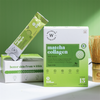
Wellbeing Nutrition’s Matcha Collagen, India’s first matcha collagen, brings the ritual to you which
-
Combines 8 g hydrolysed marine collagen peptides (< 1000 Daltons) with 1.8 g ceremonial-grade matcha, delivering skin radiance, texture improvement, and sustained clean energy
-
Enriched with Acerola Cherry + Vitamin C + L-Theanine, supporting collagen synthesis, antioxidant defence, mental calm and focus.
-
Free from artificial colours or flavours, heavy-metal tested, non-GMO, and positioned as “India’s first” matcha-collagen blend for daily glow.
The Longevity Verdict
Here’s the truth: yes, you can add collagen to matcha, and when done cleanly, it fits beautifully into a longevity-focused lifestyle.
What you’re really doing is combining:
-
Matcha’s antioxidant, cognitive and metabolic benefits, with
-
Collagen’s structural, skin and joint support
It’s not a shortcut or a miracle, it’s a ritual that reinforces consistency, calm, and cellular care.
When you choose high-quality ingredients, mind your timing, and make it part of a balanced routine, you’re not just drinking for today, you’re nourishing for decades to come.
So the next time you whisk that vivid green powder and ask yourself, can you add collagen to matcha?,the answer is simple:
Yes, you can. And in doing so, you’re choosing mindful wellbeing over momentary trend.
FAQs
1. Can you add collagen to matcha without losing its benefits?
Yes, absolutely. Hydrolyzed collagen peptides are heat-stable up to 300°F (150°C), while your matcha latte typically stays below 175°F. So, you can whisk collagen into matcha without destroying its integrity or amino acid structure. Your matcha collagen drink will retain both flavor and function.
2. What are the benefits of combining matcha and collagen?
Matcha provides antioxidants (catechins) that protect your body’s natural collagen from oxidative damage, while collagen peptides supply amino acids to rebuild skin, hair, and joints. Together, they form a longevity duo that supports both repair and protection, beauty and balance from the inside out.
3. Does caffeine in matcha affect collagen absorption?
Not directly. The caffeine + L-theanine in matcha gives calm alertness without spiking cortisol the way coffee might. However, if you’re caffeine-sensitive, start with smaller servings so that the energizing effect complements, rather than counteracts, your collagen’s restorative purpose.
4. When is the best time to drink matcha collagen?
Morning or mid-afternoon is ideal. The caffeine keeps you alert, while collagen supports cellular repair. Avoid pairing matcha collagen with iron-rich meals (like spinach or lentils) to ensure catechins don’t reduce iron absorption.
5. Can matcha collagen help with skin and hair health?
Yes. Studies show collagen peptides increase skin hydration and elasticity, while matcha’s antioxidants reduce free radical damage, a key cause of dull skin and hair thinning. Regular use supports a glow from within effect over time.
6. Is matcha collagen safe for everyone?
Most people tolerate it well, but those with caffeine sensitivity, pregnancy, or medical conditions should consult a healthcare professional. Always check your collagen source, bovine, marine, or porcine, to avoid allergens.
8. Which is the best Indian brand for matcha collagen?
If you’re looking for a premium, clinically backed Indian brand, Wellbeing Nutrition’s Japanese Matcha Collagen stands out.
It blends 8 g of marine collagen peptides (<1000 Daltons) with 1.8 g of ceremonial-grade Uji matcha, enriched with Vitamin C, L-theanine, and Acerola Cherry. This clean, tested formulation supports skin elasticity, hydration, and calm energy without added sugar or artificial additives.