Decoding Your Whey Protein Label: What to Check Before You Buy


Carnival ends in
01d : 08h : 29m : 44s
Buy 2+ eligible products & get the same/lower priced product for FREE
Learn MoreReading protein labels helps you compare powders beyond the front-of-pack protein claim. This protein supplement guide explains what to look for on a whey protein label before buying, from serving math to batch checks. You will also learn how to cross-check quality claims and authenticity markers.
Start with the serving size in grams. Then read the protein amount for that same serving. A large scoop can make the protein number look higher, even when the powder has less protein by weight.
Compare protein per serving with protein per 100 g when possible. This gives a fair view across tubs with different scoop sizes. It also helps you compare calories, carbs, and fat for your own goal.
Divide protein grams by serving size grams, then multiply by 100. For example, 25 g of protein in a 32 g serving equals about 78% protein. This simple test makes reading protein labels more useful.
Did You Know?
A protein claim only has meaning beside the scoop weight. Check both lines before comparing products.
Look for the whey protein type in the ingredient list. Concentrate, isolate, and hydrolysate are common whey protein types. The label may use one type or a blend.
Use the nutrition panel to compare protein density, carbohydrate, and fat. This is more useful than assuming every powder within one type has the same profile. Price is also a practical trade-off, so compare like-for-like pack sizes and servings.
Ingredients are listed in order of amount. Read the first few entries closely. They show what makes up most of the powder.
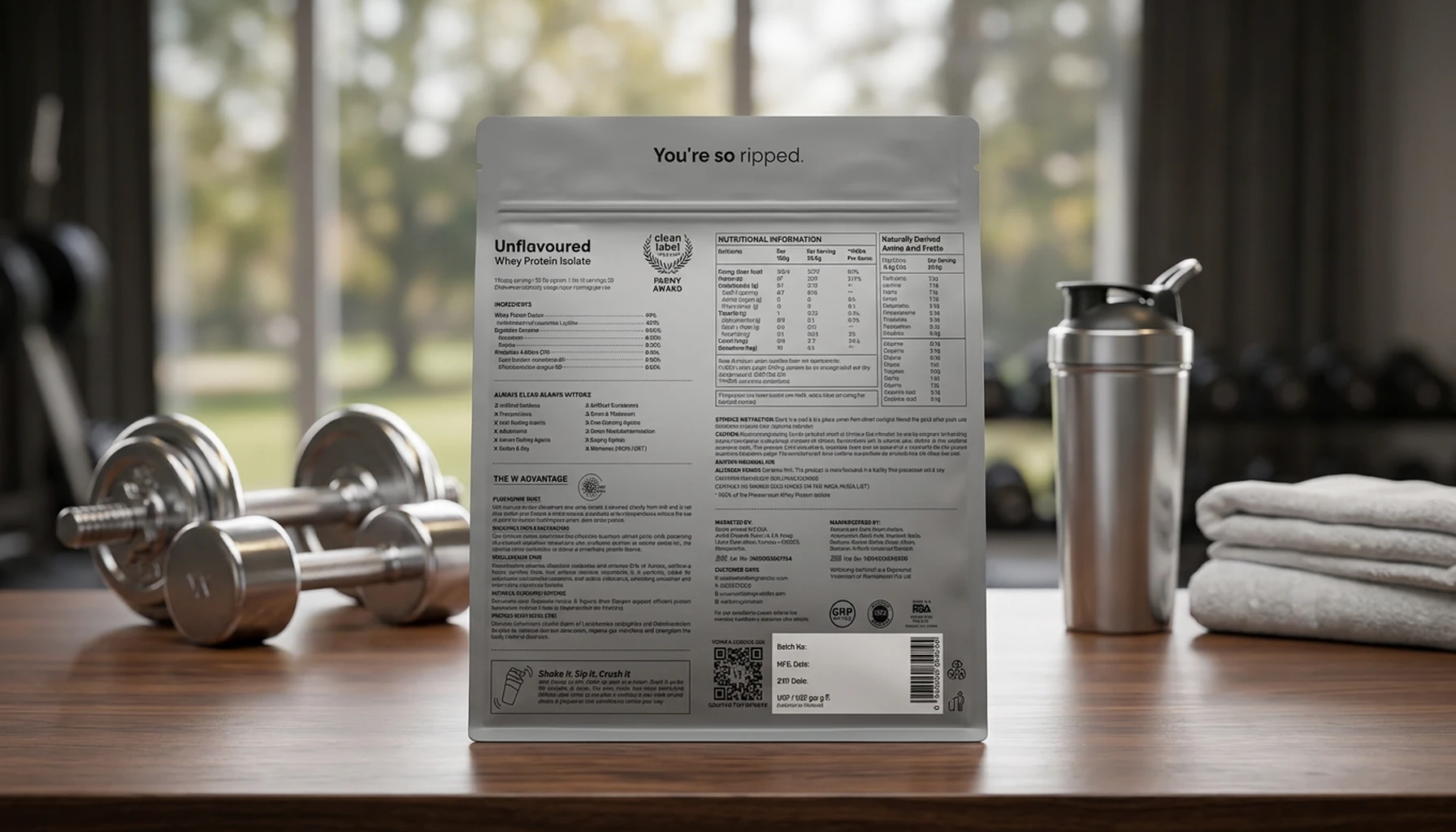
Check for added ingredients that change the formula, such as flavours, thickeners, or separate amino acids. Added glycine or taurine can affect protein readings without showing how much complete whey protein is present. A vague proprietary blend makes this harder to assess because it may not state each ingredient amount. Some products also list functional additions such as probiotic strains on the label; these are worth noting as they indicate what else the formula contains beyond protein.
Read the nutrition panel and ingredient list together. Check added sugar separately from total sugar. These are not the same claim.
Also identify the sweetener named on the label. It may be natural or artificial. Check flavours, colours, and other additives against your own preferences. There is no single acceptable amount that fits every buyer, so use the stated serving size and your wider diet as context.
For weight-focused goals, compare protein with calories and carbohydrates per serving. Beginners looking for a protein powder for weight loss or general fitness should pay particular attention to added sugars and total carbohydrates per serving, as these directly affect calorie intake. This is a label comparison, not a promise of a weight outcome.
For products sold in India, look for an FSSAI licence number on the pack. Enter that number in the official FSSAI lookup tool and compare the result with the product and seller details. Do this before purchase when possible.
A third-party testing seal can add useful context. Still, read what the seal covers. A logo alone does not explain which batch was tested or what was tested. Keep the batch and lot number available if you need to verify the product later.
Pause if the label lacks an allergen declaration, batch or lot number, or a clear ingredient list. Whey products can contain milk, so allergen information matters. Also treat vague blend language with care.
Some labels may show PDCAAS or DIAAS information. If a brand presents either score, check that it is clear and relevant to the product. If no score is shown, use the ingredient list, protein percentage, and verification details instead of guessing.
Check any hologram seal, QR verification tool, and batch code provided on the packaging. Use the manufacturer's own verification process where available. Buy through authorised sellers and compare print quality, seal condition, flavour name, and batch details with the verified product information. Packaging inconsistencies deserve a closer check.
Compare protein grams with serving size grams.
Calculate protein percentage.
Identify the whey type and the first ingredients.
Check added sugar, sweeteners, and additives.
Confirm milk allergen information.
Verify the FSSAI licence number where relevant.
Look for batch, lot, QR, and hologram details.
Read the scope of any testing seal.
Use this comparison table as a label-reading tool. It compares products across brands to help you evaluate labels.
Check protein per serving, serving size, ingredient order, sweeteners, allergen details, certifications, and batch information. Avoid relying on the front label alone.
Use the QR code or hologram process if provided. Verify the batch number with the manufacturer's tools. For Indian products, check the FSSAI licence number through the official lookup tool.
Calculate protein percentage, read the full ingredient list, and review any third-party testing information. Clear batch details and allergen declarations also support an informed choice.
Check manufacturer verification tools, buy from authorised sellers, and inspect the pack for inconsistent printing, damaged seals, or missing batch details.
A protein label explained well is a tool for better comparisons. Check serving math, whey protein ingredients, sugars, verification details, and authenticity markers together. Wellbeing Nutrition focuses on superior ingredients, highly absorbable formats, palatable flavors. Explore its product information to review current labels, allergens, and batch details before choosing a whey protein.



