Getting Whey Protein Powder for Men Right: Muscle & Recovery


Carnival ends in
01d : 08h : 29m : 38s
Buy 2+ eligible products & get the same/lower priced product for FREE
Learn MoreWhey protein powder for men can support muscle repair when it fills a real gap in the diet. The key is not chasing a single shake. It is choosing the right whey type, using it around training, and meeting total protein needs across the day.
This guide explains how to choose protein powder for men based on muscle goals, digestion, and routine. Understanding whey protein benefits helps men match the right type to their training goal. It also covers labels, post workout protein timing, and common mistakes.
Whey is a complete protein. It contains all nine essential amino acids. These amino acids help support muscle protein synthesis after resistance training.
Training places stress on muscle tissue. Protein from food and whey provides amino acids for repair. For whey protein for muscle gain, the full daily diet still matters most.
Whey is generally absorbed faster than casein. Casein is often used when a slower-digesting protein suits the meal plan. Plant proteins can also contribute to protein intake, though their amino acid profile may differ by source.
Knowing whey protein types helps you match a powder to your goal and tolerance.
Concentrate is often an entry point for whey users. It contains protein along with varying amounts of lactose and fat. Check the label if lactose causes digestive discomfort.
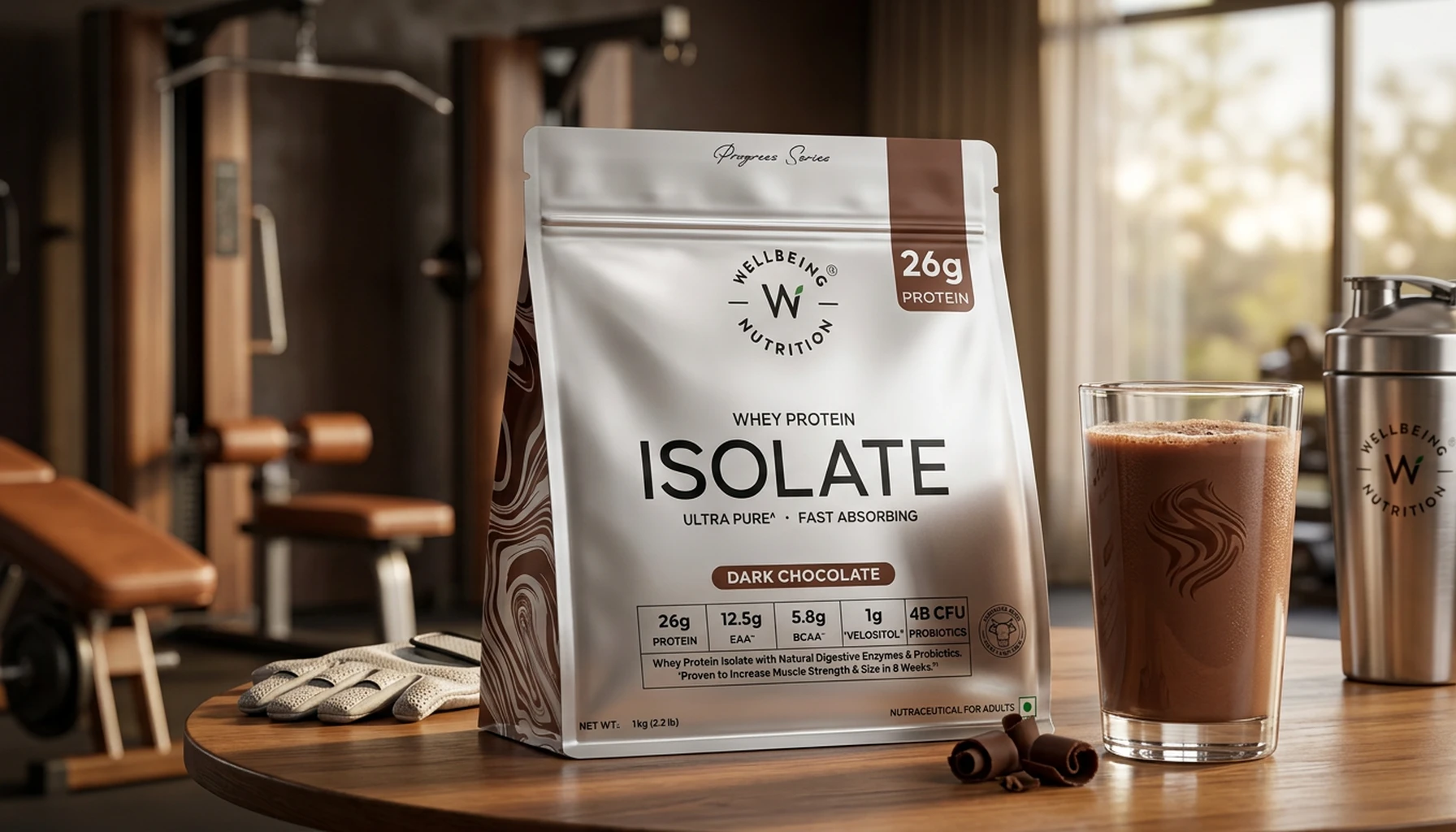
Isolate has a higher protein-per-serving ratio than concentrate. It may suit lean muscle goals, calorie-aware plans, and lactose-sensitive users. Wellbeing Nutrition Whey Protein Isolate provides 31 g of protein per unflavoured serving and 26 g per flavoured serving.
Hydrolysate is processed into smaller protein fragments. It is positioned for fast absorption and recovery-focused use. It may also come at a premium cost.
Start with body weight, training load, food habits, and your goal. A man training often may need more dietary protein than someone who is less active. General guidance from bodies such as ICMR and WHO suggests that active adults typically require higher daily protein intake than sedentary individuals; commonly referenced ranges for active men fall between 1.2 and 2.0 g of protein per kilogram of body weight, though individual needs vary. Rather than relying on one scoop, total the protein from meals, snacks, and shakes.
Use the serving size on the label to see what a shake adds. If you have a medical condition or a restricted diet, seek individual guidance before changing protein intake.
Did You Know?
A whey shake is a protein tool, not a replacement for balanced meals. Whole foods also provide fibre, fats, and other nutrients.
Timing can make protein easier to use consistently. The most useful time is often the time that helps you meet daily needs.
Post workout protein is a practical choice after training. Whey supplies amino acids when muscle repair is part of the recovery process. Have it after training if a full meal is not convenient.
A morning shake can help when breakfast is low in protein. Between-meal use can also support a more even protein intake pattern. This may help maintain lean muscle during a busy day or a calorie deficit.
The best whey protein is the one that fits your needs and has a clear label. Check protein per serving, serving size, ingredient list, allergens, and added sugars. Look for third-party testing details when available.
For digestion, check whether a formula includes lactose and whether it contains added digestive ingredients. Wellbeing Nutrition Whey Protein Isolate contains whey protein isolate, bromelain, papain, and 4B CFU probiotics from L. acidophilus and B. longum—superior ingredients, highly absorbable formats, palatable flavors—making it a considered option for digestive comfort. It contains milk, so check the allergen label.
Selection profile |
Wellness Benefit |
Health goal |
Product type |
Key ingredients |
|---|---|---|---|---|
Entry-level whey |
Supports dietary protein intake |
General training support |
Concentrate |
Whey protein with varying lactose and fat |
Lean-gain whey |
Supports muscle repair |
Lean muscle |
Isolate |
Whey protein isolate (ingredient profiles vary by brand) |
Fast-recovery whey |
Supports post-training recovery |
Recovery-focused use |
Hydrolysate |
Hydrolysed whey protein |
Wellbeing Nutrition Whey Protein Isolate |
Supports protein intake and digestive comfort |
Lean muscle and recovery |
Whey isolate powder |
Whey isolate, bromelain, papain, L. acidophilus, B. longum |
Do not let protein supplements replace varied meals. Do not assume one shake covers daily needs. Also avoid skipping protein after training when it would be your most practical meal option. Track total protein intake before adding extra scoops.
Muscle recovery also depends on regular resistance training, hydration, and sleep. Whey can support the nutrition side of that routine. It cannot replace training consistency or rest.
There is no single best choice for every man. Compare whey type, protein per serving, ingredient clarity, digestive fit, pack value, and price per serving. Choose an isolate if lean muscle or lactose sensitivity is a priority.
Whey protein supports dietary protein and muscle repair. It is not positioned as a direct way to increase testosterone.
It varies by whey type and formula. Concentrate, isolate, and flavoured powders can have different protein percentages. Read the nutrition panel for protein per serving and servings per pack.
Daily use can fit a routine when it helps meet your bodyweight-based protein needs. Keep whole-food protein in the plan and follow the product label.
Getting whey protein powder for men right starts with the type, label, and total daily intake. Use whey to support meals and post-training recovery, then pair it with training, hydration, and sleep. Wellbeing Nutrition's whey isolate range is designed for performance, recovery, and digestive comfort.



