You remember to take your fish oil capsules right before bed, then immediately wonder whether you have just wasted them. Should you have taken them at breakfast instead? Will they even work now? This is one of those small daily decisions that quietly nags at people, and the answer is far more interesting than a simple yes or no.
Here is the short version: yes, you can take fish oil at night, and for many people it might actually be the smarter choice. But the fuller picture involves how your body absorbs fat, when inflammation peaks, and what you are personally using your omega-3 supplement for in the first place.
Fish Oil Benefits
It is easy to take the timing question seriously once you understand the full scope of fish oil benefits. We are not talking about a supplement with a single narrow use case. EPA and DHA are involved in so many systems in the body that optimising how and when you absorb them genuinely moves the needle.
-
The strongest evidence sits around cardiovascular health. Omega-3 fatty acids support healthy triglyceride levels, help maintain normal blood pressure, and contribute to healthy arterial function (NIH).
-
The anti-inflammatory properties of EPA in particular have been studied extensively in the context of joint health, making fish oil a serious consideration for anyone dealing with stiffness or chronic low-grade inflammation (NIH).
-
DHA has an especially strong association with brain health, including cognitive function and mental clarity (NIH).
Why Timing Matters at All
Omega-3 fatty acids are fat-soluble. That one fact is the foundation of the entire timing conversation. Unlike vitamin C or magnesium, which dissolve in water and get absorbed relatively easily, omega-3s need dietary fat to hitch a ride through your gut lining and into your bloodstream.
Take them on an empty stomach and you will absorb a fraction of what the capsule contains. Take them with a meal that has some fat in it and absorption improves.
So, the real question shifts from "morning vs night" to "fed vs fasted." Once you have that sorted, the timing distinction becomes about optimising what happens next.
So, Can Fish Oil Be Taken at Night?
Absolutely. Can fish oil be taken at night? Yes, and here is why it holds up so well as an evening practice. Most people eat their largest, most fat-rich meal at dinner. That full plate of food creates the ideal environment for your body to absorb the EPA and DHA in your fish oil capsules. You get better bioavailability almost by default simply because of how most people eat (NIH).
Beyond absorption, there is a genuinely compelling biological reason to consider the evening window. Inflammation in the body follows a circadian rhythm, with inflammatory markers often peaking during sleep and into the early morning hours. Since omega-3 fatty acids are well studied for their role in modulating the inflammatory response, taking your dose at night means the EPA and DHA are circulating and active during exactly the period when the body may need that support most.
-
Better absorption: Dinner is typically the most fat-rich meal, giving omega-3s the ideal carrier for uptake.
-
Inflammation timing: Inflammatory markers often peak overnight, making evening dosing strategically aligned.
-
Habit consistency: Pairing with dinner means fewer missed doses and a more sustainable routine.
The Best Time to Take Fish Oil: A Practical View
Rather than debating morning vs evening in the abstract, think about it in terms of your actual life. The best time to take fish oil is the time that consistently gets you eating a meal with fat beforehand. For most people, that is dinner. For early risers who eat a big breakfast with eggs or avocado, the morning works brilliantly too.
-
With dinner: Largest meal, most dietary fat, peak inflammation period ahead
-
With breakfast: Great if breakfast includes fat, easy habit to maintain
-
On empty stomach: Poor absorption, increased risk of fishy aftertaste or reflux
One thing that is worth saying plainly: splitting your dose can also be a smart move. If you take a higher-concentration formula, taking half at breakfast and half at dinner gives you coverage across the day and keeps absorption efficient at both meals.
Does Strength Actually Matter?
This is the part of the conversation that gets glossed over most often, and it should not. Not all fish oil capsules are created equal. The number on the label that says "1000mg fish oil" tells you almost nothing useful. What matters is how much EPA and DHA is actually inside each capsule.
A standard capsule might contain only 300mg of combined EPA and DHA from a 1000mg fish oil dose. That means you would need to take three or four capsules daily just to reach a level supported by most research. Higher-concentration formulas are fundamentally different in practice.
|
Formula |
EPA + DHA per capsule |
Best suited for
|
|
~900mg EPA+DHA |
Active maintenance, everyday wellness |
|
|
~1200mg EPA+DHA |
Cardiovascular and joint support |
|
|
~1800mg EPA+DHA |
Therapeutic-level EPA+DHA in fewest capsules |
If you have ever tried fish oil and felt like was doing very little, the dose was almost certainly the issue rather than the supplement itself. A 6x Strength Omega 3 Fish Oil delivers what a generic capsule would take six of. That is a genuinely meaningful difference in what your body actually receives. Similarly, a 4x Strength Omega 3 Fish Oil or 3x Strength Omega 3 Fish Oil can dramatically reduce the pill burden while ensuring you reach an effective daily amount of EPA and DHA.
The Bottom Line
So, can I take fish oil at night?
Yes.
Can fish oil be taken at night and still work effectively?
Also, yes.
Taking fish oil at night can improve absorption, align with your body’s natural inflammatory rhythm, and make your routine easier to maintain. But timing alone is not the deciding factor.
Consistency matters more. Taking it with food matters more. Choosing a potent formula matters more.
If you have been taking fish oil without noticing much difference, the answer is rarely about when you take it. It is about how much active omega-3 you are actually getting.
Get that right, stay consistent, and your body does the rest quietly in the background.
FAQs
1. Can I take fish oil at night after dinner?
Yes, fish oil at night works best when taken after a meal with healthy fats, as it improves absorption and reduces side effects like reflux.
2. Can fish oil be taken at night on an empty stomach?
It is not ideal. Taking an omega 3 supplement without food reduces absorption and may increase fishy aftertaste or discomfort.
3. Does taking fish oil at night improve sleep?
Indirectly, yes. Omega-3s may support melatonin regulation, which can contribute to better sleep quality over time.
4. Is it better to take fish oil in the morning or at night?
Both work. The best time depends on when you consistently take your fish oil capsules with a fat-containing meal.
5. Can I split my fish oil dose between morning and night?
Yes, splitting your omega 3 supplement across meals can improve absorption and maintain steady omega-3 levels in the body.
6. Which strength of fish oil should I choose?
Higher potency options like 3x Strength Omega 3 Fish Oil, 4x Strength Omega 3 Fish Oil, or 6x Strength Omega 3 Fish Oil provide more EPA and DHA per capsule, reducing the number of pills needed.
7. Why am I not noticing fish oil benefits even after taking it regularly?
If fish oil benefits feel minimal, the issue is often low EPA and DHA dosage rather than timing. A higher-strength formula and consistent intake with meals usually improve results.

Recommended Products
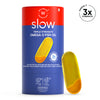 3x Strength Omega 3 Fish Oil
₹1,199
3x Strength Omega 3 Fish Oil
₹1,199
 4x Strength Omega 3 Fish Oil
₹1,274
4x Strength Omega 3 Fish Oil
₹1,274
 6x Strength Omega 3 Fish Oil
₹1,939 – ₹3,798
6x Strength Omega 3 Fish Oil
₹1,939 – ₹3,798