You’ve done the “right” things, swapped sugar for healthy smoothies, hit the gym thrice a week, and even tried meditation apps.
Still, your body feels sluggish. Recovery takes longer. Focus flickers.
Turns out, what’s missing might not be motivation, but cellular defense.
Every day, your cells are bombarded by oxidative stress, from pollution, poor sleep, mental fatigue, and even overtraining.
And while your body has its own antioxidant army, its strongest soldier, glutathione, begins to fall behind with age.
So naturally, the question arises: Should you replenish it directly with Glutathione?
Or fuel your body to make more of it naturally using NAC?
Let’s uncover the truth, what the science says, and what really works for your body.
The Body’s Antioxidant System and Why It Falters
Your cells are constantly working, converting nutrients into energy, managing inflammation, repairing tissue. But in the process, they generate reactive oxygen species (ROS), unstable molecules that can damage DNA, proteins, and lipids.
To keep this in check, your body relies on an internal antioxidant network, led by glutathione.
This tripeptide, made from cysteine, glutamate, and glycine, plays three key roles:
-
It neutralizes free radicals before they damage cells.
-
It helps your liver detoxify harmful compounds.
-
It regenerates other antioxidants like Vitamin C and E.
But lifestyle factors chip away at this defense. Stress, processed foods, lack of sleep, alcohol, pollution, all deplete glutathione faster than your body can rebuild it. By your mid-30s, glutathione levels may drop by nearly 17% (NIH).
That’s when oxidative stress tips the balance. Energy wanes, inflammation rises, and your “cellular engines”, the mitochondria, begin to tire.
The good news? Science has found ways to restore this balance.
Two of the most studied are NAC (N-acetylcysteine) and Glutathione itself.
Glutathione: The Defender
Glutathione is the molecule your cells rely on for constant cleanup.
It’s directly involved in neutralizing free radicals, recycling antioxidants, and supporting liver detox pathways.
The challenge? Traditional oral glutathione doesn’t absorb well, it’s broken-down during digestion.
That’s why newer, more bioavailable forms like liposomal glutathione or s-acetyl glutathione are being used (NIH).
Clinical findings show that advanced glutathione forms can:
-
Increase blood glutathione levels by 30–40% (NIH).
-
Reduce oxidative DNA damage markers (8-OHdG) by 20% (NIH).
-
Support liver repair with ALT enzymes dropped by 12.9% (NIH).
So, while glutathione offers fast-acting antioxidant protection, it may not always rebuild the body’s capacity to produce more, that’s where NAC steps in.
NAC (N-Acetylcysteine): The Rebuilder
NAC is used for replenishing cysteine, the rate-limiting amino acid your body needs to synthesize glutathione. Think of it as the “building block supplier” for your body’s antioxidant factory.
But NAC’s effects go far beyond just glutathione support.
Clinical trials show it improves everything from lung function to cognition, inflammation, and energy metabolism.
-
Respiratory Health: NAC reduced COPD flare-ups by 43.8% (NIH)
-
Mental Wellbeing: Reduced compulsive behavior by 38.3% in 12 weeks (NIH).
That’s how NAC works, not just as a single antioxidant, but as a cellular multitasker that helps the body repair, restore, and rebuild its natural defenses.
So, Should You Pick NAC or Glutathione?
The choice depends on your health goal, because both support glutathione differently.
If you need rapid antioxidant protection:
Choose Glutathione, particularly liposomal glutathione. It’s best for short-term antioxidant defense, recovery after illness, or high oxidative load situations (like travel or intense training).
If you want preventive, long-term cellular protection:
Choose NAC. It strengthens your body’s own glutathione cycle and supports detoxification, mood balance, and mitochondrial resilience from within.
If your goal is deep, long-term rejuvenation:
Go for a combination approach like GlyNAC, NAC and Glycine together. When NAC is paired with Glycine, your body’s glutathione machinery gets a complete reboot.
This combination, known as GlyNAC, has shown groundbreaking results in human trials:
For long-term antioxidant renewal, formulations that mirror GlyNAC research, like the Wellbeing Nutrition NAC + Glycine, provide a practical, clinically inspired way to support glutathione production naturally.
 This blend is designed to improve mitochondrial efficiency, reduce oxidative stress, and enhance energy, the same benefits seen in GlyNAC clinical trials.

So rather than asking NAC or Glutathione, the smarter question is:
What’s your goal, fast defense or foundational repair?
Because when used wisely, both can work in harmony to strengthen your cellular shield.
Practical Guidelines: How to Proceed Safely and Effectively
Clinical-backed usage recommendations:
-
NAC: 600–1200 mg per day (split doses).
-
Glutathione: 250–500 mg per day (liposomal or s-acetyl form).
Timing: NAC is best taken on an empty stomach; glutathione can be taken any time of day.
Duration: Noticeable results are typically seen after 8–16 weeks of consistent use.
Safety: Both compounds are well-studied and generally well-tolerated. NAC is recognized as GRAS (Generally Recognized As Safe) by the FDA.
The Future of Resilient Health
Your energy, focus, and recovery all trace back to one molecule, glutathione.
When its levels fall, so does your body’s ability to defend and repair itself.
NAC fuels the system that creates glutathione.
Glutathione defends the system that keeps you young.
Together, they don’t just fight oxidative stress, they future-proof your cells.
So, the next time fatigue feels mysterious or recovery seems slow, look deeper than your routine.
It might not be what you’re doing, but what your cells are missing.
Invest in their defense, rebuild from within, and let true resilience start at the source, your cells.
FAQs
1. What is the main difference between NAC and Glutathione?
NAC (N-acetylcysteine) is a precursor, it helps your body make more glutathione, the body’s master antioxidant. Glutathione, on the other hand, is the antioxidant itself. NAC works by fueling your body’s natural production process, while glutathione supplements deliver it directly.
2. Which is better for detox and liver health: NAC or Glutathione?
For liver support and detoxification, NAC is used for stimulating glutathione synthesis in the liver, helping neutralize toxins and support recovery from oxidative stress. Several studies show NAC can improve liver enzyme levels and reduce oxidative damage, especially in people exposed to pollutants, alcohol, or medication-related stress.
3. Does NAC really increase glutathione levels?
Yes. Clinical trials have shown that NAC works by increasing glutathione levels in blood and tissues. For example, when combined with glycine (as in GlyNAC), glutathione levels rose up and oxidative stress markers dropped by 73% over 16–24 weeks (NIH).
4. Is oral Glutathione effective or should I take NAC instead?
Traditional oral glutathione has low bioavailability, meaning much of it gets broken down before absorption. However, liposomal or sublingual glutathione forms improve absorption. If you want to boost your body’s own antioxidant defense, NAC supplements are often more efficient since they stimulate internal glutathione synthesis naturally.
5. Can I take NAC and Glutathione together?
Yes, combining the two can be beneficial. NAC provides cysteine, the key amino acid your body needs to make glutathione while taking glutathione directly offers an immediate antioxidant boost. Some formulations like GlyNAC (NAC + Glycine) have shown strong results in improving mitochondrial health, reducing inflammation, and enhancing longevity markers.
6. How long does it take for NAC or Glutathione to work?
It depends on your health status and dosage. Most clinical studies show measurable changes in 4–12 weeks, from improved antioxidant capacity to reduced inflammation markers like IL-6 and CRP. For mitochondrial and longevity benefits, consistent use for 16–24 weeks delivers more noticeable results.
7. What’s the best supplement to support long-term glutathione levels?
For sustained results, choose clinically inspired combinations like Wellbeing Nutrition NAC + Glycine. This blend supports glutathione production naturally, improves energy metabolism, and enhances cellular repair, mirroring the benefits seen in GlyNAC research on longevity and mitochondrial function.

Recommended Products
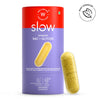 Slow Advanced N-Acetyl-Cysteine + Glycine Capsules
₹1,329 – ₹2,602
Slow Advanced N-Acetyl-Cysteine + Glycine Capsules
₹1,329 – ₹2,602