If your child always seems hungry, gets tired faster than expected, falls sick often, or struggles with focus, chances are they’re not getting enough protein. And no, it’s not because you aren’t feeding them right. Most Indian kids eat carb-heavy meals but protein-light diets, which leaves their growing bodies under-fuelled.
Protein isn’t just another nutrient; it’s the foundation for growth, immunity, muscle strength, and brain development. When kids fall short, the effects are subtle at first, but deeply impactful over time.
This guide breaks down exactly how much protein kids really need, why most kids don’t get enough, and the smartest ways to fill those nutritional gaps effortlessly.
Why Kids Fall Short of Protein
Despite eating full meals, children still end up protein deficient because:
1. Carb-Heavy Eating Patterns

Rotis, rice, idli, dosa, poha, bread, noodles are delicious, but low in protein. Most kids end up getting 70–80% of calories from carbs (NIH). And when carbs dominate the plate, protein automatically gets pushed out of the diet. Over time, this creates a silent imbalance where energy is high but nourishment is low.
2. Picky Eating Habits

Kids naturally lean toward flavours and textures, not nutritional value. This means high-protein foods like dal, paneer and eggs get rejected more often, leaving meals nutritionally incomplete. Over time, even regular meals fail to meet daily protein requirements simply because kids avoid the key sources.
3. Increased Protein Demand During Growth Spurts

During height spurts, sports seasons, or school stress, their protein needs climb, but intake usually doesn’t. These are phases when the body is rapidly building muscle, bone, and immune cells, making protein absolutely critical. If their diet doesn’t step up during these windows, kids may experience fatigue, slow recovery, and reduced stamina.
4. Vegetarian Diets with Lower Complete Proteins

While vegetarian diets are healthy, they’re often low in essential amino acids. This means kids have to consume a much wider variety of plant proteins to meet the same nutritional value of a single complete protein. When meals lack diversity, protein quality drops, even if the quantity seems adequate.
5. Low Appetite During Illness

Recovery increases protein demand, but appetite dips, leading to a widening protein gap. Since the body prioritises healing, it burns through available protein faster than usual. Without intentional protein intake, kids may recover slowly, feel weaker, and lose muscle mass during repeated illnesses.
Why Protein Matters So Much for Kids
Protein is the raw material for everything a child’s body builds every single day:
Muscles & Bones
Protein supplies the essential amino acids required to build, repair, and strengthen growing muscles. It also supports bone matrix formation, helping kids achieve greater bone density and healthier skeletal development (NIH).
Brain Cells & Neurotransmitters
Amino acids act as building blocks for neurotransmitters like dopamine and serotonin, which influence attention, mood, and cognitive performance. Adequate protein ensures optimal neuron communication, improving memory, focus, and learning speed (NIH).
Hormones & Enzymes
Protein is the structural foundation of hormones and enzymes that regulate growth, digestion, metabolism, and stress response. Without enough protein, these systems slow down, impacting everything from appetite to emotional balance (NIH).
Healthy Gut Lining
Proteins repair and strengthen the intestinal lining, reducing inflammation and improving nutrient absorption. A strong gut barrier also protects against digestive discomfort, food sensitivities, and frequent stomach upsets (NIH).
Antibodies for Immunity
Antibodies, your child’s frontline defence against infections, are made of protein. Higher protein intake supports stronger immune responses, quicker recovery, and fewer sick days (NIH).
Wound Healing & Recovery
Protein accelerates tissue repair, collagen synthesis, and recovery after injuries or illness. This means cuts heal faster, muscles repair sooner, and overall resilience improves significantly (NIH).
Steady Energy Levels
Protein slows digestion and stabilises blood glucose, preventing energy crashes between meals. It helps kids stay active, alert, and focused throughout the day without constant cravings (NIH).
When protein is low, kids experience:
-
Faster fatigue
-
Poor immunity
-
Irritability
-
Low focus
-
Slow muscle development
-
“Always hungry” behaviour
In short, protein powers growth, resilience, and brain function.
How Much Protein Do Kids Really Need?
Here’s a simple age-wise breakdown (NIH):
|
Age Group |
Protein Needed Daily |
|
1–3 years |
13–15 g |
|
4–8 years |
19–21 g |
|
9–13 years |
34–40 g |
|
14–18 years |
46 g (girls), 52 g (boys) |
But here's the truth: A typical Indian child consumes less than half of their daily requirement.
High-Quality Protein-Rich Foods for Kids

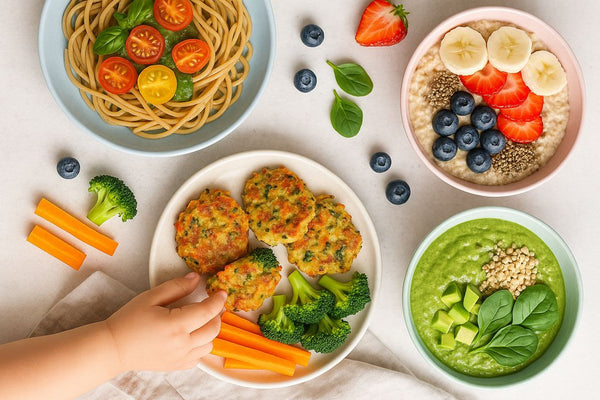
When it comes to filling the protein gap, quality matters just as much as quantity. Choosing the right foods ensures kids get complete amino acids, steady energy, and the building blocks for growth, all without complicating your daily routine.
Vegetarian Options
-
Paneer
-
Milk & Greek yogurt
-
Lentils
-
Chickpeas or Rajma
-
Soybean, Tofu
-
Peanuts & almond butter
-
Seeds
-
Quinoa
Non-Vegetarian Options
-
Eggs
-
Chicken
-
Fish such as salmon, rohu, pomfret
-
Shrimp
The challenge? Kids don’t eat enough of these every day, especially in the right quantities.
Easy Ways to Add More Protein to Kids’ Meals
Sneaking in protein doesn’t have to mean reinventing your entire menu, it’s often about smart swaps and simple upgrades. With a few clever tweaks, you can turn everyday meals into nutrient-dense, kid-approved favourites without a fuss.
-
Add protein powder to milk, smoothies, porridge, or hot chocolate to boost protein instantly without changing taste.
-
Make protein-rich breakfasts such as moong dal chilla, paneer paratha, egg rolls, veggie omelette.
-
Add lentils to everything like khichdi, soups, parathas, dosa batter.
-
Snack smart with roasted chana, peanut chikki, yogurt bowls, hummus with veggies.
-
Use paneer creatively as paneer popcorn, grated paneer in pasta, paneer tikka cubes.
-
Combine wheat flour with besan, soy flour, or multigrain flour.
-
Add protein powder to pancakes, muffins, and ladoos.
Do Kids Really Need Protein Powder?
Not every child does, but many children benefit from it.
Your child may need protein powder if they are:
✔ A picky eater
✔ Vegetarian
✔ Frequently sick
✔ Showing low appetite
✔ Active in sports
✔ Underweight
✔ Not meeting their daily protein intake despite balanced meals
A clean, high-quality protein powder for kids fills nutritional gaps safely and deliciously, without the sugars and additives typically found in “health drinks”.
How Much Protein Powder Do Kids Need?
Most kid-friendly protein powders provide 8–12 g protein per scoop.
A simple guideline:
-
3–6 years: ½ to 1 scoop/day
-
7–12 years: 1 scoop/day
-
13–18 years: 1–1.5 scoops/day (especially if active)
Always use it as a complement to food, not a replacement.
The Bottom Line
Protein is the difference between a child who simply “gets by” and a child who grows strong, learns better, stays active, and builds a powerful immune system.
Even though the requirement is only 15–50 grams a day, most children fall short and the effects show up as low energy, weak immunity, slow growth, and poor focus.
Adding more protein-rich foods, supported by a clean kids’ protein powder, is one of the easiest, most impactful decisions a parent can make for their child’s long-term health.
FAQs
1. How much protein do kids really need per day?
Kids typically need 13–52 grams of protein per day, depending on age, growth stage, and activity level. Younger kids need around 13–21 g, while older, more active teens may need 40–52 g or slightly more.
2. What are the best protein-rich foods for kids?
High-quality protein-rich foods for kids include paneer, Greek yogurt, milk, eggs, lentils, chickpeas, tofu, chicken, fish, peanuts, seeds, and quinoa. A mix of plant and animal proteins helps ensure complete amino acid intake.
3. How do I know if my child is not getting enough protein?
Common signs of low protein in kids include fatigue, poor immunity, irritability, slow growth, weak muscle development, low focus, and constant hunger. If multiple signs appear together, their protein intake may be too low.
4. Is protein powder safe for kids?
Yes, a clean, high-quality protein powder for kids is safe when used correctly. It should be free from artificial flavours, refined sugar, and unnecessary additives. Protein powder is especially helpful for picky eaters or kids with low appetite.
5. How much protein powder can kids have daily?
Most children can safely consume ½ to 1 scoop per day, depending on age. Younger kids (3–6 years) may need just half a scoop, while older kids and teens (7–18 years) may need 1–1.5 scoops, especially if they’re active in sports.
6. Can kids get enough protein from a vegetarian diet?
Yes, but it requires intentional variety. Vegetarian diets can fall short in complete proteins, so mixing sources like lentils, paneer, soy, nuts, seeds, and quinoa becomes essential. A protein powder for kids can help fill amino acid gaps.
7. What is the easiest way to add more protein to kids’ meals?
Simple additions like mixing protein powder into milk or smoothies, adding paneer to meals, using lentils in dosas or khichdi, choosing yogurt-based snacks, and incorporating nuts or seeds can rapidly boost daily protein intake.

Recommended Products
 Kids Superfuel | Creamy Vanilla | Nutrition Mix
₹759 – ₹1,518
Kids Superfuel | Creamy Vanilla | Nutrition Mix
₹759 – ₹1,518
 Kids Superfuel | Milk Chocolate | Nutrition Mix
₹759 – ₹1,518
Kids Superfuel | Milk Chocolate | Nutrition Mix
₹759 – ₹1,518