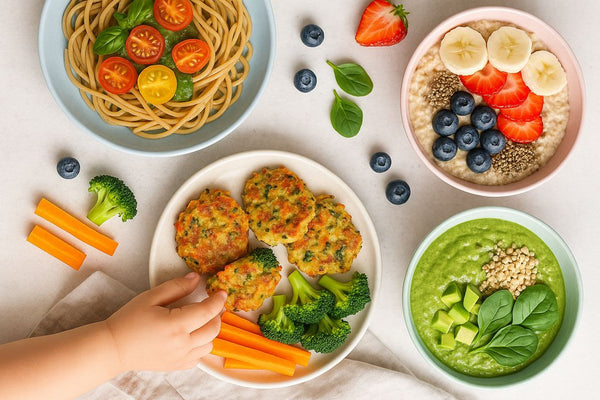
Every parent wants their child to be healthy, energetic, and resilient but frequent colds, low appetite, poor focus, or slow recovery from infections often tell a different story.
The truth is, immunity isn’t built by one magic food or supplement. It’s shaped daily by what your child eats, absorbs, and actually enjoys eating.
Children’s immune systems are still developing, which means they need nutrient-dense, vitamin-rich foods that support gut health, brain development, and immune defense without overwhelming their picky palates.
Let’s break down the top 10 immunity boosting foods for kids, backed by nutrition science, and exactly how to incorporate them easily into everyday meals.
1. Citrus Fruits

Citrus fruits are rich in vitamin C, a powerful antioxidant that supports white blood cell function and strengthens the body’s first line of immune defense. Vitamin C also improves iron absorption, critical for growing kids. Low vitamin C levels are linked to frequent infections, slower healing, and fatigue.
How to incorporate:
-
Fresh orange or mosambi juice (not packaged)
-
Add lemon to dal, soups, or warm water
-
Citrus fruit popsicles for summer immunity
2. Yogurt & Curd

Nearly 70% of immunity lives in the gut, and yogurt provides natural probiotics that support healthy gut bacteria (NIH). A balanced gut microbiome improves immune response and nutrient absorption. Poor gut health can weaken immunity even if the diet looks “healthy.”
How to incorporate:
-
Plain curd with lunch
-
Yogurt fruit bowls
-
Smoothies blended with berries or banana
3. Eggs

Eggs are a complete protein and provide vitamin A, D, B12, selenium, and choline, all essential for immune cell production and brain development. Protein deficiency can directly weaken immune defenses in children.
How to incorporate:
-
Boiled eggs with seasoning
-
Egg parathas or omelettes
-
Egg muffins for lunchboxes
4. Spinach & Green Leafy Vegetables

Spinach is loaded with vitamin A, vitamin C, iron, and folate, which help immune cells mature and function properly. Vitamin A deficiency is strongly linked to increased infection risk in kids.
How to incorporate:
-
Spinach paratha or dosa
-
Blend into soups or sauces
-
Add to omelettes or pulao
5. Nuts & Seeds

These are rich in zinc, vitamin E, omega-3 fats, and magnesium, nutrients that regulate immune responses and reduce inflammation. Zinc deficiency is one of the most common hidden causes of low immunity in children.
How to incorporate:
-
Nut powder mixed into milk
-
Sprinkle crushed seeds over curd or oats
-
Homemade laddoos or energy balls
6. Turmeric

Turmeric contains curcumin, a powerful anti-inflammatory and antioxidant compound known to support immune balance and recovery. Chronic low-grade inflammation weakens immunity over time.
How to incorporate:
-
Turmeric milk before bed
-
Add to dals, sabzis, and rice
-
Turmeric-infused soups
7. Berries

Berries are packed with polyphenols and antioxidants that protect immune cells from oxidative stress and support brain health, making them excellent brain boosting foods too. Oxidative stress can impair immune signaling in growing children.
How to incorporate:
-
Berry smoothies
-
Yogurt parfaits
-
Frozen berries as a dessert snack
8. Garlic

Garlic contains allicin, a bioactive compound known for its antimicrobial and immune-modulating properties. Garlic supports the body’s ability to fight infections naturally.
How to incorporate:
-
Add crushed garlic to dals and vegetables
-
Garlic butter on toast
-
Mild garlic soups for kids
9. Whole Grains

Whole grains provide B vitamins, zinc, iron, and fiber, which support immune metabolism and gut health. Refined foods crowd out micronutrients essential for immunity.
How to incorporate:
-
Oats porridge or pancakes
-
Millet khichdi or dosa
-
Brown rice pulao
10. Fortified Nutrition Powder for Kids

Even with the best food choices, modern diets, picky eating, and nutrient-depleted soil make it difficult for kids to meet all micronutrient needs daily.
A high-quality nutrition powder for kids can help bridge gaps, especially for zinc, iron, vitamin D, B-complex, and brain-supporting nutrients. Micronutrient gaps weaken immunity long before visible deficiency symptoms appear.
How to incorporate:
-
Mix into milk or smoothies
-
Add to oats or porridge
-
Use as part of a daily routine, not a replacement for meals
Final Takeaway
Strong immunity in kids doesn’t come from reacting to illness, it comes from consistent nourishment.
By combining vitamin-rich foods for kids, gut-friendly ingredients, and smart supplementation when needed, you support:
-
Fewer sick days
-
Better focus and learning
-
Faster recovery
-
Long-term health resilience
Start small. Rotate foods. Make meals enjoyable. And remember, what kids eat today builds the immunity they’ll rely on tomorrow.
FAQs
1. What are the best immunity boosting foods for kids?
The best immunity boosting foods for kids include citrus fruits, yogurt, eggs, green leafy vegetables, nuts and seeds, turmeric, whole grains, berries, and garlic. These foods provide essential vitamins, minerals, antioxidants, and probiotics that strengthen a child’s immune system naturally.
2. How can I improve my child’s immunity through daily diet?
You can improve your child’s immunity by offering a balanced diet rich in protein, vitamin-rich fruits and vegetables, whole grains, healthy fats, and probiotic foods. Consistency matters more than variety, small daily additions of immunity-supporting foods work better than occasional “healthy” meals.
3. Which vitamin rich foods are most important for kids’ immunity?
Vitamin rich foods for kids’ immunity include oranges and lemons (vitamin C), spinach and carrots (vitamin A), eggs and fortified dairy (vitamin D and B12), and nuts and seeds (vitamin E). These vitamins help immune cells grow, function, and fight infections effectively.
4. Are brain boosting foods also good for immunity in kids?
Yes, many brain boosting foods such as eggs, nuts, seeds, berries, whole grains, and yogurt also support immunity. These foods provide omega-3 fats, B vitamins, antioxidants, and minerals that benefit both brain development and immune health.
5. Can a nutrition powder for kids help boost immunity?
A good quality nutrition powder for kids can help boost immunity by filling nutrient gaps caused by picky eating or poor absorption. It should contain essential vitamins, minerals, and immune-supporting nutrients, and be used as a complement, not a replacement for whole foods.
6. How often should kids eat immunity boosting foods?
Kids should consume immunity boosting foods daily in small amounts rather than occasionally in large portions. Regular intake helps maintain steady levels of nutrients needed for immune defense, growth, and recovery.
7. What foods should be avoided to maintain strong immunity in kids?
To maintain strong immunity, limit ultra-processed foods, excess sugar, sugary drinks, and refined snacks. These foods can weaken gut health, increase inflammation, and displace vitamin-rich foods that support immune function.

Recommended Products
 Kids Superfuel | Creamy Vanilla | Nutrition Mix
₹759 – ₹1,518
Kids Superfuel | Creamy Vanilla | Nutrition Mix
₹759 – ₹1,518
 Kids Superfuel | Milk Chocolate | Nutrition Mix
₹759 – ₹1,518
Kids Superfuel | Milk Chocolate | Nutrition Mix
₹759 – ₹1,518