It sounds counterintuitive. But the science of how children build relationships with food tells a different story than most parents expect and forcing the bite almost always makes things worse, especially when you're dealing with a picky eater.
The Real Reason Picky Eating Is Hard to Fix
Healthy nutrition for kids doesn't start on the plate. It starts in the brain.
Around age 7, children begin forming something researchers call a food identity. It's the moment a child stops just refusing broccoli and starts saying, "I'm someone who doesn't eat vegetables." That shift from preference to identity, changes everything about how you should respond.
Once a food identity locks in, every forced bite reinforces it. The child isn't being stubborn in the way we usually mean. They're defending a version of themselves. Pushing harder doesn't break down the resistance. It hardens it.
This is why nutrition for kids can't be approached the same way you'd track calories on a fitness app. The mechanics are psychological before they're physiological and that order matters a lot, especially when trying to understand what causes picky eating in the first place.
Did You Know?
A 2023 study found that more feeding pressure at age 7 was directly linked to narrower diets by age 11. The more parents pushed, the less variety children ate four years later (NIH).
Most parents interpret a child's refusal as defiance. What's actually happening is closer to self-protection.
What Happens in the Brain When You Force the Issue
Pressure triggers the brain's threat response. Not hunger.
When a child feels forced to eat, the brain's resistance centre activates and the prefrontal cortex, the part responsible for curiosity and openness, goes quiet. The meal stops feeling like food. It starts feeling like a confrontation. And the body remembers that.
The more this pattern repeats, the stronger the aversion becomes. The child doesn't just dislike the food anymore. They now associate mealtimes with stress and stress is the enemy of any nutrition diet for kids actually working. Over time, this can even lead to patterns seen in extreme picky eating, where the range of accepted foods becomes very limited.
This is the science behind why gentle, low-pressure environments matter for food and nutrition for kids. A calmer nervous system is a more curious one. A curious child is more likely to try something new, not because you made them, but because their brain wasn't in lockdown when the option was offered.

The Texture Problem Nobody Talks About
Here's something most parents miss entirely: it's often not about taste.
A 2024 study found that 72% of children's food choices favoured smoother textures. Not sweeter. Not blander. Smoother (NIH).
Children's sensory processing is genuinely different from adults. A texture that reads as "normal" to you can feel deeply unpleasant to a child. When they reject a plate, they may not be rejecting the nutrition. They may just be rejecting the format.
This matters practically. Best nutrition food for kids isn't always the food they'll accept. But finding a format they will accept a smooth, mild, familiar is often the first step toward meeting their actual nutritional requirements for kids and building healthy eating for picky eaters over time.

What Actually Works: The Science of Real Choice
 Choice activates the thinking brain. Threat shuts it down.
The practical shift is simpler than most parents expect. Instead of saying "You're not leaving until you finish that," try "Broccoli or peas tonight, you choose." Both are vegetables. Both count as good nutrition for kids. But one puts the child in a threat state, and the other puts them in a thinking state.
Real choice, even limited choice between two approved options, engages the prefrontal cortex and lowers the brain's alarm response. The child feels control. Control reduces defensiveness. A less defensive child is genuinely more likely to try, taste, and eventually accept foods they previously rejected. This is one of the most effective tips for picky eaters backed by behavioural science.
Here's how to build that into your daily approach:
-
Keep the table calm. No negotiations, no dramatic reactions to refusals. Neutral acknowledgment ("okay, that's fine") removes the emotional charge from the rejected food.
-
Repeated low-pressure exposure wins over time. Research on nutrition tips for kids consistently shows that it can take 10 to 15 exposures to a new food before a child accepts it but only if each exposure is pressure-free.
-
Work with texture, not against it. If a child refuses chunky sabzi, try a smoother version of the same vegetable, pureed, blended into dal, or incorporated into something familiar. The food and nutrition chart for kids in your head may need a format column, not just a food group column.
-
Supplement smart when texture limits variety. This is where a well-formulated best nutrition drink for kids or best nutritional supplement for kids fills the gap, not as a replacement for food, but as daily nutritional insurance when dietary variety is genuinely limited.
The Bottom Line
Healthy nutrition for kids isn't just a nutrition chart for kids filled in correctly. It's a relationship a child builds with food and that relationship is shaped more by how mealtimes feel than by what's on the plate.
The science is clear: pressure narrows diets, and choice opens them. Over time, the consequences of picky eating are less about a single missed meal and more about a reduced willingness to explore food altogether.
Start with one meal. Offer a choice. Step back. That's the first act of good nutrition for kids that actually sticks and the foundation for how to overcome picky eating in a way that lasts.
Key Takeaways
-
Children form food identities around age 7, forced eating reinforces rejection, not acceptance
-
Feeding pressure at age 7 is scientifically linked to narrower diets by age 11
-
Pressure triggers the brain's threat response; choice engages the thinking brain instead
-
72% of children prefer smoother textures, texture is often the real barrier, not taste
-
Calm, repeated, low-pressure exposure is the most effective strategy for expanding dietary variety
-
A good nutritional supplement for kids supports daily nutrition when dietary variety is limited, without adding mealtime stress
FAQs
What is the importance of nutrition for kids?
Nutrition for kids directly affects brain development, bone density, immunity, and energy levels during the fastest growth window of their lives. Gaps in key nutrients like iron, calcium, vitamin D, and omega-3s during childhood can have effects that last well into adolescence and adulthood.
Why is my child such a picky eater?
Picky eating is often a mix of sensory sensitivity (especially to texture), developing food identity, and the brain's response to pressure at mealtimes. Understanding what causes picky eating helps shift the approach from force to strategy. It's rarely simple defiance and forcing the issue typically makes the range of accepted foods smaller over time, not larger.
What is the best nutrition food for kids who refuse vegetables?
Smooth preparations tend to work better, think vegetable soups, dal with added greens, or smoothies with spinach or carrot blended in. This approach supports healthy eating for picky eaters by working with their sensory preferences instead of against them.
What nutritional requirements for kids should parents prioritise?
Key priorities include adequate protein for muscle and tissue development, calcium and vitamin D for bone health, iron for brain function and energy, omega-3 fatty acids for cognitive development, and zinc for immunity. If dietary variety is limited, a best nutrition drink for kids or best nutritional supplement for kids can help bridge gaps.
How do I improve my child's nutrition diet without mealtime fights?
Offer real, limited choices ("this or that" rather than "eat this or else"), keep the table calm and neutral, reduce emotional reactions to refusals, and experiment with formats rather than forcing specific foods. These small shifts are often enough to start how to make picky eaters eat healthy without resistance.
What is the best nutrition drink for kids?
A good nutrition drink for kids is one that's smooth in texture (which research shows children accept better), free from excessive sugar, and formulated around actual nutritional requirements for kids, not just flavour. It works best as a supplement to food, not a replacement.
At what age do children form a food identity?
Research suggests food identity formation begins around age 7. Before that, preferences are more fluid. After that, the child begins labelling themselves as someone who "doesn't eat" certain things, which is why building positive food experiences before age 7 matters significantly.
Are nutrition activities for kids helpful for picky eating?
Yes. Involving children in food preparation, grocery selection, or simple kitchen tasks reduces the novelty and threat of unfamiliar foods. Children who help prepare a meal are more likely to try it, this is one of the more consistently supported nutrition tips for kids in the research.
What does balanced nutrition for kids actually look like?
Balanced nutrition for kids includes a mix of complex carbohydrates, quality protein, healthy fats, and micronutrient-dense foods across meals. In practice, for a Tier 2 Indian household, this might look like dal-rice with a sabzi, an egg, and a fruit supplemented with a best nutritional supplement for kids when variety is limited.
Is it normal for kids to reject foods based on texture?
Completely normal. A 2024 study found that 72% of children's food preferences are texture-driven rather than taste-driven. If a child rejects a food, swapping the texture (smooth vs. chunky, soft vs. crispy) before swapping the food entirely is a more effective first step.

Recommended Products
 Kids Superfuel | Creamy Vanilla | Nutrition Mix
₹759 – ₹1,518
Kids Superfuel | Creamy Vanilla | Nutrition Mix
₹759 – ₹1,518
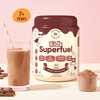 Kids Superfuel | Milk Chocolate | Nutrition Mix
₹759 – ₹1,518
Kids Superfuel | Milk Chocolate | Nutrition Mix
₹759 – ₹1,518