Energy fades slowly. Not overnight, not with one skipped meal or late night, but through the subtle accumulation of oxidative stress. It’s the microscopic rust of modern life: pollution, processed food, poor sleep, blue-light overstimulation.
This unseen burden doesn’t just age your skin; it ages your cells, impacting mitochondrial energy, immunity, and metabolic rhythm.
That’s where antioxidants step in, the molecular defence system that helps your body reset and repair. And few are more talked about than N-acetylcysteine (NAC) and Glutathione (GSH).
They’re often compared as rivals, NAC vs Glutathione. But the truth is more layered. These two molecules sit at the core of your body’s redox balance, working in synergy to keep you biologically young.
So, which one truly wins the antioxidant battle? Let’s find out.
Why Your Cells Need Reinforcements

Every second, your cells generate reactive oxygen species (ROS) as by-products of metabolism. Small amounts are necessary; they signal repair and adaptation. But when production outpaces your antioxidant capacity, oxidative stress sets in.
It’s what drives the fatigue you can’t explain, the dull recovery after workouts, and the faster-than-expected aging you notice in the mirror.
Your body’s most powerful countermeasure is Glutathione, a tripeptide made of glutamate, cysteine, and glycine. It neutralizes ROS, detoxifies the liver, supports immunity, and recycles vitamins C and E.
But with age and stress, glutathione reserves drop sharply. That’s when NAC becomes essential, the precursor molecule that helps rebuild this master antioxidant from within.
And that’s the real question: when it comes to replenishing your defences, NAC or Glutathione, which should you invest in?
Glutathione: The Master Antioxidant

Glutathione (GSH) is the molecule your cells rely on to stay young and functional. It’s the final line of defence, neutralizing free radicals, repairing oxidized proteins, and recycling other antioxidants. It’s also critical for liver detox and immune modulation (NIH).
But oral glutathione has one challenge, bioavailability. The body breaks it down during digestion, which means not all supplements effectively raise GSH levels (NIH). That’s why many experts consider building it endogenously via NAC and glycine a more sustainable route.
Recent human studies shed light on how direct GSH supplementation performs:
-
In a 6-month, blood and lymphocyte GSH increased 30–35%, with buccal cell levels rising 260% and oxidative stress markers dropping. (NIH)
-
In adults over 55 with type-2 diabetes, GSH supplementation improved glutathione stores and reduced DNA oxidative damage (8-OHdG) while lowering HbA1c.(NIH)
-
However, short-term trials (4 weeks) in healthy adults showed no measurable change in blood GSH, highlighting absorption variability.
So, while GSH is undeniably powerful, its clinical efficacy depends on context. In the conversation of N acetylcysteine vs glutathione, GSH performs best in older or metabolically stressed individuals, where internal synthesis may be compromised.
NAC: The Cellular Rebuilder

N-acetylcysteine is a modified form of the amino acid cysteine. It fuels the rate-limiting step of glutathione synthesis, making it a direct precursor. NAC’s free thiol (-SH) group also scavenges free radicals independently (NIH), making it both a builder and defender.
This dual role explains its broad biological impact, from lungs to brain to metabolism.
Across human trials, NAC shows multi-system benefits:
-
Inflammation control: Markers like hs-CRP dropped by 54% in 4 weeks (NIH).
In short, NAC doesn’t just support glutathione, it rebuilds your antioxidant capacity from the inside out. That’s what makes the NAC vs Glutathione conversation so intriguing: NAC acts as the builder, while GSH is the finished product.
NAC vs Glutathione: Which Ones Better?
Your body runs on antioxidants that guard every cell from oxidative stress. Among them, NAC and Glutathione stand out for their powerful, overlapping roles.
Here’s how they compare, molecule to molecule.
|
Category |
NAC |
Glutathione |
|
Mechanism |
Precursor that fuels glutathione synthesis |
Direct antioxidant & detox molecule |
|
Evidence strength |
Extensive across multiple systems |
Promising but variable |
|
Bioavailability |
Excellent oral absorption |
Limited unless liposomal |
|
Best suited for |
Broad antioxidant support, younger or active adults |
Aging, chronic stress, metabolic dysfunction |
|
Longevity data |
Increases mitochondrial function and reduces senescence markers |
Improves oxidative damage markers in elderly |
|
Safety |
Strong safety record (600–2400 mg/day) |
Safe but long-term data limited |
If the goal is comprehensive, evidence-backed antioxidant defence, NAC currently holds the edge. Yet both molecules complement, not compete and in many cases, they’re stronger together.
Advance Supplementation: NAC and Glycine

One of the most exciting clinical breakthroughs is the synergy between NAC and glycine, together known as GlyNAC.
In a 24-week human trial, GlyNAC improved glutathione by 200% (NIH), reduced inflammatory markers (IL-6 −78%, TNF-α −57%), and boosted muscle strength and gait speed in older adults. It also enhanced mitochondrial ATP production by 83% (NIH) and reduced DNA oxidative damage by up to 73% (NIH).
This isn’t just antioxidant support, it’s cellular rejuvenation. That’s why longevity researchers now view NAC and glycine as the next-generation strategy for restoring youthful metabolism.
A supplement that helps your body is Wellbeing Nutrition NAC + Glycine Slow.
Formulated with clinical-grade N-Acetylcysteine (800 mg) and pure Glycine (300 mg) in bioavailable ratios, it supports:
-
Glutathione regeneration, the foundation of antioxidant defense
-
Lung and liver detox pathways, easing the body’s oxidative load
-
Mitochondrial efficiency and energy production for sustained vitality
-
Cognitive clarity and resilience under stress
Backed by human clinical research, this blend doesn’t just neutralize free radicals, it builds the very system that defends you against them.
For anyone seeking comprehensive, long-term cellular protection, NAC and Glycine offer the precision of science with the promise of longevity, a daily ritual to help your cells function as if they were years younger.
So, NAC or Glutathione: Which Wins?

If you’re building a foundational wellness or longevity routine, NAC takes the lead. It’s versatile, clinically proven, and works at the source of your body’s antioxidant system.
Glutathione, however, is indispensable for specific conditions, think aging, metabolic stress, or detox overload.
The real edge comes from a layered strategy:
-
Base: NAC + Glycine to restore endogenous production.
-
Boost: Glutathione (preferably liposomal) during high oxidative stress, travel, or recovery phases.
The key is synergy, not rivalry. Think of NAC as the architect, GSH as the structure, and glycine as the finishing touch.
Conclusion: The Science of Staying Younger, Longer
The NAC vs Glutathione debate is not about choosing sides, it is about understanding strategy. Both antioxidants play vital roles in protecting cells, regenerating energy, and maintaining metabolic balance.
NAC acts as the architect, rebuilding your glutathione reserves and supporting detox, metabolism, and mitochondrial performance from the ground up. Glutathione, in turn, is the defender, neutralizing free radicals and sustaining cellular health.
The most powerful results come when both are used in synergy. NAC + Glycine, like in Wellbeing Nutrition’s NAC + Glycine Slow, helps restore endogenous glutathione, optimize mitochondrial function, and renew cellular vitality. It is not just antioxidant support, it is longevity at a molecular level, helping your cells work as if they are years younger.
When it comes to NAC vs Glutathione, the real win lies in pairing precision with science. Build your antioxidant system and let your body do what it was designed to do: protect, repair, and thrive.
FAQs
1. What is the difference between NAC and Glutathione?
NAC (N-Acetylcysteine) is a precursor that helps your body make Glutathione, the body’s master antioxidant. Glutathione itself directly neutralizes free radicals and supports detoxification. In simple terms, NAC fuels the system, while Glutathione does the cleanup.
2. Which is better: NAC or Glutathione?
If the goal is comprehensive antioxidant support, NAC has stronger clinical backing across multiple systems including lung, liver, and metabolic health. However, both work best together, as NAC boosts your body’s natural production of Glutathione.
3. Can I take NAC and Glutathione together?
Yes, absolutely. Studies show that combining NAC and Glycine (known as GlyNAC) can increase Glutathione levels, improve mitochondrial function, and reduce inflammation markers. The combination offers synergistic benefits for energy, longevity, and detoxification.
4. What are the health benefits of NAC supplements?
NAC supplements support antioxidant defense, lung function, liver detoxification, and metabolic balance. Clinical studies show reductions in inflammation markers like hs-CRP by up to 54% (NIH) and improvements in oxidative stress by 73% (NIH) with regular use.
5. Is oral Glutathione effective?
Traditional oral Glutathione has limited bioavailability because it breaks down in the digestive system. Liposomal or sublingual Glutathione forms are more effective, but the body often produces more lasting results when supported with NAC or GlyNAC supplementation.
6. Is NAC safe for daily use?
Yes, NAC has a strong safety record at doses between 600–2400 mg per day. It’s been studied extensively for conditions ranging from respiratory health to metabolic and mental well-being. Always consult a healthcare professional before starting any supplement.
7. What makes Wellbeing Nutrition NAC + Glycine different?
Wellbeing Nutrition NAC + Glycine delivers a clinical-grade, bioavailable blend of 600 mg NAC and 1000 mg Glycine, designed to restore Glutathione, enhance mitochondrial energy, and support detox pathways. It’s a next-generation antioxidant formula that rebuilds your body’s cellular defense system from within.

Recommended Products
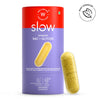 Slow Advanced N-Acetyl-Cysteine + Glycine Capsules
₹1,329 – ₹2,518
Slow Advanced N-Acetyl-Cysteine + Glycine Capsules
₹1,329 – ₹2,518