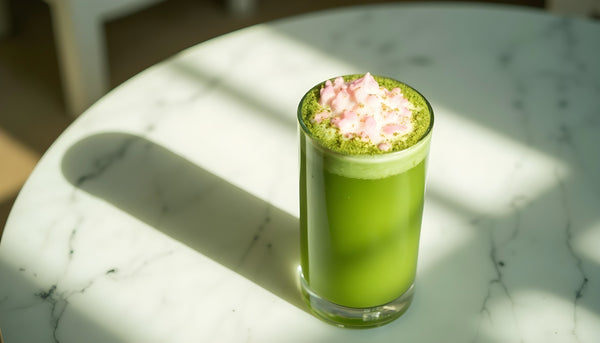
You’ve seen it, that picture-perfect, jade-green latte that fills every wellness feed. Frothy, vibrant, beautiful. But here’s the uncomfortable truth: most of what’s served under the name matcha isn’t truly matcha at all.
Behind the Instagram glow hides a world of shortcuts, sun-grown leaves, low-grade powders, artificial coloring, and bitter aftertaste masked by milk or sugar. What you’re sipping may be green, but it’s far from the green gold Japan perfected over centuries.
So, what does matcha meaning really stand for? It’s not just about color or caffeine. It’s about culture, calm, and craftsmanship, a philosophy in a cup.
Born in Shade: The Secret of 30-Day Grown Tencha Leaves
The word matcha comes from two Japanese words: “Ma” meaning ground, and “Cha” meaning tea. But its essence runs deeper than translation. For Zen monks in the 12th century, matcha was meditation fuel, a way to stay alert during long hours of mindfulness.
The true magic of matcha begins in darkness. Authentic Japanese matcha comes from shade-grown Tencha leaves, meticulously cultivated for 30 days before harvest. During this period, the plants are shielded from sunlight, forcing them to produce higher levels of chlorophyll and L-theanine, the amino acid responsible for that calm, alert feeling matcha lovers swear by.
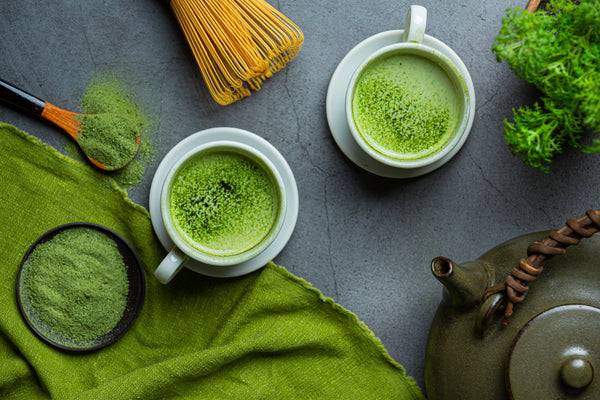
Once harvested, these Tencha leaves undergo a process as delicate as it is disciplined. They’re handpicked, steamed to halt oxidation, de-veined to remove stems, and finally stone-ground slowly into a fine, emerald powder.
This isn’t industrial grinding; it’s art. Each batch can take over an hour to produce just 30 grams of matcha. The slower the process, the less heat generated, preserving delicate amino acids and antioxidants.
That’s why true Tencha-based matcha tastes creamy, not bitter. It dissolves fully, leaving no residue. Every sip carries the integrity of nature, the devotion of growers, and centuries of Japanese craft.
Color Isn’t Quality: The Hidden Trap of “Green” Marketing
Many consumers judge matcha by its color alone. But here’s the catch: artificially bright powders may look appealing but often indicate oxidation or added dyes.
True ceremonial-grade matcha has a soft, luminous green, not neon, not dull with a silky texture and subtle umami aroma. It’s vibrant because it’s alive, not engineered.
If your matcha tastes bitter, gritty, or chalky, it’s likely culinary grade. Authentic matcha is velvety and mildly sweet, a reflection of its living chlorophyll and L-theanine content.
Understanding this nuance helps consumers honor the matcha meaning, purity over pigment.
The Science of Still Energy
Ever wondered why matcha feels different from coffee? The secret lies in its biochemical symphony.
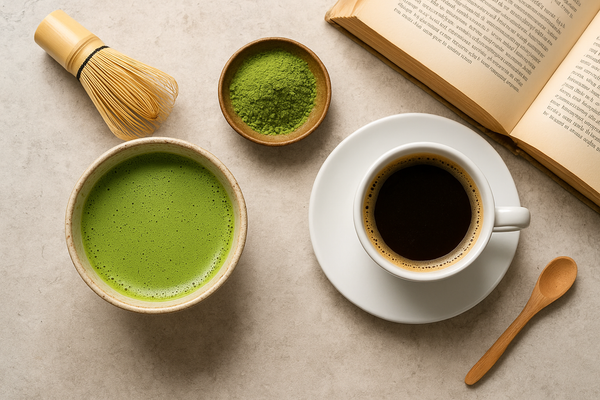
Unlike coffee’s quick caffeine spike, matcha releases energy slowly, thanks to L-theanine, an amino acid that promotes alpha brain waves, linked to relaxation and focus. Together, caffeine and L-theanine create a state scientists call “calm alertness.”
Studies show this duo enhances cognitive performance and reduces anxiety without the crash (NIH).
This shade-growing process also enhances antioxidants, especially EGCG (epigallocatechin gallate), the same compound known for supporting metabolism and cellular repair.
A study confirms that shading tea leaves significantly increases their amino acid content and antioxidant potential by 137 times as compared to standard tea (NIH).
This is the science of stillness and the heartbeat of matcha meaning.
What Science Says
Matcha and Metabolism
Beyond calm and clarity, matcha is a metabolic ally. EGCG has been shown to increases fat oxidation by up to 17% during exercise (NIH). It supports healthy lipid metabolism and helps regulate blood sugar levels, making it an excellent daily wellness habit.
That’s the hidden advantage, matcha meaning extends beyond the mind; it fuels the body too.
Matcha for Skin
When we say matcha meaning, it’s not just energy, it’s equilibrium. What begins as a mindful drink ends up showing on your skin. Matcha’s polyphenols and chlorophyll are natural detoxifiers that fight oxidative stress, while catechins like EGCG support collagen synthesis and protect skin cells from UV-induced damage.
Studies show matcha’s antioxidant load can reduce inflammation markers and prevent glycation, the process that breaks down collagen and leads to premature aging (NIH). In simpler words, it helps your skin stay firm, even-toned, and resilient.
Matcha vs. Green Tea: The Real Difference
We often use the words “green tea” and “matcha” interchangeably, but in Japan, they couldn’t be more different. Understanding this difference is the key to unlocking the true matcha meaning.
|
Feature |
Matcha |
Green Tea |
|
Form |
Finely stone-ground powder made from Tencha leaves |
Loose leaves or tea bags steeped in water |
|
Consumption |
You consume the whole leaf (more nutrients absorbed) |
You drink only the infusion (leaves discarded) |
|
Caffeine & L-Theanine Balance |
High in both → promotes calm alertness |
Moderate caffeine, lower L-theanine → mild stimulation |
|
Antioxidant Content (EGCG) |
Up to 137x higher than brewed green tea (NIH) |
Significantly lower due to infusion loss |
|
Shade-Grown Process |
Yes, 30 days before harvest to boost chlorophyll & amino acids |
No, usually grown under direct sunlight |
|
Color & Taste |
Vibrant emerald green, creamy umami, velvety texture |
Light green-yellow, mildly bitter, watery |
|
Purpose & Ritual |
Ceremonial, meditative, mindful |
Casual, everyday hydration |
|
Processing |
Hand-picked → steamed → de-veined → stone-ground |
Plucked → pan-fired or dried → rolled |
|
Nutrient Density |
Very high (vitamins A, C, E, K, minerals, polyphenols) |
Lower due to extraction limits |
|
Cultural Essence |
Rooted in Japanese tea ceremony, a philosophy of harmony and respect |
Common beverage with minimal ritual or symbolism |
That’s the quiet truth behind the cup, matcha isn’t brewed, it’s embodied. You’re not just sipping a tea; you’re taking in the concentrated vitality of an entire leaf, cultivated with patience, shade, and precision. And that’s what makes every whisk of matcha a ritual of nourishment, not just refreshment.
How to Build Your Daily Matcha Ritual
Matcha’s power lies not only in its nutrients but in its ritual. Reintroducing mindfulness into modern routines transforms it from beverage to self-care.
Here’s how to start:
Morning clarity ritual: Begin your day with ceremonial-grade matcha whisked with warm (not boiling) water. Add a scoop of Wellbeing Matcha Collagen, a blend that pairs Japanese Tencha matcha with marine collagen and hyaluronic acid to support skin and hair health.
Every sip of Wellbeing Nutrition Matcha Collagen delivers a symphony of purity and performance.
-
Single-Origin Japanese Matcha: 30-day shade-grown Tencha leaves ensure maximum L-theanine, chlorophyll, and catechin content.
-
Hydrolyzed Marine Collagen: Supports youthful skin, strong nails, and joint mobility.
-
Hyaluronic Acid: Promotes deep cellular hydration and glow.
-
Clean Label: No additives, no preservatives, no fillers. Just clean, potent nutrition in one scoop.
Afternoon reset: Replace your second coffee with matcha. Its L-theanine content prevents the post-lunch crash, keeping you focused through the afternoon.
Evening calm: Opt for lower-caffeine blends or add a few drops of coconut milk. Sip slowly. Listen to the whisk. Let each swirl mirror your breath.
Your matcha ritual becomes a rhythm of presence. In a world of instant everything, this is your moment to slow down, a small act of self-respect that defines the matcha meaning.
More Than Tea: A Philosophy in a Cup
At its core, matcha is not just a beverage, it’s a quiet rebellion against speed. It asks us to pause, whisk, and reconnect.
The patience it takes to shade-grow leaves for 30 days is the same patience matcha teaches us to bring into our lives.
True matcha meaning is this, energy without haste, luxury without excess, nature without noise.
Because in every frothy sip, you don’t just taste tea.
You taste stillness.
FAQs
1. What does “matcha” really mean?
The word “matcha” comes from Japanese, “Ma” meaning ground and “Cha” meaning tea. True matcha meaning extends beyond translation; it represents a meditative connection between energy and calm, rooted in Japanese Zen philosophy.
2. How is matcha different from regular green tea?
Unlike green tea, where you steep and discard the leaves, matcha involves consuming the whole powdered leaf. This means you absorb 100% of its nutrients, antioxidants, and chlorophyll, making it significantly more potent than brewed tea.
3. Is matcha good for skin health?
Yes. Matcha’s antioxidants, particularly EGCG, protect against free radical damage, prevent collagen breakdown, and reduce skin inflammation. Regular consumption promotes smoother texture, better hydration, and a natural glow.
4. Can matcha help with metabolism and fat loss?
Studies suggest that the catechins in matcha enhance thermogenesis, your body’s ability to burn calories. Combined with caffeine and L-theanine, matcha supports steady energy and metabolism without the crash associated with coffee.
5. What time of day is best to drink matcha?
Morning or early afternoon is ideal. Drinking matcha before a focused task or light workout can improve alertness and endurance. Avoid late-night intake due to its mild caffeine content, unless using a low-caffeine or collagen blend.
6. What’s the difference between ceremonial and culinary matcha?
Ceremonial matcha is made from young, shade-grown Tencha leaves, hand-picked for purity and whisked into a smooth, umami-rich froth. Culinary matcha, used for baking or lattes, is more bitter and lacks the depth of flavor and nutrients.
7. Which Indian brand offers authentic Japanese matcha with collagen?
If you’re looking for a brand that blends Japanese ceremonial-grade matcha with Marine Collagen, Wellbeing Nutrition’s Matcha Collagen stands out. It combines 30-day shade-grown Tencha leaves from Uji, Japan, with bioactive collagen peptides for calm energy and youthful skin — a ritual that nourishes both mind and beauty.