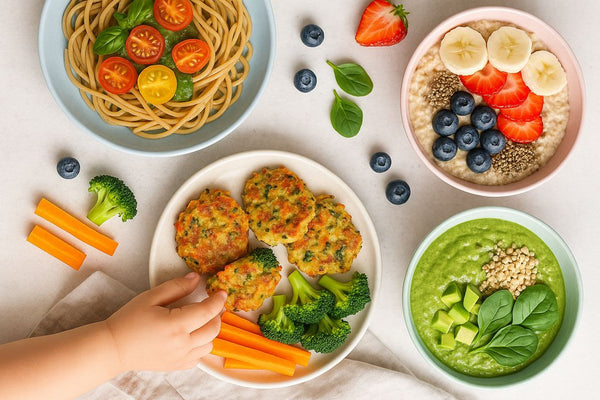
If you’ve ever chopped, sautéed and lovingly plated vegetables, only to watch your child spot one green speck and refuse the entire meal, you’re not alone.
For most parents, vegetables are the biggest challenge in kids nutrition. You know they’re essential. You know they matter for growth, immunity, and focus. Yet every meal can feel like a negotiation or worse, a standoff.
The good news? This struggle isn’t a reflection of poor parenting or a “fussy” child. It’s biology. And once you understand why kids reject vegetables and why they’re non-negotiable as good nutrition for kids, sneaking them in becomes far easier and far less stressful.
Why Do Children Reject Vegetables?

Before fixing the problem, it helps to understand it.
1. Kids Are Wired to Prefer Sweet

From an evolutionary standpoint, children are biologically programmed to prefer sweet and mild flavours (NIH). Bitter tastes, common in vegetables like spinach, broccoli, karela, and methi, activate a natural rejection response.
2. Texture Matters More Than Taste

Many children don’t dislike vegetables for flavour alone, they dislike:
-
Mushy textures
-
Fibrous bites
-
Mixed foods where textures clash
A visible vegetable can feel unpredictable to a child’s sensory system, leading to instant refusal (NIH) .
3. Pressure Backfires

Repeated instructions like “just one bite” or “finish your vegetables” create stress around food. Over time, this stress can worsen picky eating and disconnect kids from internal hunger cues.
Why Vegetables Are Essential for Nutrition for Kids

Many parents wonder if fruits, milk, and freshly cooked meals are enough for healthy growth. While these foods play an important role, they don’t fully replace what vegetables uniquely offer.
Vegetables supply a wide spectrum of nutrients that support a child’s body in ways no single food group can. They nourish the gut through natural fibers and prebiotics, strengthen immune defenses with protective antioxidants, and support brain development through minerals involved in learning and memory. They also help maintain steady energy levels by supporting balanced blood sugar, rather than quick highs and crashes (NIH).
In simple terms, nutrition for kids isn’t just calories, it’s nutrient density. Vegetables are one of the most nutrient-dense food groups for growing bodies.
Skipping them regularly can lead to gaps that even “healthy-looking” diets may miss.
Easy Ways to Sneak Vegetables in a Kid’s Plate
The goal isn’t to trick your child, it’s to change the form without changing the nutrition.
1. Blend Vegetables Into Familiar Foods

Blending removes texture resistance while keeping nutrients intact.
Try:
-
Spinach or lauki in dosa
-
Pumpkin or carrot purée in pasta sauce
-
Beetroot blended into tomato gravies
This is one of the simplest upgrades to everyday nutrition food for kids.
2. Pair Vegetables With Healthy Fats

Fat improves absorption of fat-soluble vitamins (A, D, E, K).
Examples:
-
Ghee-roasted vegetables
-
Olive oil in soups
-
Nut butters blended with veggie sauces
This small shift dramatically improves nutrition for kids, even if portion sizes are small.
3. Use Snack Time Strategically

Snacks are often less emotionally charged than meals.
Vegetable-rich snack ideas:
-
Vegetable chillas
-
Savoury muffins with carrot or zucchini
-
Paratha rolls with hidden veggies
These count as kids nutrition snacks while reducing pressure at the dining table.
4. Make Nutrition Drinks Work Smarter

Many parents wonder: are nutrition drinks good for kids?
They can be, if they’re clean, low in sugar, and made from real nutrients.
A well-formulated nutrition drink for kids can:
-
Fill micronutrient gaps
-
Support immunity and digestion
-
Help picky eaters who miss vegetables daily
This is especially helpful during growth spurts, illness, or food refusal phases.
Designed for picky eaters and growing bodies, Wellbeing Nutrition’s Kids Superfuel helps bridge everyday nutrition gaps when vegetables aren’t consistent.

Why parents trust it:
-
Supports immunity, digestion, and growth with 9gm protein, DHA, 23 vitamins and minerals
-
Free from artificial colours, preservatives, and excess sugar
-
Easy to mix into milk, smoothies, or recipes
For parents wondering which nutrition drink is best for kids or which nutrition powder is best for kids, Kids Superfuel offers clean, science-backed support, without compromising real food habits.
5. Rotate Vegetables Instead of Repeating Them

Kids don’t need large quantities of one vegetable, they need variety.
Rotate weekly:
-
Leafy greens: Spinach, fenugreek, amaranth leaves, lettuce, kale
-
Root vegetables: Carrot, beetroot, sweet potato, radish, turnip
-
Cruciferous vegetables: Broccoli, cauliflower, cabbage, Brussels sprouts
This improves overall nutrition for kids without overwhelming their palate.
6. Talk About Food Without Talking About “Health”

When parents ask how to talk to kids about nutrition, the answer is simple language.
Instead of nutrients, talk about:
-
Look at how many colours are on your plate, each colour helps your body in a different way.
-
This food helps make your body strong, so you can run, climb, and jump better.
-
These foods give you energy that lasts, not just for a little while.
-
Eating this helps you play longer without getting tired.
This builds curiosity and connection to real food nutrition for kids.
Final Takeaway
If your child doesn’t eat vegetables daily, it doesn’t mean they’re unhealthy or that you’re failing. Good nutrition for kids is built over time through:
-
Repeated exposure
-
Smart food pairing
-
Stress-free meals
-
Supportive nutrition when needed
Vegetables don’t need to be forced to be effective. With the right strategies and the right support, you can nourish your child’s growth, immunity, and confidence without turning every meal into a battle.
FAQs
1. Why do kids often refuse vegetables?
Children are biologically wired to prefer sweet flavors and may dislike the bitter taste or texture of vegetables. Pressure to eat them can backfire, making picky eating worse.
2. Are vegetables really necessary if my child eats fruits and milk?
Yes. Vegetables provide unique nutrients like fiber, antioxidants, and essential minerals, that fruits and milk alone cannot fully supply.
3. What are easy ways to sneak vegetables into meals?
Blending vegetables into familiar foods, pairing them with healthy fats, offering veggie-rich snacks, rotating different types weekly, and using nutrition drinks can make it easier for children to consume vegetables consistently.
4. Can nutrition drinks help picky eaters get enough vegetables?
Yes. A clean, well-formulated nutrition drink for kids can fill nutrient gaps, support immunity and digestion, and complement real food when children refuse vegetables.
5. Which vegetables are best for children?
A mix of leafy greens (spinach, fenugreek, amaranth), root vegetables (carrot, beetroot, sweet potato), and cruciferous vegetables (broccoli, cauliflower, cabbage) ensures variety and a wide range of nutrients.
6. How can I make vegetables appealing to my child?
Use simple language focusing on colors, strength, and energy. For example: “This food helps you play longer” or “Each color helps your body in a different way.” Engaging children positively encourages curiosity rather than resistance.
7. What makes Kids Superfuel a trustworthy nutrition drink for kids?
Wellbeing Nutrition’s Kids Superfuel contains 9g of protein, DHA, and 23 vitamins and minerals, is free from artificial colors, preservatives, and excess sugar, and blends easily into milk, smoothies, or recipes, supporting immunity, digestion, and growth for picky eaters.

Recommended Products
 Kids Superfuel | Creamy Vanilla | Nutrition Mix
₹759 – ₹1,518
Kids Superfuel | Creamy Vanilla | Nutrition Mix
₹759 – ₹1,518
 Kids Superfuel | Milk Chocolate | Nutrition Mix
₹759 – ₹1,518
Kids Superfuel | Milk Chocolate | Nutrition Mix
₹759 – ₹1,518