Did You Know? India Has Year-Round Sun. So Why Are 76% of Indians Vitamin D Deficient? The answer isn't sunscreen or office jobs, though those play a role. It's a layered biology problem that "go stand outside" will never solve. And the supplement you're already taking? You're probably getting half the benefit because of one simple mistake around vitamin D timing.
India is the world's largest producer of sunshine. Roughly 300 sunny days per year across most of the subcontinent. Ultraviolet radiation in abundance. And yet 76% of Indians are Vitamin D deficient, according to data published in the Indian Journal of Endocrinology and Metabolism. [NIH] In urban populations like Delhi, Mumbai, and Bengaluru, that number climbs toward 85-90%. Among Indian women, it touches 96% in some clinical cohorts.
Read that again. 96%. In a country where the sun never really goes away.
Something is deeply broken in the conventional advice, and it's not just "spend more time outside." The failure is biochemical, cultural, and entirely fixable. But only if you understand what's actually happening. The best time to take Vitamin D and how you take it both matter more than most people realise.

The Sun Paradox: Why Indian Skin and Indian Habits Work Against You
Here's the first thing dermatology training gets right and public health messaging gets catastrophically wrong: melanin is a natural sunscreen. Darker skin, which the majority of Indians have, requires significantly longer UVB exposure to synthesise the same amount of Vitamin D3 as lighter skin. Estimates from photobiology research suggest that a person with Fitzpatrick Type V or VI skin (common across South Asia) needs 3 to 6 times more sun exposure than a Type II skin person to produce equivalent D3.
Now layer in the reality of Indian urban life: office hours from 9 to 7, commutes in glass-windowed cars and metros (glass blocks 100% of UVB), cultural norms around sun avoidance, and the widespread use of fairness creams and sunscreens marketed aggressively across demographics. The sun is there. The vitamin D absorption timing pipeline is not.
| 76% of Indians clinically Vitamin D deficient | 3–6× more UVB exposure needed for darker skin to match lighter skin D3 output | 70% of urban Indian women are also magnesium deficient | D3 > D2 by ~87% in raising serum levels yet D2 is still widely prescribed in India |
Vitamin D Is Not a Vitamin, It's a Hormone You're Not Activating
Technically, Vitamin D is a secosteroid, a hormone precursor. When you swallow a D3 capsule or stand in sunlight to get your vitamin D absorption from sunlight, you're not getting the active form. Your liver converts it to 25(OH)D (the storage form measured in blood tests), and then your kidneys convert it again to calcitriol, the active hormone that binds to receptors in over 37 tissue types including your immune cells, heart muscle, brain, pancreatic beta cells, and gut lining.
This is why deficiency looks so confusing clinically. It doesn't give you one symptom. It gives you fatigue, frequent infections, low mood, bone aches, hair loss, and insulin resistance, because every one of those organs is quietly running low. The vitamin D benefits you should be getting are silently blocked at every step.
Indian clinicians see this constantly. It gets misattributed to anaemia, stress, thyroid issues, or "just lifestyle."
"Indian clinicians see this constantly: fatigue, hair loss, low mood, weak bones. It gets misattributed to stress or anaemia. Often it's Vitamin D, silently failing at every link of the chain."

The Fat-Soluble Secret That Makes Your Supplement Half-Useless
Vitamin D is fat-soluble. This is the entire ballgame for vitamin D absorption timing. A study in the Journal of the Academy of Nutrition and Dietetics (Dawson-Hughes et al., 2015) showed that taking Vitamin D with a fat-containing meal increases absorption by up to 32% compared to taking it on an empty stomach.
Thirty-two percent. That's the difference between being in range and staying deficient on the exact same dose.
So the question of should vitamin D be taken with food has a very clear scientific answer: yes, always with fat-containing food.
Now consider how many Indians take their Vitamin D sachet, the popular 60,000 IU weekly D3 sachet prescribed across India, dissolved in a glass of water. Or first thing in the morning on an empty stomach before chai. Or alongside a dry roti. The Vitamin D supplement is there. The absorption mechanism isn't.
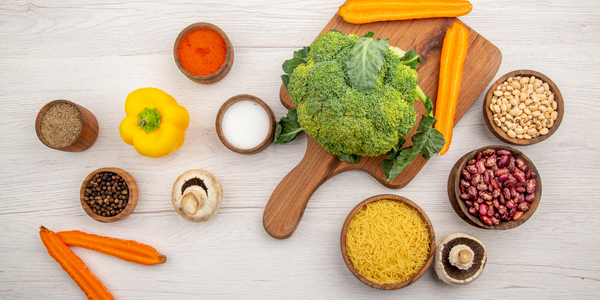
For Indian Diets Specifically: Ghee, full-fat dahi, coconut oil, groundnut chutney, sesame seeds, and whole eggs are excellent Vitamin D co-pilots. Even a small katori of full-fat curd counts. The fat doesn't need to be a large quantity 10 to 15 grams is enough to trigger chylomicron packaging and maximise absorption. Take your D3 with your largest meal of the day, not dissolved in warm water on an empty stomach.
Morning or Night? There Is a Right Answer for Indian Schedules
Vitamin D absorption timing is similar morning or evening, as long as fat is present. But here's what most people don't know about taking vitamin D at night: Vitamin D directly influences circadian clock genes called BMAL1 and Per1, essentially telling your cells it's daytime. [NIH] Taking high-dose D3 at night may subtly disrupt sleep onset, particularly at doses above 2,000 IU. This appears dose- and individual-dependent, but given that morning absorption is equally efficient, there is no good reason to take vitamin D at night.
For most Indians, the optimal window is breakfast or lunch, the two meals most likely to contain adequate fat in a traditional Indian diet. The common habit of taking the weekly D3 sachet on a Sunday morning with warm water misses both the fat co-factor and optimal vitamin D timing simultaneously.
|
Scenario |
Absorption |
Circadian Impact |
Verdict |
|
Morning with ghee, eggs, or full-fat dahi |
Optimal |
Aligns with daylight signal |
Best |
|
Lunch with a fat-containing meal |
Optimal |
Neutral to good |
Great |
|
Weekly sachet dissolved in warm water |
Reduced ~32% |
Depends on time of day |
Improve it |
|
Evening with a fatty meal |
Optimal |
May disrupt sleep at high doses |
Caution |
|
Anytime, empty stomach, no fat |
Significantly reduced |
Irrelevant, not absorbing |
Don't |
The Co-Factor Crisis: Especially Critical for India
Vitamin D requires magnesium to convert to its active form. Without adequate magnesium, you can have "sufficient" 25(OH)D on a blood test and still have chronically low active calcitriol where it matters. An estimated 70% of urban Indian women are also magnesium deficient. The combination creates a double-block in the activation pathway that no amount of D3 alone will fix.
A landmark 2018 paper in The American Journal of Clinical Nutrition (Deng et al.) showed that magnesium supplementation raised Vitamin D status in deficient individuals without changing the D3 dose at all. The conversion enzyme simply worked when magnesium was present.
Then there's Vitamin K2, the co-factor that ensures calcium (mobilised by active Vitamin D) goes into bones rather than arteries. India already carries one of the world's highest burdens of cardiovascular disease. Taking high-dose D3 without K2 over months or years may compound arterial calcification risk. The MK-7 form of K2 is the research-backed option. It's available as a supplement and costs almost nothing to add.
The Complete Stack — India Context
D3 (cholecalciferol not D2/ergocalciferol, which is still over-prescribed across India) + K2-MK7 + Magnesium glycinate or malate + a meal with at least 10g of fat. For vegetarians: lichen-derived D3 is available and effective. For K2: fermented foods or supplementation. For magnesium: pumpkin seeds, sesame, dark leafy greens, or a supplement.
The Testing Gap Nobody Talks About
Most Indian labs still flag Vitamin D sufficiency at 20 ng/mL. Most endocrinologists and functional medicine practitioners now consider 40 to 60 ng/mL the optimal range for genuine biological function, not just the absence of deficiency. There's a meaningful difference between "not rickets" and "your immune system, brain, and hormones have what they need."
Get tested. Ask specifically for a 25-hydroxyvitamin D (25-OH Vitamin D) test, not a generic "Vitamin D" panel. It is the single most informative test you can run if you're experiencing fatigue, recurrent illness, bone pain, or low mood that hasn't been explained by other workups.
Key Takeaways
-
Darker skin needs far more sun than you think. Indian skin tones require 3 to 6 times more UVB exposure to produce the same D3 as lighter skin. Outdoor time alone will not rescue most urban Indians from deficiency.
-
Always take D3 with fat never in plain water. Without dietary fat, absorption drops by up to 32%. Ghee, dahi, eggs, coconut oil, or a handful of groundnuts alongside your vitamin D3 supplement is non-negotiable. The popular habit of dissolving sachets in warm water is actively wasting the dose.
-
Morning or lunch not at night. Vitamin D influences circadian clock genes and tells your cells it's daytime. High-dose evening supplementation may disrupt sleep. Take it with your first or midday meal for optimal timing and absorption.
-
Demand D3, not D2. Cholecalciferol (D3) raises serum levels 87% more effectively than ergocalciferol (D2) yet D2 remains the default prescription across much of India. Ask your doctor specifically for D3.
-
Add magnesium and K2 they're not optional extras. Magnesium activates the enzyme that converts D3 to its usable form. K2-MK7 directs calcium to bones instead of arteries. Without these co-factors, high-dose D3 is an incomplete and potentially risky intervention.
-
Test, don't guess. Ask for a 25-OH Vitamin D blood test (₹600–₹1,200 at major labs). Target 40–60 ng/mL not the 20 ng/mL threshold your lab report calls "sufficient." The difference between those numbers is the difference between surviving and functioning.
FAQs
Q1. What is the best time to take Vitamin D for maximum absorption?
The best time to take Vitamin D is with your morning meal or lunch, provided that meal contains some dietary fat. Vitamin D is fat-soluble, meaning it requires fat to be absorbed into the bloodstream via the lymphatic system. In an Indian diet, pairing your D3 supplement with ghee, full-fat dahi, eggs, or groundnuts at breakfast or lunch is the optimal vitamin D timing strategy.
Q2. Should you take Vitamin D in the morning or at night?
Morning is strongly preferred for Vitamin D timing. Vitamin D influences circadian clock genes (BMAL1 and Per1) that signal your body it is daytime. Taking high doses, particularly above 2,000 IU, at night may subtly interfere with sleep onset. Since absorption is equally efficient in the morning when fat is present, there is no metabolic advantage to taking vitamin D at night and a potential sleep disadvantage at higher doses. Stick to breakfast or lunch.
Q3. Can you take Vitamin D at night?
Technically, you can take vitamin D at night if your evening meal contains sufficient fat, and absorption will be similar to morning doses. However, given that Vitamin D's interaction with circadian clock genes may disrupt sleep onset at higher doses, it is not recommended as a default. If your only fat-containing meal is dinner and you've been forgetting your morning dose, taking it at night with a fatty meal is still better than skipping it or taking it on an empty stomach.
Q4. Should Vitamin D be taken with food?
Yes, always. This is one of the most clinically significant and underappreciated facts about vitamin D absorption timing. Vitamin D is fat-soluble. Without dietary fat in the same meal, the vitamin cannot be packaged into chylomicrons (the transport vessels that carry fat-soluble nutrients from the gut into the lymph system). The result is dramatically reduced absorption, with studies showing up to 32% lower blood levels compared to taking it with a fat-rich meal. Never take your D3 sachet dissolved in plain water or on an empty stomach.
Q5. What are the best vitamin D rich foods and natural sources of Vitamin D?
Very few foods are naturally rich in Vitamin D. The best sources of Vitamin D from food include fatty fish (salmon, mackerel, sardines), egg yolks, beef liver, and in some countries, fortified dairy products and cereals. In India, dairy is rarely fortified with Vitamin D, so food sources alone are insufficient for most people. Mushrooms exposed to UV light are one of the few plant-based sources of Vitamin D. For vegetarians and vegans, lichen-derived vitamin D3 supplements are the most effective option. Sunlight remains the most potent source of Vitamin D, but as outlined above, Indian skin tones and urban lifestyles make reliable sun synthesis difficult without intentional, prolonged exposure.
Q6. What are the key Vitamin D benefits and why does deficiency cause so many different symptoms?
Vitamin D benefits extend far beyond bone health because Vitamin D is technically a hormone, not just a vitamin. Its active form (calcitriol) binds to receptors in over 37 tissue types including immune cells, brain tissue, heart muscle, pancreatic beta cells, and the gut lining. This is why Vitamin D deficiency presents as a cluster of seemingly unrelated symptoms: chronic fatigue, recurrent infections, low mood and depression, hair loss, bone and joint aches, poor blood sugar regulation, and slow wound healing. When Vitamin D is consistently low, essentially every major organ system underperforms quietly, which is why deficiency so frequently gets misdiagnosed as anaemia, stress, or thyroid disorders in Indian clinical settings.
Q7. What is the difference between Vitamin D2 and D3, and which should Indians take?
Vitamin D3 (cholecalciferol) is the form your skin produces when exposed to sunlight. Vitamin D2 (ergocalciferol) is derived from plant sources and fungi. Research published in the Journal of Clinical Endocrinology and Metabolism confirmed that D3 is approximately 87% more potent than D2 in raising and maintaining serum 25(OH)D levels. Despite this clear evidence, D2 remains the commonly prescribed form in India, largely due to cost and regulatory inertia. Always ask your doctor to prescribe D3 specifically. For vegetarians, lichen-derived D3 is available and equally effective.
Q8. Why is Vitamin D timing important alongside magnesium and K2?
Even perfect vitamin D timing is incomplete without its co-factors. Magnesium is required for the enzyme that converts 25(OH)D (the stored form) into calcitriol (the active hormone). Without sufficient magnesium, your blood test may show adequate Vitamin D, but your body cannot activate it. Vitamin K2 (specifically MK-7) ensures that the calcium mobilised by active Vitamin D is deposited into bones rather than into arterial walls, an important consideration given India's high cardiovascular disease burden. The complete stack is D3 + K2-MK7 + magnesium, taken with a fat-containing meal.

Recommended Products
 Bone Support Slow
₹1,119 – ₹2,238
Bone Support Slow
₹1,119 – ₹2,238
 Natural Vitamin D3
₹616 – ₹1,233
Natural Vitamin D3
₹616 – ₹1,233
 Multi + Omega for Her Slow
₹1,189 – ₹2,378
Multi + Omega for Her Slow
₹1,189 – ₹2,378
 Multi + Omega for Him Slow
₹1,189 – ₹2,378
Multi + Omega for Him Slow
₹1,189 – ₹2,378