Every Indian child has heard the same sentence:
“Eat your palak paneer. It has iron. It will make you strong.”
Somewhere between a mother’s kitchen and a school textbook, spinach became the superhero of iron, without us realising that the calcium-rich paneer in palak paneer can interfere with the absorption of iron from spinach.
I am writing this in all caps:
SPINACH WAS NEVER THE IRON KING.
And I am not saying this because spinach has no iron. In fact, it has TRUCKLOADS of iron, but not the kind of iron the body can readily use.
See, there is a difference between:
IRON PRESENT IN FOOD
AND
IRON THAT CAN BE BROKEN DOWN BY THE BODY, PASS THROUGH THE GUT WALL, AND ENTER YOUR BLOODSTREAM.
India has been trapped in the notion of counting the amount of nutrients in vegetables, fruits, and nuts, and not the amount of those nutrients that the body can recognise, digest, and use.
There Was a Mistake Made in History

In the late 1800s, a German scientist analysing spinach’s iron content reportedly misplaced a decimal point, accidentally inflating spinach’s iron numbers.
That tiny error became a giant nutrition myth.
Then came Popeye, the sailor man that we all know.
A can of spinach, and suddenly, a burst of strength that even made the love of his life admire him more.
See, that psychology was so powerful. The lie was repeated, and playing on people’s primal instincts worked so well that it became the truth of the world:
Spinach is NATURE’S IRON SUPPLEMENT.
BUT HERE IS THE BREAKDOWN OF THE SCIENCE
I would love to teach India two things:
Absorption and Bioavailability.
Most supplement brands, nutritionists, etc., use these as synonymous words as if one can be interchanged with the other.
THEY ARE NOT.
I can give you a whole PubMed explanation, but you probably wouldn’t understand it (honestly, I wouldn’t either).
But here is a very simple breakdown:
Absorption is when nutrients from food in the gut manage to surpass the gut wall and enter the bloodstream.
Bioavailability is when the nutrient enters the bloodstream in an active form, ready to be used wherever the body needs it.
Absorption is the first step, but the goal is bioavailability.
Simplest explanation, but maybe next time I’ll write a blog about this because the science behind this is complex and fascinating on its own.
But what you need to take away from this is:
You need to see not which food is high in iron, but which foods are high in bioavailable iron.
Also, No One Knows That Iron Has Two Personalities
Iron doesn’t exist in one universal form.
There are two types:
1. Heme Iron: The Easy Passenger
Heme iron is the form of iron found naturally in animal foods, where it is bound within haem, the iron-containing molecule that carries oxygen in haemoglobin and myoglobin.
This makes it easier for the body to recognise and absorb.
Found in:
-
Meat
-
Fish
-
Poultry
-
Organ meats like liver (highest in iron, but personally, I hate the taste of it)
Around 15–35% can be absorbed.
2. Non-Heme Iron: The Difficult Passenger
Non-heme iron is the form of iron found in plants and fortified foods.
Unlike heme iron, it is not bound to haem, the oxygen-carrying molecule found in animal tissues.
Found in:
Plant foods:
-
Lentils
-
Chickpeas
-
Beans
-
Tofu and tempeh
-
Spinach
-
Pumpkin seeds
-
Sesame seeds
-
Quinoa
Fortified foods:
-
Breakfast cereals
-
Some plant milks
-
Flour and grain products
Typical absorption ranges from 2-20%, depending on several factors.
The Hidden Iron Blockers Sitting On Your Plate
BLOCKER 1: Phytates (Phytic Acid)
Phytates are the storage form of phosphorus in plants.
They are found mainly in:
-
Whole grains
-
Brown rice
-
Wheat bran
-
Oats
-
Lentils
-
Chickpeas
-
Beans
-
Nuts
-
Seeds
Did you know spinach is high in phytates? But how does it affect iron?
Phytates have multiple negatively charged phosphate groups.
Iron (especially Fe²⁺ and Fe³⁺) carries a positive charge.
The opposite charges attract each other, allowing phytate to bind iron tightly, forming an insoluble complex.
This complex cannot interact with the iron transporter (DMT1) on intestinal cells.
BLOCKER 2: Oxalates (Oxalic Acid)
Oxalates are naturally occurring organic acids produced by many plants.
Foods high in oxalates include:
-
Spinach
-
Beet greens
-
Swiss chard
-
Rhubarb
-
Cocoa
-
Almonds
Oxalates can bind minerals, including iron, but their effect on iron absorption is much weaker than phytates.
Polyphenols
Polyphenols are a large family of antioxidant compounds.
Sounds great, but when it comes to iron absorption, polyphenols can chemically bind non-heme iron in the gut, forming complexes that remain poorly soluble.
Sources include:
-
Tea
-
Coffee
-
Cocoa
-
Red wine
-
Berries
-
Pomegranates
-
Apples
-
Grapes
-
Some herbs and spices
Drinking black tea with a meal can reduce non-heme iron absorption by 60–90%, depending on the amount consumed.
Good, if you have reached this far, that means you can officially understand iron as well as a nutritionist.
And just in case you need it, here’s a cheat sheet of high-iron foods both heme and non-heme and their bioavailability.


Now, In Case You Are Vegetarian
If you cannot have heme sources easily, the solution is not to eat more spinach.
It is improving absorption.
Here’s how:
Add Vitamin C
Vitamin C acts like an absorption accelerator.
A squeeze of lemon on dal.
A side of guava.
Some papaya.
The magic isn’t that papaya contains more iron than spinach.
It doesn’t.
The magic is that vitamin C helps your body capture more iron from the food already there.
The Real Iron Lesson
Don’t look for high-iron foods.
Look for high-bioavailable-iron foods, and you should be good.
If you found this useful, let me know by sharing this on your feed.
My job is to break down complex science pieces and make them understandable in a way that even a 6th-standard child can understand.

Recommended Products
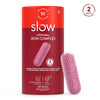 Liposomal Iron Complex |Pack of 60 Capsules
₹969 – ₹1,898
Liposomal Iron Complex |Pack of 60 Capsules
₹969 – ₹1,898
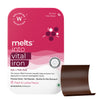 Vital Iron
₹649 – ₹1,298
Vital Iron
₹649 – ₹1,298