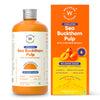
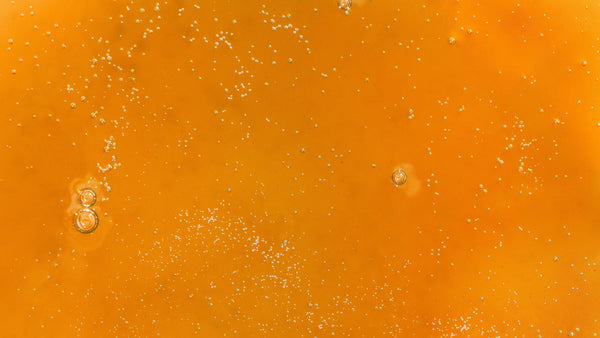
That bright orange sea buckthorn juice showing up in wellness routines? There is a reason people are paying attention.
But here is the interesting part: sea buckthorn is anything but new. It may look like a recently discovered superfood, but Hippophae rhamnoides, the plant behind those vivid orange berries, has been used for centuries across the Himalayan, Tibetan, Mongolian and Chinese regions. Traditional uses of the plant are well documented, while modern research is now catching up with its unusually rich nutritional profile. [NIH].
So, what makes this tiny berry so interesting?
For starters, sea buckthorn contains omega-3, omega-6, omega-9 and the much rarer omega-7, along with carotenoids, flavonoids, polyphenols, vitamin C, vitamin E and other bioactive compounds. [NIH].
And that is really the appeal. It is not about one magical nutrient. It is the combination of several naturally occurring compounds in one bright, intensely flavoured berry.
Sea Buckthorn Benefits: What Makes It Worth Adding?
1. It brings an unusual mix of healthy fats
Sea buckthorn is particularly notable for its fatty acid profile. It contains omega-3, omega-6, omega-9 and omega-7, with omega-7 being relatively uncommon among plant foods. The fruit and its oils also contain carotenoids, tocopherols, phytosterols and other bioactive compounds. [NIH].
2. It provides a diverse antioxidant profile
Carotenoids, flavonoids, polyphenols, vitamin C and vitamin E give sea buckthorn a particularly diverse antioxidant profile. These compounds contribute to the nutritional value of the fruit and are among the reasons it continues to attract research interest. [NIH].
3. Sea buckthorn may support skin hydration
This is one of the reasons sea buckthorn has become so popular in beauty nutrition. Its fatty acids and other bioactive compounds have been studied for their relationship with skin hydration and barrier function. Research on sea buckthorn seed oil has specifically investigated its potential role in skin hydration. [NIH].
This is also where the popular search terms sea buckthorn skin benefits and sea buckthorn oil skin benefits come from.
One important distinction, though: evidence involving sea buckthorn oil should not automatically be treated as evidence for sea buckthorn juice. Different preparations contain different concentrations and combinations of compounds.
4. It may support healthy glucose regulation
Sea buckthorn fruit has also been studied in people with impaired glucose regulation. Research using sea buckthorn fruit puree found an improvement in fasting plasma glucose compared with placebo, suggesting that the fruit may have a role worth exploring in metabolic health. [NIH].
That is an interesting finding, but it does not mean sea buckthorn is a treatment for diabetes or a substitute for dietary and medical management.
5. It has been studied for eye comfort
Sea buckthorn oil has also been investigated for dry-eye symptoms. Oral sea buckthorn oil was associated with a smaller increase in tear-film osmolarity and some improvement in dry-eye symptoms in human research. [NIH].
Again, this study used sea buckthorn oil, not juice. So, this is best understood as an interesting finding about a specific sea buckthorn preparation rather than a direct claim about sea buckthorn juice.
6. Sea buckthorn benefits for women are being studied too
The term sea buckthorn benefits for women often appear in wellness searches because of its fatty acid profile and research into women's health.
Sea buckthorn oil has been studied in postmenopausal women experiencing vaginal dryness and other symptoms associated with vaginal atrophy. The research found a beneficial effect on vaginal epithelial integrity compared with placebo. [NIH].
This is promising research, but again, the study involved sea buckthorn oil, not juice or pulp.
7. What about sea buckthorn benefits for hair?
Sea buckthorn contains fatty acids, carotenoids and antioxidant compounds that are nutritionally relevant to skin and scalp health. However, direct human evidence showing that drinking sea buckthorn juice prevents hair fall or promotes hair growth is limited. [NIH].
So rather than calling sea buckthorn a hair-growth ingredient, it is more accurate to look at it as a nutrient-rich food that can complement an overall balanced diet.
Sea Buckthorn Juice: Why Is Pulp So Popular?
Sea buckthorn berries are naturally tart, acidic and intensely flavoured. That is why sea buckthorn pulp is often diluted before drinking.
The simplest way to have it?
Sea buckthorn pulp + water + ice.
You can also dilute it with coconut water, add citrus or mix it into a smoothie.
Just check the label before buying. An unsweetened sea buckthorn pulp is a very different nutritional choice from a juice drink loaded with added sugar.
7 Easy Ways to Use Sea Buckthorn
You do not have to drink your sea buckthorn the same way every day.
1. Classic sea buckthorn drink
Dilute sea buckthorn pulp with chilled water and add ice. Simple, tart and refreshing.
2. Morning wellness drink
Mix diluted sea buckthorn pulp with water and have it alongside breakfast.
3. Citrus cooler
Combine sea buckthorn with orange or lime, chilled water and ice for a bright, tangy drink.
4. Smoothie booster
Add a small amount to a mango, pineapple, berry or coconut smoothie.
5. Salad dressing
Whisk sea buckthorn pulp with extra virgin olive oil, lemon juice, herbs and a pinch of salt.
6. Chia drink
Mix diluted sea buckthorn juice with soaked chia seeds for a simple, fibre-rich drink.
7. Mocktail-style spritz
Combine diluted sea buckthorn juice with sparkling water, mint and citrus.

When Is the Best Time to Take Sea Buckthorn?
There is no universally established best time to take sea buckthorn pulp, straw or juice.
The easiest approach is to make it part of a consistent routine. Morning with breakfast is convenient, but there is no strong evidence that morning is inherently better than another time of day.
If acidic drinks feel uncomfortable on an empty stomach, have diluted sea buckthorn juice with or after food instead.
And more is not necessarily better. Follow the serving recommendation on your product rather than treating sea buckthorn juice like an unlimited wellness shot.
Sea Buckthorn Juice: The Bottom Line
Sea buckthorn is interesting because it brings together omega-3, omega-6, omega-9 and omega-7, carotenoids, flavonoids, polyphenols and vitamins in one fruit. [NIH].
Research has explored its potential role in areas including antioxidant protection, skin health and metabolic health, while specific sea buckthorn oil preparations have also been studied for dry-eye symptoms and women's health. The evidence varies by preparation, so juice, pulp and oil should not be treated as interchangeable.
The simplest way to look at it? Sea buckthorn is a nutrient-rich food that can complement a good diet, not a cure-all.
And if that tart orange pulp has been sitting in your pantry, there is a lot more you can do with it than simply mix it with water.
FAQs
1. What is sea buckthorn?
Sea buckthorn is a bright orange berry from the Hippophae rhamnoides plant. It has a long history of use across parts of Asia and the Himalayan region and is naturally rich in fatty acids, carotenoids, flavonoids and vitamins. [NIH].
2. What are the main sea buckthorn benefits?
Its main nutritional appeal comes from its combination of omega fatty acids, carotenoids, flavonoids, polyphenols and vitamins. Research is also exploring its potential role in skin and metabolic health. [NIH].
3. What are the benefits of sea buckthorn juice?
Sea buckthorn juice or pulp provides a convenient way to consume compounds naturally found in the fruit, including fatty acids, carotenoids and polyphenols.
4. Is sea buckthorn good for skin?
Sea buckthorn contains fatty acids and antioxidant compounds relevant to skin health. Research on sea buckthorn seed oil has specifically explored skin hydration. [NIH].
5. What are sea buckthorn benefits for women?
Its nutrient profile makes it relevant to general nutrition, while specific sea buckthorn oil preparations have been studied in postmenopausal women for vaginal health. [NIH].
6. Does sea buckthorn help hair?
Sea buckthorn contains fatty acids and antioxidant compounds relevant to skin and scalp nutrition, but direct human evidence that sea buckthorn juice prevents hair fall or promotes hair growth remains limited. [NIH].
7. Is sea buckthorn high in omega-7?
Yes. Sea buckthorn is particularly notable for containing omega-7, a fatty acid that is relatively uncommon among plant foods. [NIH].
8. Can I drink sea buckthorn juice every day?
Sea buckthorn juice or pulp can be included as part of a balanced diet, provided you follow the serving recommendation of the product you are using.
9. When is the best time to take sea buckthorn?
There is no scientifically established universal best time. Morning with breakfast is a convenient option, especially if you prefer not to consume acidic drinks on an empty stomach.
10. Is sea buckthorn oil the same as sea buckthorn juice?
No. They are different preparations with different nutritional profiles.