Your skincare shelf now has competition from your supplement drawer.
Search “brighter skin” online and it will not take long before glutathione appears. There are glutathione capsules, powders, creams, effervescent tablets, liposomal formulas, collagen supplements with glutathione, and, more controversially, intravenous drips.
Glutathione has somehow gone from a molecule most people had never heard of to one of beauty’s buzziest ingredients.
So, before the algorithm convinces you to add another tablet to your routine, here is what you should actually know.
First, why glutathione?
Glutathione is not something invented by the beauty industry.
Your body already makes it.
It is composed of three amino acids, glutamate, cysteine and glycine, and is one of the body's major intracellular antioxidants. It helps cells manage oxidative stress and plays a role in several cellular defence systems. [NIH]
Then comes the reason TikTok and Instagram care about it: melanin.
Glutathione can influence pathways involved in melanin production, which is why it has become associated with brighter and more even-looking skin. [NIH]
Oral glutathione may help reduce melanin index and brighten sun-exposed skin. [NIH]
And that is how an antioxidant became a beauty ingredient.
Brightening, yes. A fairness switch, no.
This distinction matters.
Glutathione has become deeply tangled with the internet's obsession with “fair skin”. Before-and-after videos can make it look as though taking one supplement will completely change your natural skin tone.
That is not what the science says.
Glutathione may help reduce the appearance of pigmentation and support brighter, more even-looking skin, but individual responses vary and the evidence is not strong enough to promise dramatic or permanent skin-lightening. [NIH]
And no glutathione tablet replaces sunscreen.
If pigmentation is your concern, daily UV protection still belongs at the top of the routine.
So, before taking glutathione, check these 5 things
|
Check |
Why it matters |
|
How much glutathione are you actually getting? |
There is no official cosmetic RDA for glutathione. Human skin research commonly uses approximately 250 to 500 mg/day, so do not assume a mega-dose automatically means better results. [NIH] |
|
What form is it in? |
Capsule, powder, effervescent tablet or liposomal glutathione are not interchangeable buzzwords. Delivery can influence how much glutathione reaches circulation, and human evidence suggests liposomal delivery may improve systemic availability compared with conventional glutathione. [NIH] |
|
What is it paired with? |
A smart formula is not just about having the longest ingredient list. L-cystine combined with glutathione has been shown to support skin brightening and dark-spot reduction. [NIH] |
|
How clean is the formulation? |
Check the complete ingredient list. Look for the glutathione source and dose, quality testing, relevant patented or researched ingredients, plant-based suitability if important to you, no added sugar and no unnecessary artificial colours or additives. |
|
What are you expecting it to do? |
Think weeks, not “glow by Friday”. Skin research has generally looked at changes over several weeks, and results vary between individuals. [NIH] |
The better question: can you help your body make more glutathione?
Possibly, yes.
Your body does not simply wait for glutathione to arrive in a capsule. It can manufacture glutathione itself when it has access to the right building blocks. [NIH]
And two of those building blocks have become increasingly interesting: glycine and cysteine.
Enter NAC + Glycine
NAC, or N-acetylcysteine, provides cysteine availability, while glycine provides another amino acid required to make glutathione. [NIH]
Together, GlyNAC supplementation has been shown to improve glutathione status in human research, particularly in populations with lower glutathione availability. [NIH]
So there are essentially two conversations happening:
Take glutathione directly.
Or
Give the body precursors it can use to make glutathione.
They are different strategies, and both are worth understanding before choosing a supplement.
Your plate matters too
No, eating spinach is not the same as taking a clinically dosed glutathione supplement.
Still, food can contribute glutathione itself, its amino-acid building blocks and nutrients involved in antioxidant defence.

Fruits and vegetables contribute substantially to dietary glutathione intake, while foods such as asparagus, avocado and spinach naturally contain glutathione.
Vitamin C is another useful supporting nutrient and has been shown in human research to help maintain or increase glutathione concentrations. [NIH]
So, if your “glow routine” is one glutathione tablet followed by a nutritionally chaotic day, there may be room to rethink the strategy.
What about collagen supplements with glutathione?
This pairing is everywhere for a reason.
While glutathione is associated more closely with antioxidant defence and pigmentation pathways, collagen supplements have evidence for supporting skin hydration and elasticity. [NIH]
They are doing different jobs.
So, when choosing collagen supplements with glutathione, turn the pack around.
How much collagen does it contain?
How much glutathione?
Is the collagen hydrolysed?
Does it contain useful supporting nutrients?
Are the hero ingredients present at meaningful doses?
Because “12 beauty actives” on the front means very little if everything is sprinkled in at tiny amounts.
What to avoid when taking glutathione
This may be more important than what you add.
Avoid mega-dosing just because social media says more is better.
Avoid stacking multiple products containing glutathione without checking the combined dose.
Avoid assuming every effervescent or liposomal product is automatically superior. The technology and formulation need to be real, not just front-of-pack language.
Avoid treating glutathione as a substitute for SPF or dermatological treatment.
And be particularly cautious around IV glutathione used purely for cosmetic skin lightening.
What about taking glutathione side effects?
Oral glutathione appears to be generally well tolerated, but if you experience gastrointestinal discomfort such as bloating or nausea then please consult your healthcare professional.
If you are pregnant, breastfeeding, managing a medical condition or taking regular medication, speak to your healthcare professional before starting supplementation.
Because “everyone on Instagram is taking it” is not quite the same thing as a medical history.
FAQs
1. Is taking glutathione safe?
Oral glutathione appears generally well tolerated, although long-term cosmetic-use data are still developing.
2. What are the benefits of taking glutathione?
Glutathione supports antioxidant defence and may help support brighter, more even-looking skin.
3. How much glutathione should I take daily?
There is no official cosmetic RDA. Skin research commonly uses around 250 to 500 mg/day.
4. Can glutathione reduce pigmentation?
It may help reduce melanin index and the appearance of pigmentation in some individuals. [NIH]
5. How long does glutathione take to work?
Skin changes are generally studied over several weeks rather than days.
6. Are liposomal glutathione tablets or effervescent formulas better?
The delivery system can matter, but being effervescent does not automatically make a product liposomal or better absorbed. Always check the actual formulation. [NIH]
7. Can I take collagen supplements with glutathione?
Yes. They target different aspects of skin health, although you should check whether both are included at meaningful doses.
8. Can NAC + glycine increase glutathione?
GlyNAC can support the body's own glutathione synthesis and has increased glutathione status in human research.
9. What foods support glutathione levels?
Avocado, asparagus, spinach, broccoli, peppers and protein-rich foods can contribute glutathione or nutrients involved in its production.
10. What should I avoid when taking glutathione?
Avoid unnecessary mega-dosing, overlapping supplements, questionable formulations and unsupervised injectable glutathione for cosmetic purposes.
Key Takeaways
-
Glutathione is not just a beauty ingredient. Your body naturally makes and uses it as an antioxidant. NIH
-
Glutathione may support brighter, more even-looking skin, but it is not a guaranteed fairness shortcut. NIH
-
250 to 500 mg/day is commonly seen in human skin research, but there is no established cosmetic RDA. NIH
-
NAC + glycine, vitamin C and a nutrient-rich diet can also support the glutathione story. NIH
-
Check the dose, delivery system, supporting ingredients and quality standards before buying into the glow.

Recommended Products
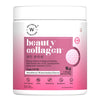 Beauty Collagen Strawberry Watermelon Flavour
₹1,799 – ₹7,196
Beauty Collagen Strawberry Watermelon Flavour
₹1,799 – ₹7,196
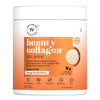 Beauty Korean Marine Collagen Peptides Mango Peach Flavour
₹1,799 – ₹7,196
Beauty Korean Marine Collagen Peptides Mango Peach Flavour
₹1,799 – ₹7,196
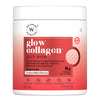 Glow Korean Marine Collagen Peptides with Liposomal Glutathione & Vitamin C | Tropical Bliss Flavour | 250g
₹1,799 – ₹7,196
Glow Korean Marine Collagen Peptides with Liposomal Glutathione & Vitamin C | Tropical Bliss Flavour | 250g
₹1,799 – ₹7,196
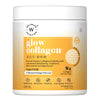 Glow Korean Marine Collagen Peptides with Liposomal Glutathione & Vitamin C | Valencia Orange Flavour | 250g
₹1,799 – ₹7,196
Glow Korean Marine Collagen Peptides with Liposomal Glutathione & Vitamin C | Valencia Orange Flavour | 250g
₹1,799 – ₹7,196
 Korean Marine Collagen - Blueberry Mint
₹1,018 – ₹1,993
Korean Marine Collagen - Blueberry Mint
₹1,018 – ₹1,993
 Marine Collagen - Valencia Orange
₹1,018 – ₹1,993
Marine Collagen - Valencia Orange
₹1,018 – ₹1,993
 Pure Korean Marine Collagen Peptides | Unflavored | Combat Signs of Ageing
₹1,619 – ₹6,476
Pure Korean Marine Collagen Peptides | Unflavored | Combat Signs of Ageing
₹1,619 – ₹6,476
 Slow Advanced N-Acetyl-Cysteine + Glycine Capsules
₹1,357 – ₹2,658
Slow Advanced N-Acetyl-Cysteine + Glycine Capsules
₹1,357 – ₹2,658