There is something fascinating about sea buckthorn. It may be trending across today's wellness world, but this bright orange berry is anything but new.
Native to cold regions of Eurasia, sea buckthorn has a long history of traditional use, including in Tibetan medicine and Himalayan communities. Traditionally valued as both a food and wellness ingredient, the berry has been part of regional practices for centuries. [NIH]
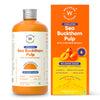
Today, it has found a new audience through sea buckthorn juice, sea buckthorn pulp and functional wellness products.
And there is plenty to be curious about.
What makes sea buckthorn different?
Sea buckthorn, scientifically known as Hippophae rhamnoides, is a small orange-yellow berry with a naturally sharp, tangy flavour.
Its berries contain a combination of carotenoids, flavonoids, phenolic compounds, tocopherols, vitamins and fatty acids. [NIH]
But if one part deserves the spotlight, it is the pulp.
Sea buckthorn pulp is particularly notable for its naturally high content of palmitoleic acid, commonly known as omega-7. The amount can vary depending on the variety and part of the fruit being studied, but this unusual fatty acid profile is one of the reasons sea buckthorn stands out among plant foods. [NIH]
That combination of bioactive compounds and its distinctive fatty acid profile gives this ancient berry a very modern nutritional appeal.

Sea buckthorn benefits worth knowing about
It may support immune health – The talk of the town
When people talk about sea buckthorn for immunity, there is more to the story than its vibrant orange colour. The berry naturally contains vitamin C, carotenoids, flavonoids, phenolic compounds and other bioactive compounds that have been investigated for their antioxidant and immunomodulatory properties.
Human research has also explored this connection. In a double-blind, placebo-controlled trial, regular consumption of sea buckthorn berries was associated with a significant reduction in C-reactive protein (CRP), a biomarker associated with inflammation.
It may support skin health
If you've heard of sea buckthorn for skin, there is genuine research behind the interest.
Sea buckthorn preparations have been studied for their potential role in supporting skin health, including skin hydration and conditions associated with dryness.
Its pulp and oil contain several naturally occurring compounds that have made sea buckthorn particularly interesting in the beauty and wellness space.
It may complement cardiovascular wellness
Sea buckthorn has also been explored for cardiovascular-related markers.
Research suggests that sea buckthorn juice may influence the susceptibility of LDL particles to oxidation, adding to interest around its potential role in heart-conscious nutrition.
This is promising nutritional research, rather than evidence that sea buckthorn can prevent or treat cardiovascular disease.
It may support a healthy inflammatory balance
Sea buckthorn contains several bioactive compounds that have been investigated for their antioxidant and inflammation-related effects.
This is one reason the berry continues to attract attention as a functional food.
It has been studied for eye comfort
Sea buckthorn oil has also been investigated for dry-eye symptoms, with research suggesting potential improvements in aspects of tear-film function and eye comfort.
It is worth remembering that these findings relate to specific sea buckthorn preparations and should not automatically be applied to every juice or pulp product.

Sea buckthorn pulp, juice or oil: what should you choose?
The form matters.
Sea buckthorn pulp contains the fleshy part of the fruit and is particularly interesting from a nutritional perspective.
Sea buckthorn juice offers a convenient way to enjoy the fruit, especially when you want something easy to add to your routine.
Sea buckthorn oil is a more concentrated preparation and has been investigated in several areas, particularly skin and eye health.
If your goal is simply to enjoy the fruit as part of your diet, pulp or pulp-based juice can be an easy place to start.
How to take sea buckthorn
You don't need an elaborate routine.
Sea buckthorn juice or pulp can be diluted with water or added to smoothies, yoghurt bowls, overnight oats and fruit bowls. Its tart flavour also works well in salad dressings, homemade sauces and other savoury preparations.
If you are using a packaged juice, check the serving size, fruit content and added sugar.
As for timing, there is no scientifically established "best time" to take sea buckthorn. Choose a time that fits naturally into your routine. If you find its acidity uncomfortable on an empty stomach, having it with or after food may be more comfortable.
Why is sea buckthorn suddenly everywhere?
Because it brings together several things' people are looking for in modern wellness foods.
It is plant-based, naturally colourful, nutrient-rich and rooted in a long traditional history.
It also has a story that goes far beyond today's wellness trend. Sea buckthorn has been used across Eurasian and Himalayan traditions for generations, while modern research is now exploring its nutritional and potential health applications. NIH/PubMed
In other words, the trend may be new. The berry isn't.
The takeaway
Sea buckthorn is more than a photogenic orange berry.
Its traditional Himalayan history, distinctive nutritional profile and versatile pulp make it an interesting addition to modern diets. Research has shown promising areas of interest around skin health, cardiovascular markers, inflammatory balance and eye comfort, although evidence varies depending on the preparation studied. [NIH]
Try it as a juice, blend the pulp into a smoothie or give your salad dressing a tart twist. Sometimes, the most interesting wellness ingredients are the ones that have been around long before the trend began.
FAQs
What is sea buckthorn?
Sea buckthorn is an orange-yellow berry from Hippophae rhamnoides, a plant with a long history of traditional use across Eurasia, including Tibetan and Himalayan regions.
What is sea buckthorn good for?
Sea buckthorn has been researched for potential benefits related to skin health, cardiovascular markers, inflammatory processes and eye comfort.
Is sea buckthorn good for skin?
Research involving sea buckthorn preparations has shown promising findings related to skin health and hydration.
What is sea buckthorn pulp?
Sea buckthorn pulp is the fleshy portion of the fruit. It contains a range of naturally occurring bioactive compounds and is particularly valued for its distinctive fatty acid profile.
Is sea buckthorn juice the same as sea buckthorn pulp?
No. Juice is a liquid preparation, while pulp refers to the fleshy portion of the fruit. Processing can affect the composition of the final product, so the two should not automatically be considered nutritionally identical.
How should I take sea buckthorn?
You can dilute sea buckthorn juice with water or add the pulp to smoothies, yoghurt, oats, fruit bowls and salad dressings.
When is the best time to take sea buckthorn?
There is no established scientifically proven best time. Take it at a time that fits your routine and consider having it with food if you find its natural acidity uncomfortable.
Can you take sea buckthorn every day?
It can be included as part of a varied diet, but the appropriate amount depends on the product and preparation. Follow the serving guidance provided for the specific product you use.