Taking an iron supplement sounds simple: take one capsule, every day, and let it do its job. But timing matters more than most people realise.
Iron absorption can be affected by what you eat, drink and supplement around the same time. So, if your iron levels are not improving as expected, the issue may not always be the supplement itself. Your routine could be getting in the way.
Here is how to get more from your iron supplement, without turning your day into a complicated supplement schedule.
First, why is iron so important?
Iron is essential for making haemoglobin, the protein in red blood cells responsible for carrying oxygen throughout the body. It also plays a role in energy metabolism and normal cellular function. (NIH)
When iron stores become low, you may notice persistent tiredness, weakness, dizziness, headaches, shortness of breath or reduced concentration. These symptoms are not exclusive to iron deficiency, so blood testing is important before assuming you need supplementation. (WHO)
Iron deficiency is particularly relevant during periods of increased need or iron loss. Menstruating women, pregnant women, infants and children are among the groups more vulnerable to iron deficiency and anaemia.

So, what is the best time to take iron?
Morning or night?
If you are searching for the best time to take iron morning or night, there is no universal rule that says iron must be taken in the morning.
What matters more is taking it at a time when it can be absorbed well and kept away from nutrients or beverages that may interfere with absorption.
For many people, morning is simply the easiest option because it can be taken before breakfast.
A simple routine: consume 1 daily before any meal, preferably in the morning, for optimal iron uptake.
Iron is generally better absorbed on an empty stomach. However, if it causes nausea, cramps or diarrhoea, taking it with a small amount of food may make it easier to tolerate. (MedlinePlus)
The biggest iron timing mistake: taking it with calcium
Calcium deserves special attention.
Calcium may interfere with iron absorption, which is why it's recommended to take calcium and iron supplements at different times. (NIH)
If you take both, keeping them around 2 to 3 hours apart is a practical approach. Experts advise waiting at least two hours between calcium, milk or antacids and an iron supplement.
This is especially useful if your morning routine includes a calcium supplement, milk-based breakfast or multivitamin containing calcium.
Tea and coffee can also get in the way
Your morning chai or coffee may be another reason to rethink your iron routine.
Caffeinated beverages and certain compounds in tea can reduce iron absorption when consumed alongside an iron supplement. Avoid caffeine-containing foods and drinks at the same time as iron. (MedlinePlus)
So instead of taking your iron capsules with your morning coffee, take them with water and have your coffee later.

Vitamin C: a useful pairing
Vitamin C is one nutrient that can work in iron's favour.
It improves the absorption of non-heme iron, the form found primarily in plant foods. (NIH)
That makes foods such as guava, amla, citrus fruits, tomatoes and bell peppers useful additions to an iron-rich diet.
You do not necessarily need a separate high-dose vitamin C supplement. Food can be a simple way to pair the two.
What if iron doesn't agree with your stomach?
This is where choosing the right formulation becomes important.
Common oral iron supplements include ferrous sulfate, ferrous gluconate and ferrous fumarate. Higher doses of supplemental iron can cause gastrointestinal effects such as nausea and constipation, while some alternative iron forms may have fewer gastrointestinal side effects. (NIH)
If conventional iron feels harsh on your stomach, you may want to discuss alternative formulations with your healthcare professional. Liposomal iron capsules are one option available in the supplement category that's gentle on the gut.
The goal is not simply to choose the highest-dose iron. It is to use an appropriate form and dose that you can take consistently.
And what about probiotics?
There is growing interest in the relationship between iron supplementation and the gut microbiome. However, probiotics should not be positioned as a guaranteed way to increase iron absorption.
If digestive comfort is a concern, a suitable probiotic may be considered as part of an overall nutrition routine, but it does not replace appropriate iron supplementation or medical advice.
Your simple iron routine
If you want to make iron timing easy, think:
Iron → before food → preferably morning → with water
Then keep it away from calcium, milk, tea and coffee.
If an empty stomach causes discomfort, taking it with a small amount of food may be more practical. Consistency matters too.
And more iron is not automatically better. 45 mg per day for adult is generally the upper limit from all sources, although healthcare professionals may prescribe higher amounts temporarily to treat iron deficiency. (NIH)
The duration of supplementation also depends on the severity and cause of deficiency. Follow the dose and duration recommended for you rather than assuming every person needs the same course.
Key Takeaways
-
The best time to take iron is generally before a meal, preferably in the morning.
-
Keep calcium and iron around 2 to 3 hours apart.
-
Avoid taking iron alongside tea, coffee and milk.
-
Vitamin C can improve absorption of non-heme iron.
-
If conventional iron causes digestive discomfort, ask about alternative forms such as liposomal iron capsules.
FAQs
1. What is the best time to take iron supplements?
Before a meal, preferably in the morning, is a practical option because iron is generally better absorbed on an empty stomach. (MedlinePlus)
2. What is the best time to take iron morning or night?
Either can work. The priority is taking it consistently and away from calcium, milk, tea and coffee.
3. What is the best time to take iron capsules?
Take them before food with water, unless your healthcare professional or product instructions recommend otherwise.
4. Can I take iron with vitamin C?
Yes. Vitamin C improves the absorption of non-heme iron. (NIH)
5. Can I take iron with calcium?
It is better to separate them because calcium may interfere with iron absorption. (NIH)
6. Can I take iron with magnesium?
There is not the same clearly established interaction with magnesium as there is with calcium. If you take both, spacing them can keep your supplement routine simple.
7. Can I take iron at night?
Yes. Night-time supplementation can work if it fits your routine and is kept away from foods and supplements that interfere with absorption.
8. Why does iron upset my stomach?
Iron can cause nausea, cramps, constipation or diarrhoea. Taking it with a small amount of food may improve tolerance. (MedlinePlus)
9. Are liposomal iron capsules better for the stomach?
Tolerance varies between individuals and formulations. Some alternative forms of iron may cause fewer gastrointestinal side effects than conventional iron salts. (NIH)
10. How long should I take an iron supplement?
There is no single duration for everyone. Treatment depends on your iron status, the cause of deficiency and your response to supplementation. Follow your healthcare professional's recommendation.

Recommended Products
 Liposomal Iron Complex |Pack of 60 Capsules
₹799 – ₹1,598
Liposomal Iron Complex |Pack of 60 Capsules
₹799 – ₹1,598
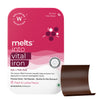 Vital Iron
₹649 – ₹1,298
Vital Iron
₹649 – ₹1,298