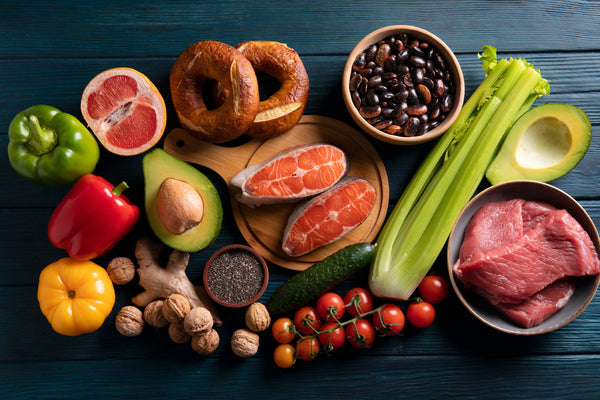
Feeling tired even after a good night’s sleep? Struggling with poor focus, mood swings, low energy, or a sluggish metabolism? More often than not, your body isn’t asking for caffeine, it’s asking for B vitamins.
The vitamin B complex is a group of eight essential, water-soluble vitamins that drive energy production, support brain and nerve function, aid red blood cell formation, and keep your metabolism running efficiently. Because your body can’t store most B vitamins, you need a steady daily supply from vitamin B complex foods or targeted supplementation when needed.
Before reaching for B complex capsules, it’s worth exploring the most effective and naturally absorbable vitamin B complex rich foods you can add to your plate for sustained energy and mental clarity.
1. Egg Yolk

Eggs are one of the most complete vitamin B complex foods, providing B2 (riboflavin), B5 (pantothenic acid), B7 (biotin), and B12(cobalamin) all crucial for energy metabolism and brain health.
They also contain choline, a nutrient that works closely with B vitamins to support memory and focus, making eggs powerful brain boosting foods.
How to incorporate:
-
Have 1–2 eggs at breakfast
-
Add boiled eggs to salads or grain bowls
-
Pair eggs with vegetables for better nutrient absorption
2. Whole Grains

Whole grains like brown rice, oats and millets are rich in B1, B3, B5, and B6, vitamins essential for converting carbohydrates into usable energy.
Unlike refined grains, whole grains retain the bran and germ, where most B vitamins are concentrated. This makes them foundational vitamin B complex rich foods for sustained energy.
How to incorporate:
-
Swap white rice for brown rice or millets
-
Start your day with oats or steel-cut porridge
-
Use whole-grain rotis or sourdough bread
3. Leafy Green Vegetables

Leafy greens are particularly high in folate, vitamin B9, vital for DNA synthesis, red blood cell formation, and hormone balance.
Low folate levels are linked to fatigue, poor focus, and mood changes, one reason greens are underrated brain boosting foods.
How to incorporate:
-
Add spinach to dals, curries, or omelettes
-
Blend moringa or kale into smoothies
-
Lightly sauté greens to preserve B vitamins
4. Legumes

Legumes such as lentils, chickpeas and beans provide B1, B6, and folate, along with plant protein and fiber that stabilise blood sugar and support gut health.
For vegetarians, legumes are some of the most important vitamin B complex foods, especially when animal foods are limited.
How to incorporate:
-
Eat dal or rajma regularly
-
Add boiled chickpeas to salads
-
Make hummus or bean-based spreads
5. Nuts and Seeds

Seeds, especially sunflower seeds, are packed with B1, B6, and niacin (B3), all essential for nervous system health and stress resilience.
These nutrients help regulate neurotransmitters, making nuts and seeds quiet but effective brain boosting foods.
How to incorporate:
-
Sprinkle seeds over salads or yogurt
-
Snack on soaked almonds
-
Add nut butters to smoothies
6. Dairy Products

Dairy is a strong source of B2 and B12, both crucial for energy production, nerve signaling, and red blood cell health.
B12 deficiency is especially common and often requires vitamin B complex rich foods or B complex capsules for correction.
How to incorporate:
-
Include curd or yogurt daily
-
Add paneer to meals
-
Choose fermented dairy for better absorption
7. Fish

Fatty fish are rich in B3, B6, and B12, along with omega-3 fats that amplify brain benefits.
This combination makes fish one of the most powerful brain boosting foods, supporting memory, mood, and cognitive performance.
How to incorporate:
-
Eat fatty fish 2–3 times a week
-
Add grilled fish to salads
-
Pair with vegetables for a nutrient-dense meal
8. Poultry and Lean Meats

Chicken and lean meats are excellent sources of B3, B6, and B12, which support muscle function, metabolism, and nervous system repair.
They’re especially helpful during periods of high stress, intense workouts, or recovery phases.
How to incorporate:
-
Include lean chicken in lunch or dinner
-
Opt for slow-cooked preparations
-
Combine with whole grains for balanced energy
9. Mushrooms

Mushrooms are unique plant-based sources of riboflavin (B2), niacin (B3), and pantothenic acid (B5), nutrients essential for cellular energy and detox pathways.
They’re a great addition to vegetarian vitamin B complex foods lists.
How to incorporate:
-
Add mushrooms to stir-fries
-
Use them in soups or gravies
-
Pair with healthy fats to improve absorption
10. Bananas

Bananas are rich in vitamin B6, which plays a major role in neurotransmitter production, hormone regulation, and mood balance.
They’re quick, accessible vitamin B complex rich foods, especially useful during stress or fatigue.
How to incorporate:
-
Eat as a snack
-
Blend into smoothies
-
Add to oatmeal or yogurt bowls
Do You Still Need B Complex Capsules?
While vitamin B complex foods form the foundation of good health, modern lifestyles often increase B vitamin needs:
-
Chronic stress burns through B vitamins faster
-
Cooking and food processing reduce B content
-
Gut absorption varies between individuals
In such cases, high-quality B complex capsules can help bridge nutritional gaps, especially for B12, folate, and B6.
Final Takeaway
B vitamins don’t shout for attention, but when they’re missing, your body feels it everywhere: energy, brain, mood, metabolism, and immunity.
By regularly including these vitamin B complex rich foods, you support your body’s daily biochemical processes naturally. Think of them as quiet, consistent brain boosting foods that keep your system running smoothly, day after day.
Food first and then supplementation when needed. That’s how B vitamins truly work.
FAQs
1. What are the best vitamin B complex foods to eat daily?
Some of the best vitamin B complex foods include egg yolk, whole grains, leafy green vegetables, legumes, nuts and seeds, dairy products, fish, lean meats, mushrooms, and bananas. These foods provide a broad spectrum of B vitamins that support energy production, brain health, and metabolism when eaten consistently.
2. Why is vitamin B complex important for energy and brain function?
The vitamin B complex helps convert food into usable energy, supports neurotransmitter production, maintains nerve health, and aids red blood cell formation. Without enough B vitamins, the brain and nervous system slow down, leading to fatigue, poor focus, and mood changes.
3. Can I get all my B vitamins from food alone?
Many people can meet their needs through vitamin B complex rich foods, especially with a balanced diet. However, factors like chronic stress, digestive issues, restricted diets, aging, and food processing can increase requirements, making B complex capsules useful for filling nutritional gaps.
4. Which vitamin B complex foods are best for vegetarians?
For vegetarians, key vitamin B complex foods include whole grains, legumes, leafy greens, nuts and seeds, dairy products, mushrooms, and bananas. Since vitamin B12 is mostly found in animal foods, vegetarians may need fortified foods or B complex capsules to maintain optimal levels.
5. Do vitamin B complex foods help improve focus and mental clarity?
Yes. Many vitamin B complex rich foods support brain health by aiding neurotransmitter synthesis, reducing oxidative stress, and supporting nerve signaling. Foods like eggs, leafy greens, nuts, seeds, fish, and whole grains are particularly effective brain boosting foods for focus and cognitive performance.
6. When should you consider taking B complex capsules?
B complex capsules may be helpful if you experience ongoing fatigue, high stress, poor concentration, low appetite, digestive issues, or follow a vegetarian or restrictive diet. They are also commonly recommended when blood tests show low B12, folate, or B6 levels.
7. How often should vitamin B complex rich foods be consumed?
Because B vitamins are water-soluble and not stored in the body, vitamin B complex rich foods should be consumed daily. Regular intake ensures consistent energy production, stable mood, better metabolism, and long-term nervous system support.