Glowing skin trends come and go.
One year it is collagen coffee. The next, it is green powders, skin smoothies or expensive serums that promise everything.
But every once in a while, an ingredient quietly earns attention because people keep coming back to it.
Sea buckthorn is one of those ingredients.
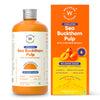
This bright orange berry has been used for centuries, but recently it has become a favourite in the world of beauty-from-within. And for good reason. Sea buckthorn pulp and juice naturally contain vitamin C, carotenoids, antioxidants and healthy fats that may support skin hydration and overall skin health. [NIH]
So, is sea buckthorn good for skin?
The short answer is: yes, especially if you think of good skin as hydrated, healthy and resilient skin rather than chasing overnight miracles.
Let's break down why.
Why everyone is suddenly talking about sea buckthorn for skin
Some ingredients become popular because of marketing.
Sea buckthorn is different.
It is naturally packed with nutrients, has a vibrant colour that comes from plant compounds called carotenoids, and contains an unusual fatty acid called Omega-7, which is particularly abundant in sea buckthorn pulp. [NIH]
And here's the interesting part.
Unlike many beauty ingredients that are applied on the skin, sea buckthorn is increasingly being explored as a drinkable beauty ingredient.
Because sometimes, glowing skin starts in the kitchen, not in the skincare aisle.
Sea buckthorn skin benefits worth knowing
1. It may help support skin hydration
One of the most interesting findings from human studies is that people who consumed sea buckthorn juice experienced improvements related to skin hydration and skin barrier function. [NIH]
What does that mean in real life?
Skin that feels less dry, less tight and more comfortable.
Because great skin is not just about glow. It is about keeping moisture where it belongs.
2. It delivers antioxidants
Sea buckthorn naturally contains vitamin C, flavonoids and carotenoids. [NIH]
Think of antioxidants as your body's support team.
They help protect cells from everyday stress caused by things like pollution, sunlight and modern lifestyles.
No, sea buckthorn is not a replacement for sunscreen.
But adding antioxidant-rich foods to your routine is always a smart move.

3. It contains Omega-7, the lesser-known fatty acid
You've probably heard of Omega-3.
But sea buckthorn pulp is one of the few natural sources of Omega-7. [NIH]
That is one reason sea buckthorn has become such an interesting ingredient in beauty and wellness circles.
It is one of those nutrients most people have never heard of, yet it is naturally found in this small berry.
4. It is a beauty habit that feels easy
Let's be honest.
Most wellness routines fail because they are too complicated.
Sea buckthorn can fit into real life.
A small serving of sea buckthorn juice mixed with water in the morning.
A smoothie addition.
A refreshing mocktail.
A quick shot before breakfast.
Sometimes the best habits are the simplest ones.
5. It is beauty from within
There is something refreshing about supporting your skin through everyday choices.
More sleep.
Better hydration.
More colourful foods.
And perhaps a little sea buckthorn.
Because healthy-looking skin is rarely about one product. It is usually a collection of small habits that add up over time.
What makes sea buckthorn pulp special?
Not all sea buckthorn products are exactly the same.
The pulp, which is the soft, juicy part of the berry, is particularly rich in carotenoids and Omega-7. [NIH]
That is why sea buckthorn pulp and juice are becoming increasingly popular in beauty supplements and wellness drinks.
Think of it as the "golden part" of the berry.

Lifestyle tip: Sea buckthorn has a naturally tangy taste, so many people enjoy it diluted.
Sea buckthorn skin care: drink it or apply it?
People often search for:
-
How to use sea buckthorn oil for skin
-
Sea buckthorn oil for skin
-
Sea buckthorn skin care
Both approaches can have a place.
Topical sea buckthorn oil is found in many skincare products.
But if you want an inside-out approach, sea buckthorn pulp or juice can be a practical option too.
Think of it this way:
Skincare supports the surface. Nutrition supports the foundation.
Both matter.
Key takeaways
-
Yes, sea buckthorn is good for skin, especially for hydration support.
-
Sea buckthorn pulp is naturally rich in antioxidants and Omega-7.
-
Drinking sea buckthorn juice is an easy beauty habit.
-
Healthy skin comes from small daily choices, not quick fixes.
-
Sea buckthorn works best as part of an overall healthy lifestyle.
The bottom line
The beauty world often looks for complicated answers.
Sea buckthorn reminds us that sometimes the simplest ideas are the most interesting.
A bright orange berry.
A small daily habit.
And a gentle reminder that good skin is built from the inside out.
If your routine already includes good food, enough water, sleep and sun protection, adding sea buckthorn pulp or juice could be one more easy step toward healthy, glowing skin.
FAQs
1. Is sea buckthorn good for skin?
Yes. Sea buckthorn may support healthier-looking skin, particularly when it comes to hydration and maintaining the skin barrier. Human studies on sea buckthorn juice have found improvements in measures related to skin hydration after regular consumption. [NIH]
2. Can I drink sea buckthorn juice daily?
Yes, sea buckthorn juice can be included as part of a daily routine if the product is intended for regular consumption. There is no need to overdo it. Follow the serving size recommended on the product, especially because sea buckthorn juice can be naturally tart and concentrated.
3. What is special about sea buckthorn pulp?
Sea buckthorn pulp is particularly interesting because it naturally contains Omega-7, carotenoids, vitamin C and other plant compounds. Omega-7 is especially abundant in the pulp, making it different from many other fruits and berries.
4. Does sea buckthorn help with dry skin?
It may help support skin hydration. Human studies looking at sea buckthorn juice have found improvements in measures related to the skin's ability to retain moisture. [NIH] Think of it as nutritional support for your skin, rather than a replacement for your moisturiser.
5. Is sea buckthorn only good for skin?
No. Sea buckthorn has a broad nutritional profile, which is why it is used across food, beauty and wellness products. Its berries contain vitamin C, carotenoids, flavonoids, fatty acids and other naturally occurring compounds. Skin is simply one of the areas where researchers are beginning to explore its potential benefits.
6. Is sea buckthorn oil good for skin?
Sea buckthorn oil is commonly used in skincare because it contains fatty acids and antioxidant compounds. However, sea buckthorn oil for skin and drinking sea buckthorn juice are two different approaches. Evidence from studies on drinking juice should not automatically be applied to topical oil, and vice versa.
7. Can I add sea buckthorn juice to smoothies?
Absolutely. If you find the natural tartness a little strong, add a serving to a smoothie with berries, yoghurt, banana or citrus fruits. You can also simply dilute it with water for an easy morning drink. The goal is to make it enjoyable enough to become a habit.
8. Does sea buckthorn brighten skin?
Sea buckthorn contains vitamin C, carotenoids and other antioxidant compounds that can support healthy-looking skin. However, it should not be considered a skin-lightening treatment. If your goal is brighter-looking skin, think of sea buckthorn as one part of a bigger routine that includes good nutrition, adequate sleep, hydration and daily sun protection.
9. What does sea buckthorn taste like?
Sea buckthorn has a naturally tart, tangy and slightly citrusy flavour. It can be quite sharp on its own, which is why many people prefer it diluted with water or mixed into smoothies. For a refreshing option, try sea buckthorn juice with chilled water, mint and a squeeze of lime.