Your skin, gut, eyes, heart and immune system have very little in common. So why do scientists keep studying the same tiny orange berry for all of them?
At first glance, it doesn't make much sense. Most nutrients have one headline benefit. Calcium is associated with bones. Vitamin C is known for immunity. Lutein is linked to eye health.
But sea buckthorn refuses to fit into just one category.
Researchers have explored it for skin hydration, gut health, cardiovascular wellness, metabolic health, eye comfort and even exercise recovery. That doesn't mean it's a miracle ingredient. It means it works differently.
Instead of relying on a single "hero nutrient," sea buckthorn contains a naturally occurring network of over 190 bioactive compounds that support multiple biological processes happening inside your body every single day.
Let's find out.
What is sea buckthorn?
If you're new to sea buckthorn, think of it as one of nature's most resilient berries.
The bright orange sea buckthorn berry grows naturally across cold, mountainous regions, including the Himalayas. Living in such an extreme environment means surviving freezing winters, intense sunlight, strong winds and low oxygen levels. Over thousands of years, the plant adapted by producing an extraordinary collection of protective compounds to defend itself.
Those same compounds are what make the sea buckthorn fruit nutritionally unique.
Depending on how it's processed, the berry becomes different products.
-
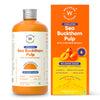
Sea buckthorn juice is made primarily from the fruit pulp and is naturally rich in vitamin C and plant polyphenols.
-
Sea buckthorn pulp contains fibre along with many of the berry's naturally occurring nutrients.
-
Sea buckthorn oil is extracted from either the fruit or the seeds, providing healthy fatty acids and fat-soluble antioxidants.
If you'd like to learn more about the berry itself, how it's traditionally used and whether you can consume it every day, read our guide on Can I Take Sea Buckthorn Daily?
For now, let's answer the question everyone really wants to know.
Why Can One Berry Support So Many Parts of the Body?
Here's something most articles never explain.
Your body isn't organised by ingredients. It's organised by biology. Your skin doesn't ask for "skin vitamins." Your heart doesn't ask for "heart nutrients."
Instead, every organ in your body is built from the same basic components. Every cell has an outer membrane. Every cell produces energy. Every cell needs protection against oxidative stress. Every cell communicates using chemical signals. Support these shared biological systems, and multiple organs may benefit at the same time.
That's exactly why sea buckthorn has attracted so much scientific interest.
Rather than acting through one pathway, its nutrients participate in several normal physiological processes happening simultaneously. Think of building a house. You don't just need bricks. You need cement, steel, wiring, plumbing and insulation working together.
Similarly, your body doesn't depend on a single nutrient. It depends on hundreds of compounds working as a team.
That's where sea buckthorn stands apart. Instead of delivering one standout ingredient, it provides an entire nutritional toolkit.

What Does Sea Buckthorn Do?
Before we talk about benefits, let's zoom in. Every second, millions of your cells are repairing themselves. Old cell membranes are replaced. Proteins are rebuilt. Collagen is continuously produced. Free radicals generated during normal metabolism are neutralised.
This maintenance never stops.
The nutrients you consume simply provide the raw materials your body uses to carry out these everyday tasks. For example, healthy fatty acids contribute to the structure of cell membranes, helping maintain their flexibility and integrity. Vitamin C acts as an essential cofactor for enzymes involved in collagen synthesis, a process your body performs continuously rather than occasionally.
Carotenoids and vitamin E help protect cell membranes from oxidative damage, while polyphenols interact with the gut microbiome, producing metabolites that researchers continue to investigate for their role in overall health.
None of these actions happen in isolation.
Together, they help explain why sea buckthorn uses extend far beyond being "just another antioxidant." Instead of targeting one organ, it supports several fundamental biological processes that different organs rely on every day. And that's exactly why scientists continue to study it across such a wide range of health areas.
1. Is Sea Buckthorn Good for Skin?
When most people think about skin health, they think about collagen. But collagen is only part of the story. Your skin's first and most important job isn't to look good. It's to act as a barrier.
Every day, this barrier works like a protective wall. It keeps moisture locked inside while preventing pollutants, irritants and microbes from entering your body. But constant exposure to sunlight, pollution, dry weather and ageing gradually weakens this barrier.
That's where sea buckthorn becomes interesting.
Unlike many fruits, it naturally contains Omega-7 (palmitoleic acid), a fatty acid that's also found in small amounts in human skin. Omega-7 contributes to the lipid layer that helps maintain skin hydration and barrier integrity. Simply put, it helps reinforce the "mortar" that holds your skin cells together (NIH).
At the same time, the sea buckthorn berry provides vitamin C, which is essential for collagen production. Your body cannot build stable collagen fibres without it. It also contains carotenoids and vitamin E, two antioxidants that help protect skin cells from oxidative stress caused by UV exposure and environmental pollutants.
This combination explains why is sea buckthorn good for skin is one of the most researched questions surrounding the berry. Rather than acting through one ingredient, it supports multiple biological processes that healthy skin depends on.

2. Your Gut Does More Than Digest Food
Your digestive system isn't just responsible for breaking down meals.
It also acts as one of your body's largest protective barriers. The lining of your intestine is only one cell thick, yet it decides what nutrients enter your bloodstream and what stays out. Maintaining this barrier is essential for normal digestive function.
Research suggests that the polyphenols naturally present in sea buckthorn fruit interact with beneficial gut bacteria. These bacteria transform the plant compounds into smaller metabolites that may influence gut health in different ways (NIH). The berry also contains naturally occurring fibre and healthy fats, both of which contribute to a balanced digestive environment.
This is why many studies investigating sea buckthorn juice benefits don't just look at digestion. They also explore changes in the gut microbiome, the diverse community of microorganisms living inside your intestines.
3. Your Heart Relies on Healthy Cell Membranes Too
When people hear the word "heart health," cholesterol usually gets all the attention. But every heartbeat depends on healthy cells.
Heart muscle cells are surrounded by membranes made largely from lipids. These membranes allow electrical signals to travel efficiently, helping your heart contract in a coordinated rhythm.
Sea buckthorn naturally contains a mixture of Omega-3, Omega-6, Omega-7 and Omega-9 fatty acids, along with plant sterols and flavonoids.
Plant sterols have been studied for their role in supporting healthy cholesterol metabolism, while flavonoids contribute to maintaining healthyblood vessels by helping protect them from oxidative stress (NIH).
4. Your Eyes Are Constantly Fighting Light
Here's something most people don't think about.
Every time light enters your eyes, tiny amounts of oxidative stress are produced. Normally, your body has antioxidant systems that help neutralise this damage.
The bright orange colour of sea buckthorn comes from carotenoids such as beta-carotene and zeaxanthin. These pigments originally evolved to protect the berry from intense ultraviolet radiation in high-altitude environments.
Interestingly, similar carotenoids accumulate naturally in the human retina. Researchers continue to investigate how dietary carotenoids contribute to long-term eye health, which is one reason sea buckthorn continues to receive scientific attention (NIH).

5. Your Immune System Needs More Than Vitamin C
Many people associate sea buckthorn juice with vitamin C. And it's true, sea buckthorn is naturally rich in this important vitamin. But immunity isn't powered by one nutrient alone.
Your immune system depends on healthy barriers, balanced inflammation, adequate antioxidant protection and proper communication between immune cells. That's why researchers often study nutrients as combinations rather than in isolation.
Alongside vitamin C, sea buckthorn provides vitamin E, carotenoids, flavonoids and polyphenols, each contributing to different aspects of normal immune function (NIH). Rather than "boosting immunity," these nutrients help support the biological systems your immune cells already rely on.
6. Why Scientists Keep Talking About Oxidative Stress
You'll often come across the phrase "oxidative stress" while reading about sea buckthorn. But what does it actually mean?
As your cells produce energy, they also generate unstable molecules called free radicals. In small amounts, they're completely normal. Problems arise when free radicals are produced faster than your body's antioxidant defences can neutralise them.
This imbalance is called oxidative stress. It doesn't happen only because of ageing.
Pollution, smoking, UV radiation, poor sleep, psychological stress and even intense exercise can increase oxidative stress.
That's why antioxidant-rich foods have become such an important focus of nutrition research. Rather than eliminating free radicals altogether, antioxidants help maintain a healthy balance. Sea buckthorn naturally contains several antioxidant compounds, including vitamin C, vitamin E, carotenoids, flavonoids and polyphenols (NIH).
Instead of relying on one antioxidant, the berry delivers multiple compounds that work through different pathways. This diversity is one of the reasons researchers continue to investigate what does sea buckthorn do beyond individual health claims.
The Bottom Line
The question isn't simply "What is sea buckthorn good for?"
A better question is: Why does one small berry continue to appear in research across so many areas of health?
The answer lies in its complexity.
Unlike ingredients that depend on one headline compound, sea buckthorn naturally delivers more than 190 bioactive compounds, including healthy fatty acids, carotenoids, vitamins, flavonoids and polyphenols. Together, they participate in the everyday biological processes that help your body maintain healthy skin, support the gut, protect cells from oxidative stress and keep countless systems functioning normally.
That's why sea buckthorn uses continue to expand, from functional foods and sea buckthorn juice to skincare and nutritional supplements.
Nature didn't design this berry to solve one problem. It designed it to survive one of the harshest environments on Earth. Its remarkable nutritional profile is simply the result of that survival.
Key Takeaways
-
Sea buckthorn contains over 190 bioactive compounds, not just one active ingredient.
-
It's one of the few fruits to naturally provide Omega-3, 6, 7 and 9.
-
Its nutrients support cell repair, collagen production and antioxidant defence.
-
Omega-7 helps maintain a healthy skin barrier and hydration.
-
Polyphenols interact with the gut microbiome to support digestive health.
-
Carotenoids help protect cells from oxidative stress caused by UV rays and pollution.
-
Its benefits come from the synergy of multiple nutrients, not a single "super compound."
-
Sea buckthorn supports multiple body systems because many organs rely on the same fundamental biological processes.
Frequently Asked Questions
What is sea buckthorn good for?
Sea buckthorn is best known for supporting skin health, gut health, antioxidant defence and overall wellness due to its naturally occurring omega fatty acids, vitamin C, carotenoids, polyphenols and flavonoids.
What does sea buckthorn do?
Rather than acting through one mechanism, sea buckthorn provides multiple bioactive compounds that contribute to normal biological processes such as collagen production, maintaining healthy cell membranes and protecting against oxidative stress.
Is sea buckthorn good for skin?
Yes. Its combination of Omega-7, vitamin C, vitamin E and carotenoids has made sea buckthorn a popular ingredient in both nutritional supplements and skincare products.
How do I drink sea buckthorn juice?
Most people dilute sea buckthorn juice with water or blend it into a smoothie, since it's naturally tart. A daily serving of around 15–30 ml is typical, though this varies by product concentration.
What are the sea buckthorn juice benefits over eating the fruit fresh?
Fresh berries are hard to find outside Ladakh and the Himalayan belt, so juice offers a more practical, shelf-stable way to get the vitamin C, polyphenol and carotenoid content without needing access to the fresh fruit.
Are there sea buckthorn side effects to know about?
Mild digestive upset is the most commonly reported issue, usually from taking it on an empty stomach or exceeding the recommended dose. Its vitamin K content also means anyone on blood-thinning medication should check with a doctor first.
How much sea buckthorn should I take daily?
Juice is typically taken at 15–30 ml a day, while oil doses usually fall between half a teaspoon and a teaspoon, depending on concentration. Following the specific product's label is more reliable than a single universal number.
Is Himalayan sea buckthorn different from other sources?
Himalayan and Ladakhi sea buckthorn grows at high altitude in harsh, cold conditions, which is generally associated with higher concentrations of active compounds in the berry. Most sea buckthorn sold in India is sourced from this belt.
What's the difference between sea buckthorn oil and sea buckthorn juice?
Juice is pressed mainly for the water-soluble content: vitamin C, polyphenols and is usually taken internally. Oil concentrates the fat-soluble compounds, particularly omega-7 and carotenoids, and is used both internally and topically depending on the product.