


You've been taking your probiotic capsules every morning. Nothing's changed. That's not because probiotics don't work. It's because you've been sending in workers without sending in food.
The Problem: Bacteria Without Fuel
Most people ask why we need probiotics and stop there. They buy a bottle, take one a day, and expect a rebalanced gut in a few weeks. But probiotic strains, whether from capsules or curd, are living organisms. They need something to eat once they reach your colon. If there's nothing there for them, they pass through and die off, and you're back to square one.
This is the part most labels don't explain. Why are probiotics important as a category isn't in question. Bacteria like Lactobacillus and Bifidobacterium genuinely help with digestion, immunity, and even mood regulation through the gut-brain axis. The question is whether the bacteria you're taking actually survive long enough to do any of that. And survival depends almost entirely on fiber.
The Science: Fiber Is the Food, Bacteria Are the Workers
Here's the mechanism most people never hear. Prebiotic fiber, found in foods like onions, garlic, bananas, oats, and legumes, isn't digested by your stomach or small intestine. It travels intact to your large intestine, where gut bacteria ferment it (NIH).
That fermentation produces short-chain fatty acids, mainly butyrate, acetate, and propionate. These compounds are the actual currency of gut health. Butyrate feeds the cells lining your colon, keeps the gut barrier tight, and lowers inflammation throughout the body.
So when someone asks why probiotics are good for you, the honest answer is: the bacteria themselves aren't doing much good directly. It's what they produce when they're fed properly that matters. A probiotic without fiber is a factory without raw material. It can exist, but it can't produce anything (NIH).

This also answers how to know if you need probiotics in a more useful way than most quizzes do. If your diet is already fiber-rich, chances are your resident bacteria are already thriving and multiplying on their own. Supplementation becomes more relevant when fiber intake is low, after a course of antibiotics, or during high stress, when gut diversity typically drops.

There's also a common misunderstanding buried in how much probiotics per day searches. More CFUs (colony-forming units) doesn't mean more benefit if those bacteria have nothing to ferment.
A prebiotic probiotic tablet, one that combines live strains with a fiber source like inulin or FOS (fructooligosaccharides), works differently. It delivers the bacteria and their food source together, which is closer to how fermentation happens in a fiber-rich diet (NIH).

The Solution: Feed Before You Supplement
If you're wondering do I need a probiotic supplement, the more useful first question is whether your fiber intake can support the bacteria you already have. Start there.
How to get probiotics naturally: fermented foods like curd, kanji, idli batter, and pickled vegetables all contain live cultures. These are a reasonable daily source for most people, though the strain diversity and CFU count are inconsistent compared to a formulated capsule.
How to take probiotics if you're supplementing: consistency matters more than timing. Taking them at the same time each day, ideally with a meal that contains some fiber, gives the bacteria a better chance of surviving stomach acid and reaching the colon intact.
How to take prebiotics and probiotics together for actual results: pair your probiotic capsules with a fiber source at the same meal. This can be dietary (oats, banana, dal) or a dedicated fiber supplement if your diet consistently falls short. The combination is what determines whether the bacteria colonize or simply transit through.
As for do you need to take probiotics every day, most clinical research on probiotic strains uses daily dosing over 4 to 12 weeks before showing measurable changes in gut markers (NIH). Sporadic use rarely shows the same effect, mainly because gut bacterial populations reset quickly without consistent reinforcement, both from the strains and the fiber that sustains them.
Key Takeaways
-
Probiotic bacteria need prebiotic fiber to survive and multiply once they reach the colon. Without it, most of the dose passes through unused.
-
The real benefit of gut bacteria comes from short-chain fatty acids like butyrate, produced only when fiber is fermented.
-
Most Indian diets fall short of daily fiber needs by 10 to 15 grams, which is often the actual reason probiotic supplements feel ineffective.
-
A prebiotic probiotic tablet or a probiotic taken alongside a fiber-containing meal outperforms a probiotic taken alone.
-
Consistency, not dosage size, is what drives results. Daily use over several weeks is what most research is based on.
-
If your diet already includes fermented foods and enough fiber, you may not need a separate supplement at all.
Conclusion
Probiotic supplements are not the finish line, they're one half of a two-part system. The other half, prebiotic fiber, is the part almost nobody talks about on the label. If you've been taking a probiotic and wondering why nothing's shifted, the answer probably isn't the strain count. It's what you're feeding it.
FAQ Section
Why are probiotics important?
Probiotics help maintain the balance of bacteria in your gut, which affects digestion, immune function, and even mood through the gut-brain axis. Their importance depends on whether they can actually survive and colonize, which is where fiber intake becomes relevant.
Why do we need probiotics?
We need a diverse population of gut bacteria to break down fiber into short-chain fatty acids like butyrate, which support gut lining health and reduce systemic inflammation. Diet, stress, and antibiotic use can all disrupt this balance, making probiotics useful for restoring it.
Do I need a probiotic supplement?
Not necessarily. If your diet already includes fermented foods and adequate fiber, your gut bacteria may already be self-sustaining. Supplementation is more useful after antibiotics, during high stress, or when fiber intake is consistently low.
How do I know if I need probiotics?
Common signs include irregular digestion, bloating, recent antibiotic use, or a diet low in fiber and fermented foods. A consistently low-fiber diet is often the clearest indicator that gut bacteria diversity has dropped.
How much probiotics per day should I take?
Most clinical studies use doses between 1 billion and 10 billion CFUs daily, though this varies by strain and purpose. Higher CFU counts aren't automatically better if fiber intake to sustain those bacteria is insufficient.
How do I get probiotics naturally?
Fermented foods like curd, kanji, idli batter, and pickled vegetables all contain live bacterial cultures. These are a reasonable daily source, though strain diversity is less predictable than a formulated supplement.
How do I take probiotics for best results?
Take them consistently, ideally with a meal that contains some fiber, so the bacteria have a food source once they reach the colon. Daily use over 4 to 12 weeks is what most research is based on.
Do you need to take probiotics every day?
Daily use tends to produce more consistent results than occasional use, since gut bacterial populations shift quickly without regular reinforcement. Most clinical trials on probiotic strains use daily dosing schedules.
How do I take prebiotics and probiotics together?
Pair a probiotic, whether from food or a capsule, with a fiber source at the same meal. This can be a fiber-rich food like oats or banana, or a dedicated fiber supplement, and it's the combination that determines whether the bacteria actually colonize.
Why eat probiotics if I already eat a healthy diet?
Even a generally healthy diet can be low in the specific fermented foods or fiber types that support bacterial diversity. Adding probiotics ensures a steady introduction of live strains, particularly if fermented foods aren't a regular part of your meals.

Recommended Products
 Daily Probiotic Slow
₹1,119 – ₹2,238
Daily Probiotic Slow
₹1,119 – ₹2,238
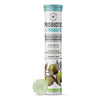 Probiotic + Prebiotic
₹559 – ₹3,355
Probiotic + Prebiotic
₹559 – ₹3,355
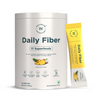 Daily Fiber | Pina Colada Flavour
₹719 – ₹1,438
Daily Fiber | Pina Colada Flavour
₹719 – ₹1,438
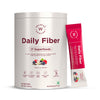 Daily Fiber | Vanilla Berry Flavour
₹719 – ₹1,438
Daily Fiber | Vanilla Berry Flavour
₹719 – ₹1,438














Leave a comment