Noticed fine lines showing up way before you expected? You're not alone. And honestly, there's some really good news.
Let's be real for a second. You're in your mid-twenties, going through photos from last Diwali or a random Sunday brunch, and you spot something. Little creases near your eyes. A faint line or two across your forehead. Not deep wrinkles exactly, but they're there and they weren't there before.
And before you spiral into a 2 AM skincare rabbit hole, take a breath. Because those fine lines on your face are not a life sentence. They're a signal. And the science of skin ageing tells us that when you catch them early and respond smartly, you can genuinely turn things around.
So let's talk about what's actually going on with your skin, and what you can realistically do about it.
Why Are Fine Lines Showing Up So Early Anyway?
Here is the part most skincare content skips. Fine lines are not just about getting older. Yes, your skin starts losing collagen at around 1% per year from your mid-twenties [NIH].
But in India specifically, we're dealing with a whole extra layer of challenges. Pollution, intense year-round UV exposure, erratic sleep patterns, chronic stress, and diets heavy in refined sugar are all compounding that natural decline.

So, what you're seeing when you notice fine lines under your eyes or fine lines on your forehead is really two things happening at once. Intrinsic ageing, which is the biological clock ticking, and extrinsic ageing, which is everything your environment is throwing at your skin daily.
The good news is that extrinsic ageing is almost entirely within your control.
Let's get into the five things that can actually make a difference.
1. Start Feeding Your Skin From the Inside
This is the one most people overlook because we're so used to thinking about skincare as something you apply to your face. But collagen for skin is built from the inside. And once your body starts producing less of it, the fine lines and wrinkles you're seeing are a direct reflection of that.
Marine collagen has become one of the most researched options here, and for good reason. Because it comes from fish, it has a smaller molecular size than other collagen types, which means your body absorbs it more easily.
A 2019 study published in Nutrients found that people who took marine collagen peptides for 12 weeks saw significant improvements in skin elasticity, hydration, and a visible reduction in fine lines and wrinkles [NIH].

If you follow a plant-based diet, vegan collagen formulations are worth looking into.
They don't contain collagen directly but they're packed with nutrients like Vitamin C, silica, and zinc that your body needs to produce its own collagen. The research on Vitamin C as a collagen cofactor is solid [NIH], and these supplements are a genuinely smart option.
One simple health tip here: always pair your collagen supplement with Vitamin C. Your body literally cannot synthesise collagen without it.
2. If You're Not Using SPF Daily, Start Today
Okay, this one might feel like advice you've heard a thousand times. But the reason dermatologists never stop saying it is because the science is that clear. UV radiation is the single biggest driver of premature fine lines on your face, around your eyes, and across your forehead.
One major study in Clinical, Cosmetic and Investigational Dermatology found that up to 80% of visible facial ageing is caused by sun exposure [NIH].
Not stress. Not diet. Sun.
In India, where the UV index stays high for most of the year and we're outdoors a lot more than, say, someone living in Scandinavia, this matters enormously. And UV-A rays penetrate glass, so working from home next to a sunny window counts too.

The fix is simple. A broad spectrum SPF 30 or higher, every single morning, no exceptions. If you're outside, reapply every two to three hours. It protects against new fine lines forming and gives the existing ones room to recover. Nothing else on this list works as well without this habit as the foundation.
3. Add a Retinoid to Your Night Routine
If SPF is your shield, retinoids are your repair crew. And they are genuinely the most well-studied ingredient in dermatology when it comes to fine line wrinkle treatment.
Retinoids are Vitamin A derivatives that speed up your skin's cell turnover and stimulate fibroblasts, which are the cells that produce collagen.
A review published in Clinical Interventions in Aging confirmed that topical retinoids produce significant improvements in fine lines and wrinkles with consistent use over 12 to 24 weeks [NIH].

If you're new to retinoids, start with retinol two to three nights a week. It's available over the counter and it's a good entry point. If your skin tends to be sensitive, retinaldehyde is a gentler alternative that still delivers results. Just make sure you're applying it at night only and following with SPF the next morning because retinoids make your skin more sensitive to the sun.
Give it three months before you judge the results. Skin remodelling is not a two-week project but when it works, it genuinely works.
4. Think About What Pollution Is Doing to Your Skin
This is a conversation that's particularly relevant if you live in a city like Delhi, Mumbai, Pune, or Bengaluru. Every day your skin is exposed to pollutants and UV radiation that generate something called free radicals. These are unstable molecules that attack your skin cells, break down collagen, and speed up the appearance of fine lines on skin.
Your body's natural defence against this is an antioxidant called Glutathione, often referred to as the master antioxidant. It's made in the liver and it works hard to neutralise these free radicals and support skin repair. The problem is that chronic stress, pollution, and poor diet deplete your glutathione levels over time.

Glutathione tablets taken orally have shown real promise in clinical research.
A randomised double-blind study in Clinical, Cosmetic and Investigational Dermatology found that 12 weeks of oral glutathione supplementation led to measurable improvements in skin elasticity and overall skin condition [NIH].
This is definitely one to discuss with your dermatologist, but it's a meaningful addition to a well-rounded routine for people dealing with high environmental stress.
5. Go Back to Basics With Sleep, Water, and Your Skin Barrier
Sometimes the most powerful fine lines treatment is not a new product or supplement. It's fixing the things you already know you should be doing but aren't.
Your skin barrier, which is the outermost layer of your skin, is your first line of defence. When it gets disrupted through harsh cleansers, dehydration, or over-exfoliation, fine lines become much more visible and they deepen faster.

Hyaluronic acid is one of the best ingredients you can use to address this. It holds up to 1,000 times its weight in water and clinical research confirms it visibly plumps skin and softens fine lines around the eyes and mouth [NIH]. Apply it to slightly damp skin and follow with a moisturiser to seal it in.
Sleep is the other big one.
A study in Clinical and Experimental Dermatology found that people with poor sleep quality showed significantly more signs of skin ageing, including fine lines, compared to good sleepers [NIH].
Your skin repairs itself at night. If you're not sleeping well, that repair cycle gets cut short.
And for home remedies for fine lines and wrinkles that are actually backed by science, aloe vera is worth mentioning. It contains a compound called acemannan that has been shown to stimulate collagen production. It's not going to replace a retinoid but it's a gentle, affordable addition to your routine.
Key Takeaways
-
Premature fine lines are largely reversible, especially when you catch them early and respond with a combination of the right topical ingredients, smart supplementation, and lifestyle shifts.
-
Collagen supplementation, whether you choose marine collagen or vegan collagen, has real clinical evidence behind it. The key is consistency over months, not days.
-
Daily SPF is genuinely the highest-return habit you can build for your skin. It prevents new fine lines from forming and gives existing ones a chance to recover.
-
Retinoids and antioxidants like glutathione work on different levels but complement each other. Retinoids rebuild collagen from the outside. Glutathione protects the process from oxidative damage on the inside.
-
The basics, meaning good sleep, adequate hydration, and a healthy skin barrier, are not optional supporting acts. They are central to whether everything else you do actually work.
Frequently Asked Questions
Q1. How to remove fine lines from face at home without expensive treatments?
The most effective at-home approach combines daily SPF, a gentle hydrating cleanser, a hyaluronic acid serum, and retinol used two to three nights a week. Stick with this consistently for eight to twelve weeks and most people see a noticeable improvement in fine lines on face. It takes patience but it works.
Q2. How to remove fine lines under eyes that keep getting more visible?
The skin under your eyes is the thinnest on your face, which is why it shows fine lines early. Use a dedicated eye cream with peptides or retinaldehyde. Apply it by tapping gently with your ring finger, never rubbing. Sleeping with your head slightly elevated and cutting back on salt can also reduce puffiness that makes fine lines under eyes look more pronounced.
Q3. How to reduce fine lines under eyes if they're caused by dehydration?
This is more common than people realise. Dehydration makes fine lines look deeper because the skin lacks volume. Drink at least two and a half litres of water daily, apply hyaluronic acid serum to damp skin before moisturising, and give it a few days. Hydration-related fine lines under eyes can improve quite quickly once you address the root cause.
Q4. How to get rid of fine lines on forehead without going for Botox?
Fine lines on forehead are mostly driven by repetitive muscle movement and UV damage. The most evidence-backed approach without injectables is consistent SPF, retinol three to four nights a week, and collagen supplementation. Face yoga and forehead massage can support this by reducing muscle tension and improving circulation.
Q5. How to remove fine lines from forehead that are already quite visible?
For established fine lines and wrinkles on forehead, you need a layered approach. Retinol at night, a Vitamin C serum in the morning, marine collagen or vegan collagen daily, and glutathione tablets to address oxidative stress. Give it a solid twelve weeks before evaluating. The changes are gradual but cumulative.
Q6. Are fine lines on skin normal in your twenties?
Increasingly yes, especially in urban India. Pollution, screen exposure, poor sleep, stress, and diet are all accelerating fine lines on skin in younger people. Think of them as a message from your body to start being more intentional with your skin, not as a reason to panic.
Q7. What is the best fine lines treatment for Indian skin tones?
Indian skin tends to have higher melanin, which offers some natural UV protection but does not make it immune to photoageing or fine lines. The best fine lines treatment for Indian skin combines broad spectrum SPF daily, a retinoid a few nights a week, hydrating actives, and internal support through collagen and antioxidant supplementation. Be cautious of harsh ingredients that can trigger pigmentation on deeper skin tones.
Q8. Do home remedies for fine lines and wrinkles actually do anything?
Some genuinely do. Aloe vera has collagen-stimulating properties backed by research. Rosehip oil contains natural retinoids and antioxidants. Raw honey is a good humectant. That said, home remedies work best as supportive measures alongside proven actives. They will not replace SPF or a retinoid, but they can complement a solid routine.
Q9. Is marine collagen better than vegan collagen for treating fine lines?
Marine collagen has more direct clinical evidence for reducing fine lines specifically because it delivers Type I collagen peptides that the body absorbs well. Vegan collagen works indirectly by supplying the building blocks your body needs to produce its own collagen. Both are legitimate options. The better one for you depends on your dietary choices and lifestyle.
Q10. Can Glutathione Tablets actually help with fine lines on skin?
Yes, and particularly for people living in high-pollution environments. Glutathione works by neutralising the free radicals that degrade collagen and accelerate fine lines on skin. Clinical studies show improvements in skin elasticity and overall condition after eight to twelve weeks of consistent supplementation. It is most effective as part of a broader routine rather than as a standalone solution.
References and Citations
[1] Varani J, et al. "Decreased Collagen Production in Chronologically Aged Skin." The American Journal of Pathology, 2006. https://www.ncbi.nlm.nih.gov/pmc/articles/PMC1698468/
[2] Bolke L, et al. "A Collagen Supplement Improves Skin Hydration, Elasticity, Roughness, and Density." Nutrients, 2019. https://www.ncbi.nlm.nih.gov/pmc/articles/PMC6835901/
[3] Pullar JM, et al. "The Roles of Vitamin C in Skin Health." Nutrients, 2017. https://www.ncbi.nlm.nih.gov/pmc/articles/PMC5579659/
[4] Flament F, et al. "Effect of the sun on visible clinical signs of aging in Caucasian skin." Clinical, Cosmetic and Investigational Dermatology, 2013. https://www.ncbi.nlm.nih.gov/pmc/articles/PMC3790843/
[5] Mukherjee S, et al. "Retinoids in the treatment of skin aging: an overview of clinical efficacy and safety." Clinical Interventions in Aging, 2006. https://www.ncbi.nlm.nih.gov/pmc/articles/PMC2699641/
[6] Weschawalit S, et al. "Glutathione and its antiaging and antimelanogenic effects." Clinical, Cosmetic and Investigational Dermatology, 2017. https://www.ncbi.nlm.nih.gov/pmc/articles/PMC5413479/
[7] Pavicic T, et al. "Efficacy of cream-based novel formulations of hyaluronic acid of different molecular weights in anti-wrinkle treatment." Journal of Drugs in Dermatology, 2011. https://pubmed.ncbi.nlm.nih.gov/21717129/
[8] Oyetakin-White P, et al. "Does poor sleep quality affect skin ageing?" Clinical and Experimental Dermatology, 2015. https://pubmed.ncbi.nlm.nih.gov/25266053/
This blog is for informational purposes only. Please consult a qualified dermatologist before starting any new supplement or active ingredient, especially if you have sensitive or reactive skin.

Recommended Products
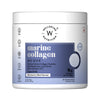 Korean Marine Collagen - Blueberry Mint
₹1,018 – ₹1,993
Korean Marine Collagen - Blueberry Mint
₹1,018 – ₹1,993
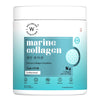 Pure Korean Marine Collagen Peptides | Unflavored | Combat Signs of Ageing
₹1,745 – ₹6,476
Pure Korean Marine Collagen Peptides | Unflavored | Combat Signs of Ageing
₹1,745 – ₹6,476