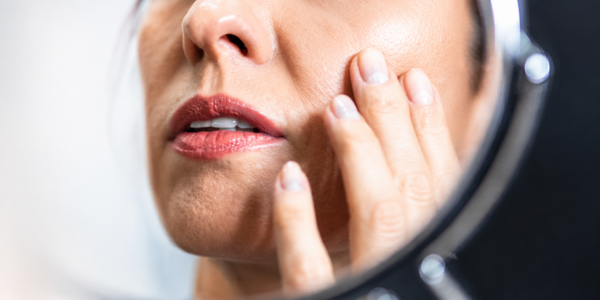
You are doing everything right.
Cleanser. Toner. Serum. SPF. Water. Sleep (or at least trying to). And yet the mirror keeps showing you something your skincare routine swore it was handling.
A jaw that looks puffier than it used to. Breakouts that appear like clockwork every time things get stressful. A dullness that no brightening product has ever actually touched. Skin that just looks exhausted, even when you are not.
Here is what nobody on your favourite beauty reel is telling you: your skin is not the problem. Your cortisol is.
And no serum in the world can fix a hormone.
So What Is Cortisol, Actually?
Cortisol is your body's stress hormone. When your brain senses pressure, a deadline, a difficult conversation, a sleepless night, three hours of scrolling that somehow became five, it signals your adrenal glands to release cortisol.
In short bursts, cortisol is not the villain. It keeps you sharp, manages inflammation, and helps you respond to real demands. The body needs it.
The problem is when it never switches off.
Under chronic stress, cortisol stops following its natural rhythm and stays elevated for weeks, months, sometimes years. Your skin, which is a living organ that responds to every hormonal signal in your body, keeps a record of every single one of those days.
This Is What Cortisol Is Doing to Your Face Right Now
It is dismantling your collagen. Quietly. Continuously.
Breakdown is accelerating. Rebuilding is slowing. Both at once.
This is why chronic stress produces fine lines, jawline sagging, and a loss of firmness that your topical collagen cream cannot reach. A 2025 clinical study confirmed stress can significantly decreased antioxidant potential and impacted skin barrier integrity. [NIH]

It is causing the puffy face and cortisol connection people keep talking about.
Cortisol face is not a social media exaggeration. High cortisol drives water retention and inflammation, concentrating most visibly around the jaw, cheeks, and under-eye area. When people describe a face that looks swollen, heavy, or older than it used to, they are often describing exactly this.
It is making your skin barrier give up.
The outermost layer of your skin is designed to lock moisture in and keep irritants out. Chronically elevated cortisol disrupts the lipid production that holds this barrier together. The result is skin that becomes dry, reactive, and suddenly sensitive to products it handled fine for years.
If your skin turned sensitive seemingly out of nowhere, it may not be your products that changed. It may be your cortisol.
It is triggering oil and breakouts on its own timeline.
Cortisol directly stimulates sebum production in the skin's oil glands, independently of your hormonal cycle. More oil means more clogged pores, more inflammation, more breakouts. If stress and skin flare-ups track together in your life, now you know exactly why.
The Sleep Factor Is the One Most People Miss
Your skin repairs itself between roughly 11pm and 3am. Cell turnover accelerates. Collagen synthesis picks up. Growth hormone releases. This is the window your skin uses to undo the damage the day created.
For this to work, cortisol needs to be at its lowest at night. That is its natural design: high in the morning, tapering through the day, dropping significantly at night so the body can restore itself.
Chronic stress breaks this rhythm completely. Evening cortisol stays elevated when it should be falling. The repair window shrinks or disappears entirely.
A clinical study in the journal Clinical and Experimental Dermatology found that poor sleepers showed significantly greater signs of skin aging, slower barrier recovery, and increased moisture loss through the skin compared to good sleepers. [NIH] Stress and poor sleep are not two separate skin problems. They are the same problem in a loop, feeding each other every single night.

Stress Skin Does Not Always Look Like Stress Skin
Most people link stress and skin to breakouts. But cortisol face shows up in ways that are far less obvious and far more frustrating because they are harder to trace:
Dullness that does not budge
When cortisol slows cell turnover, skin stops renewing at the rate it should. The result is a flatness that no amount of brightening serum, sheet masking, or highlighting ever fully addresses. Because the problem is not on the surface.
Hyperpigmentation that keeps returning
Chronic inflammation drives melanin production. For deeper skin tones, stress is one of the most underappreciated triggers of post-inflammatory pigmentation that comes back even after treatment.
Puffiness that is worst in the morning
Morning cortisol is naturally at its peak as part of your body's waking process. When baseline cortisol is already elevated from chronic stress, this morning spike becomes exaggerated, combining with overnight fluid retention to produce the swollen, heavy cortisol face people recognise immediately in the mirror.
Dark circles that sleep alone does not fix
Cortisol-driven inflammation and poor sleep quality both pool visibly around the eyes. If you are sleeping seven hours and still waking up looking exhausted, cortisol may be the reason.
What Actually Helps (And What Does Not)
The honest answer is this: no topical product fully resolves a cortisol problem. Products can support and soothe what cortisol damages. They cannot address why the damage is happening.
Sleep is the most powerful skincare tool you are not counting. Seven to nine hours is not a luxury. It is the window in which your skin literally rebuilds. If your entire routine is working but your skin is still not responding, check your sleep before you check your products.
Consistent movement lowers baseline cortisol over time. Not intense training. Not daily gym sessions you dread. A 30-minute walk most days is clinically more useful for stress-related skin than most people expect.
Blood sugar stability matters more than people realise. Skipping meals, inconsistent eating, and high-sugar diets all trigger cortisol spikes throughout the day. Eating consistently and prioritising protein and complex carbohydrates keeps cortisol more stable between meals.
The puffy face and cortisol relationship responds to hydration. Cortisol-driven water retention is partly the body's response to perceived dehydration. Consistent water intake combined with lower sodium genuinely reduces facial puffiness over time.

On Supplements
When lifestyle alone is not enough to close the gap, a few supplements have clinical support worth knowing about.
Ashwagandha has the strongest evidence for measurable cortisol reduction. Multiple randomised controlled trials, including a well-cited Indian study, show consistent reductions in serum cortisol with regular use.
Magnesium supplements support the stress response and sleep quality. Deficiency is common and associated with heightened cortisol reactivity.
Omega 3 fish oil reduces the systemic inflammation that elevated cortisol drives, supporting skin barrier function from within.
Vitamin B complex supports nervous system resilience, particularly relevant when sustained stress has depleted B vitamin reserves.
Melatonin supplement is useful specifically where stress has disrupted sleep onset, helping to restore the overnight cortisol drop that skin repair depends on.
These are tools for filling gaps. They do not replace the lifestyle. They make it work better.

Key Takeaways
-
Cortisol face is a biological reality, not a trend. Puffy face, dullness, breakouts, and accelerated skin aging are all documented cortisol effects. The name is new. The mechanism is not.
-
Cortisol attacks collagen on two fronts simultaneously. It speeds up breakdown and slows down rebuilding at the same time. No topical product addresses both sides of this equation.
-
The overnight repair window is the most important skincare window you have. Chronic stress keeps cortisol elevated exactly when it should be falling, erasing the window your skin needs to recover every night.
-
Stress skin is not always breakouts. Returning pigmentation, persistent dullness, sudden sensitivity, and morning puffiness are all cortisol presentations that most people never connect to stress.
-
The most effective cortisol for face protocol is not topical. Sleep, movement, blood sugar stability, and targeted supplementation with ashwagandha, magnesium, and omega 3 fish oil work at the level where the problem actually lives.
FAQs
Q1. What is cortisol face and why is everyone suddenly talking about it?
Cortisol face describes the cluster of skin changes that chronic stress produces: puffiness around the jaw and cheeks, dullness, breakouts, sagging, and accelerated aging. The term is new but the biology behind it is well-documented. People are recognising it now because the conversation around stress and skin has finally caught up with the science.
Q2. Is puffy face and cortisol actually connected or is that just a social media claim?
It is genuinely connected. High cortisol drives water retention and inflammation that concentrates most visibly around the lower face and under-eye area. The puffiness is a real hormonal effect, not aesthetic variation.
Q3. How do I know if my skin problems are from cortisol or something else?
Timing is the most reliable indicator. If skin consistently worsens during high-stress periods and partially improves when pressure reduces, cortisol is almost certainly a significant factor. Stress and hormones are deeply linked so they rarely operate independently.
Q4. Can stress cause permanent skin damage?
Prolonged chronic stress accelerates collagen loss and skin aging in ways that are difficult to fully reverse. However, skin is responsive. Consistently reducing cortisol through sleep, movement, and stress management allows measurable skin recovery over time, even if the timeline is months rather than weeks.
Q5. Does ashwagandha actually work for skin?
Ashwagandha works on skin indirectly. Its clinically documented mechanism is reducing serum cortisol. Lower cortisol means less collagen degradation, reduced sebum overproduction, better overnight repair, and less inflammation-driven pigmentation. Multiple randomised controlled trials support this.
Q6. Why does my face look puffiest in the morning?
Morning cortisol is naturally at its daily peak as part of your body's waking mechanism. When baseline cortisol is already chronically elevated, this morning spike is exaggerated and layers on top of overnight fluid retention. The combination produces the swollen, heavy cortisol face that is most pronounced first thing.
Q7. Does a melatonin supplement help with cortisol face?
Melatonin and cortisol operate on opposite rhythms. When stress keeps cortisol elevated at night, melatonin cannot rise properly and sleep quality degrades. A melatonin supplement can help restore the evening cortisol drop and the overnight repair window that stressed skin depends on.
Q8. Do omega 3 fish oil supplements help stressed skin?
Yes, through the inflammation pathway. Cortisol drives systemic inflammation that weakens the skin barrier and worsens every cortisol-related skin symptom. Omega 3 fish oil reduces this inflammatory load, supporting skin barrier function and reducing the reactivity that chronic stress creates.
Q9. What foods make cortisol face worse?
High-glycaemic foods trigger cortisol release through blood sugar spikes. Refined sugar, white flour, and processed snacks all keep cortisol elevated through the day. High sodium worsens the water retention component of cortisol face. Caffeine in large amounts or taken late in the day also disrupts the evening cortisol drop.
Q10. How long before cortisol face improves once I start managing stress?
Skin renews itself every 28 to 40 days. Visible improvement in texture, puffiness, and tone typically may appear within 6 to 12 weeks of consistently better sleep, reduced stress, and targeted support. The puffiness component often reduces faster. Collagen-related changes like firmness and fine lines take longer because the structural damage accumulates slowly and reverses slowly.

Recommended Products
 Liposomal Magnesium Glycinate (Chelated) | Pack of 60 Capsules
₹872 – ₹1,708
Liposomal Magnesium Glycinate (Chelated) | Pack of 60 Capsules
₹872 – ₹1,708
 Triple Magnesium Complex
₹1,357 – ₹2,658
Triple Magnesium Complex
₹1,357 – ₹2,658
 Ultra Strength Magnesium+
₹1,745 – ₹3,418
Ultra Strength Magnesium+
₹1,745 – ₹3,418
 Restful Sleep (5mg)
₹649 – ₹1,298
Restful Sleep (5mg)
₹649 – ₹1,298
 Restful Sleep Melts (10mg)
₹649 – ₹1,298
Restful Sleep Melts (10mg)
₹649 – ₹1,298
 4x Strength Omega 3 Fish Oil
₹1,349
4x Strength Omega 3 Fish Oil
₹1,349
 6x Strength Omega 3 Fish Oil
₹1,939 – ₹3,798
6x Strength Omega 3 Fish Oil
₹1,939 – ₹3,798
 3x Strength Omega 3 Fish Oil
₹899
3x Strength Omega 3 Fish Oil
₹899
 Pure Ashwagandha
₹649 – ₹1,298
Pure Ashwagandha
₹649 – ₹1,298
 Bioactive B Complex | Methylated B Vitamins with Biotin & Vitamin C | 60 Capsules
₹872 – ₹1,708
Bioactive B Complex | Methylated B Vitamins with Biotin & Vitamin C | 60 Capsules
₹872 – ₹1,708