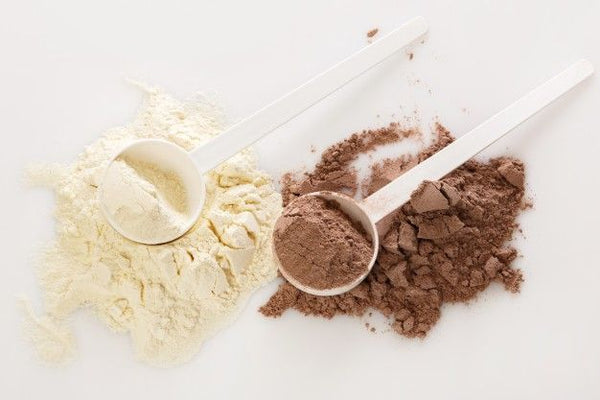
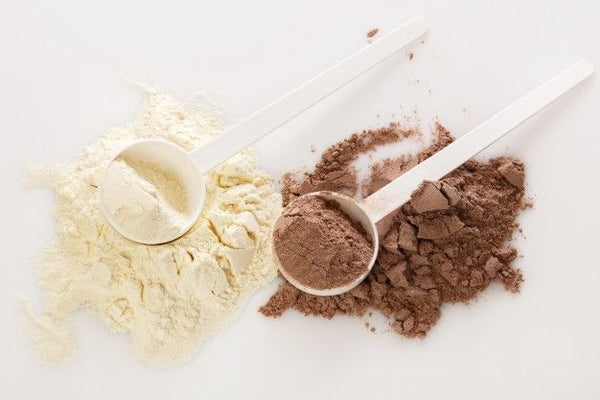
You're standing in front of two tubs of protein powder. One says whey concentrate. One says whey blend. Both claim to build muscle. Both claim to taste great. Both have a very confident athlete on the label.
So what's actually different? More importantly, does it matter for you?
Let's sort it out. No jargon. No unnecessary complexity.
Start at the Source
All whey protein comes from the same place.
Milk.
When milk is processed to make cheese, it separates into two parts: curds and liquid whey. That liquid whey is then filtered, processed, and dried into the protein powders you see on shelves.
What happens after that separation is where concentrate, isolate, and blends part ways.
What Is Whey Concentrate?
Whey concentrate is the less processed of the two.
After filtering, it retains around 70 to 80% protein by weight. The rest? A small but meaningful amount of fats, carbohydrates, and naturally occurring bioactives: immunoglobulins, lactoferrin, and growth factors that survive because the processing is gentler.
This is actually a feature, not a flaw.
Whey protein concentrate benefits go beyond the protein number. Those retained fats and carbs contribute to satiety, so you feel fuller for longer. The bioactives support immune function. The slightly richer nutritional profile makes it an excellent everyday protein, not just a post-workout tool.
It does contain small amounts of lactose. For most people that's completely fine. For those with significant lactose sensitivity, it's worth noting.
Wellbeing Nutrition's Whey Protein Concentrate delivers 27g of protein per serving, with EAAs, BCAAs, and 4 billion CFU of probiotics because even at the concentrate level, gut health is part of the formula.
What Is Whey Isolate?
Whey isolate goes through additional filtration.
The result: 90%+ protein by weight, with most of the fat and lactose removed. Faster absorption. Leaner macros. Easier on sensitive digestive systems.
It's the choice for people who want maximum protein per calorie, are cutting body fat, or simply don't tolerate lactose well.
The tradeoff is that some of those beneficial bioactives present in concentrate get filtered out in the process. You get a cleaner protein hit but a slightly narrower nutritional profile.
So What Is a Whey Blend?
A whey blend vs whey concentrate conversation often gets framed as either/or.
It doesn't have to be.
A whey blend, specifically a whey concentrate whey isolate blend, combines both in one formula. And that combination is more strategic than it might sound.
Here's why it works:
Isolate absorbs quickly. Amino acids reach the muscles fast, ideal for the post-workout window when the body is primed for protein synthesis.
Concentrate absorbs more gradually. It sustains amino acid delivery over a longer period, keeping muscle protein synthesis elevated well after the initial spike from the isolate.
Together, they create a two-phase delivery curve. Fast and sustained. The kind of profile that neither form achieves entirely on its own.
Wellbeing Nutrition's Whey Isolate + Concentrate blend is India's first to combine this with Velositol®, a patented complex of amylopectin and chromium clinically shown to double muscle protein synthesis compared to whey alone. Add 24g protein, 11.5g EAAs, 5.4g BCAAs, 1g glutamine, 4 billion CFU probiotics, and digestive enzymes, and you have a formula where the blend is genuinely the point, not just a cost compromise.
The Digestion Factor Nobody Talks About Enough
Here's what most whey blend vs concentrate conversations miss entirely.
The best protein formula in the world is only as good as what your body actually absorbs.
Protein that sits undigested in the gut ferments. That fermentation is what causes the bloating, the gas, the post-shake heaviness that gives protein powders a bad reputation among people who've tried them before.
This is why sourcing and processing matter just as much as the protein percentage.
Wellbeing Nutrition's whey is sourced directly from fresh milk, not as a by-product of cheese production. It's cold-processed and microfiltered at low temperatures, without acids or bleach, preserving the protein's native structure. Native proteins are more readily recognised by digestive enzymes. Faster breakdown. Less residue. Less fermentation.
Pair that with probiotics (Lactobacillus acidophilus and Bifidobacterium longum) and plant-based digestive enzymes from bromelain and papain, and the gut environment is actively supported, not just left to cope with a large protein load.
The result is protein that performs and digests. Both. Not one at the expense of the other.
Which One Is Actually Right for You?
No single answer fits everyone. But here's a simple way to think about it.
Choose whey concentrate if: You want an everyday, versatile protein that's nutrient-rich, easy to use, and delivers solid macros. You train regularly but aren't chasing ultra-lean macros. You want a fuller, more satisfying shake.
Choose whey isolate if: You want the highest protein per calorie, are in a cutting phase, or have lactose sensitivity. You prioritise fast absorption above all else.
Choose a whey blend (isolate + concentrate) if: You want the best of both, fast-acting and sustained, lean macros with bioactive retention, a formula designed for performance and recovery without the digestive compromise.
Most people who train consistently, eat reasonably well, and want a premium everyday protein that doesn't overcomplicate their routine land here. The blend isn't a middle ground. It's a deliberate formulation choice.
The Bottom Line
Whey blend vs whey concentrate is not a question of better or worse.
It's a question of what your body needs, when, and how well the formula is designed to deliver it.
A well-formulated blend that’s clean-sourced, bioavailable protein, and gut support built in will outperform a poorly formulated isolate every single time.
Because what matters is not the number on the front of the tub.
It's what actually makes it to your muscles.
FAQs
1. What is the difference between whey blend and whey concentrate?
The main difference between whey blend vs whey concentrate is composition. Whey concentrate contains 70–80% protein with some fats and lactose, while a whey blend combines concentrate and isolate to deliver both fast and sustained protein absorption.
2. Is whey blend better than whey concentrate?
Neither is universally better. Whey blend is ideal if you want both fast and sustained amino acid release, while whey concentrate is better for those seeking a nutrient-rich, more natural protein option with added bioactives.
3. What are the benefits of whey protein concentrate?
Whey protein concentrate benefits include:
-
Better satiety due to fats and carbs
-
Presence of bioactives like immunoglobulins
-
More natural nutritional profile
-
Suitable for daily use
It’s a great all-round protein for general fitness and recovery.
4. What is whey protein blend used for?
A whey protein blend is used for muscle recovery and sustained protein delivery. It combines fast-absorbing isolate with slower-digesting concentrate, making it ideal for post-workout recovery and long-lasting muscle support.
5. Is whey blend good for muscle gain?
Yes, whey blend is excellent for muscle gain because it provides a dual-phase absorption—quick amino acid delivery from isolate and prolonged release from concentrate, supporting muscle protein synthesis over a longer duration.
6. Which is better for beginners: whey blend or whey concentrate?
For beginners, whey concentrate is often sufficient as a simple, cost-effective option. However, a whey blend can offer more complete support if you want both performance and recovery benefits in one product.
7. Does whey blend digest better than whey concentrate?
Digestion depends more on quality and formulation than type. A well-made whey blend with digestive enzymes and probiotics can digest better than a low-quality concentrate, reducing bloating and improving absorption.
8. Is whey concentrate good for weight loss?
Yes, whey concentrate can support weight loss by improving satiety and helping maintain muscle mass. However, whey isolate or blends may be preferred if you want lower calories and higher protein per serving.
9. Does whey blend contain lactose?
Yes, a whey blend contains some lactose due to the presence of concentrate. However, it is usually lower than pure concentrate and often well tolerated, especially if digestive support is included.
10. How do I choose between whey blend and whey concentrate?
Choose based on your goal:
-
Whey concentrate → everyday nutrition, satiety, affordability
-
Whey isolate → lean protein, low lactose
-
Whey blend → balanced performance, recovery, and absorption
The right choice depends on your fitness goals, digestion, and protein needs.

Recommended Products
 Whey Protein Concentrate 27g | 1kg | 4B CFU Probiotics | Unflavoured
₹4,499 – ₹8,998
Whey Protein Concentrate 27g | 1kg | 4B CFU Probiotics | Unflavoured
₹4,499 – ₹8,998
 Whey Protein Isolate + Concentrate 24g | 1kg | 4B CFU Probiotics | Mango Flavoured
₹4,949 – ₹9,898
Whey Protein Isolate + Concentrate 24g | 1kg | 4B CFU Probiotics | Mango Flavoured
₹4,949 – ₹9,898
 Whey Protein Isolate + Concentrate 24g | 1kg | 4B CFU Probiotics | Swiss Chocolate
₹6,174 – ₹12,348
Whey Protein Isolate + Concentrate 24g | 1kg | 4B CFU Probiotics | Swiss Chocolate
₹6,174 – ₹12,348
 Whey Protein Isolate + Concentrate 24g | 1kg| 4B CFU Probiotics | Cappuccino
₹6,174 – ₹12,348
Whey Protein Isolate + Concentrate 24g | 1kg| 4B CFU Probiotics | Cappuccino
₹6,174 – ₹12,348
 Whey Protein Isolate 26g | 1kg | 4B CFU Probiotics | Bourbon Vanilla
₹7,599 – ₹15,199
Whey Protein Isolate 26g | 1kg | 4B CFU Probiotics | Bourbon Vanilla
₹7,599 – ₹15,199
 Whey Protein Isolate 26g | 1kg | 4B CFU Probiotics | Dark Chocolate
₹7,199 – ₹13,949
Whey Protein Isolate 26g | 1kg | 4B CFU Probiotics | Dark Chocolate
₹7,199 – ₹13,949
 Whey Protein Isolate 26g | 2kg | 4B CFU Probiotics | Dark Chocolate
₹13,949 – ₹27,898
Whey Protein Isolate 26g | 2kg | 4B CFU Probiotics | Dark Chocolate
₹13,949 – ₹27,898
 Whey Protein Isolate 31g | 1kg | 4B CFU Probiotics | Unflavoured
₹6,399 – ₹12,399
Whey Protein Isolate 31g | 1kg | 4B CFU Probiotics | Unflavoured
₹6,399 – ₹12,399
 Whey Protein Isolate 31g | 2kg | 4B CFU Probiotics | Unflavoured
₹12,399 – ₹24,798
Whey Protein Isolate 31g | 2kg | 4B CFU Probiotics | Unflavoured
₹12,399 – ₹24,798