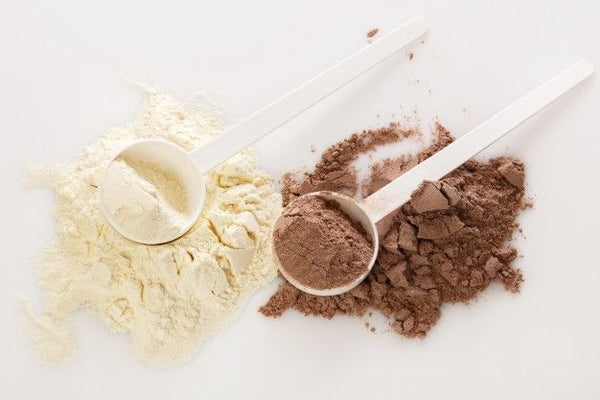
Other brands sell whey at ₹70–₹100 per scoop.
Ours costs ₹140–₹150 per scoop.
Yes, we get asked about the price difference. A lot.

Complaints about efficacy are rare, and that’s exactly what we want to explain. Here’s a snapshot from Amazon’s Rufus AI summarizing all the reviews, with the last line highlighting how well it actually works.

The Backwards Way the Market Works
In India, whey is often built backwards.
Most brands start with a target price. Then they adjust quality to fit that number.
We started with a different question:
“What would it take to create whey that absorbs efficiently and digests easily?”
Starting from performance, not cost, immediately rules out conventional shortcuts.
Sourcing Matters
A large share of whey in the market comes from cheese byproducts.
Our whey comes directly from milk from hormone-free cows.
Why does this matter? Whey from milk contains higher-quality protein fractions and intact bioactive compounds. By contrast, whey from cheese byproducts is often lower in key proteins and has already been exposed to heat and acid.
Low-Temperature Microfiltration
Most brands use high heat and acids during extraction. This helps scale production and extend shelf life, but it damages protein structure.
We use low-temperature microfiltration. This keeps amino acids intact, preserves whey protein fractions, and ensures the protein you consume is fully functional.
Transparency: Isolate vs Concentrate
Many whey products are blends of concentrate and isolate. The front label might say “primary source whey isolate”, but the exact ratio is rarely disclosed.
We put full transparency on the back of the pack. Customers know exactly how much isolate vs concentrate they’re getting. Words should match numbers.
Digestion as the Starting Point
Protein digestion is often an afterthought. Not for us.
We added:
-
Natural enzymes like papain and bromelain to aid digestion
-
4 billion CFU probiotics to support gut health
Because protein that isn’t absorbed doesn’t build muscle. It just builds discomfort.

Clean Sweeteners Only
Artificial sweeteners may be approved, but they can disrupt metabolism and brain signaling.
We sweeten our whey only with Monk Fruit, which gives a pleasant taste without blood sugar spikes.

Clinically Proven Absorption
When we say fast-absorbing whey, we back it with science.
We use Velositol®, a patented chromium amylopectin complex (a fiber-mineral complex). Research shows it amplifies muscle protein synthesis by 2x and improve amino acid uptake.
Velositol allows your muscles to do more with less protein, reducing digestive load. It’s expensive raw material in terms of manufacturing, but it makes a real difference. You want to know more about Velositol, please go here.
And here is the research paper of all the percentage improvement to muscle if you can read the PubMed language.

Clean Label Certified
Globally, only 16 brands meet the Clean Label standard: free from 258 contaminants. Wellbeing Nutrition is one of them.
This means your whey is:
-
Free from hormones
-
Free from heavy metals
-
Free from pesticides
-
Free from microbial contamination
Here is the proof: https://cleanlabelproject.org/protein-study-2-0/
Why This Costs More?
or just watch this reel

https://www.instagram.com/reels/DTiRXl1kmzk/
Every choice we made, direct milk sourcing, low-temperature microfiltration, digestive enzymes, Velositol®, Monk Fruit sweetening, Clean Label certification, adds cost.
We did not choose shortcuts because shortcuts compromise the protein you consume. Cheap whey can:
-
Denature proteins with heat or acid
-
Reduce bioactive fractions
-
Lower digestibility
-
Cause bloating or discomfort
-
Reduce amino acid absorption
In other words, it may fill your stomach, but it does not feed your muscles efficiently.
So yes, our scoop costs ₹140–₹150.
Not to look premium. Not to make a marketing point.
Because whey built for results costs more.
Yes, the one writing this blog also drinks this whey. Twice a day. So does almost everyone at Wellbeing Nutrition.
Not because we were told to. But because once you understand what goes into your body and when you understand the science, it’s just hard to go back.

Recommended Products
 Whey Protein Concentrate 27g | 1kg | 4B CFU Probiotics | Unflavoured
₹4,499 – ₹8,998
Whey Protein Concentrate 27g | 1kg | 4B CFU Probiotics | Unflavoured
₹4,499 – ₹8,998
 Whey Protein Isolate + Concentrate 24g | 1kg | 4B CFU Probiotics | Mango Flavoured
₹4,949 – ₹9,898
Whey Protein Isolate + Concentrate 24g | 1kg | 4B CFU Probiotics | Mango Flavoured
₹4,949 – ₹9,898
 Whey Protein Isolate + Concentrate 24g | 1kg | 4B CFU Probiotics | Swiss Chocolate
₹6,174 – ₹12,348
Whey Protein Isolate + Concentrate 24g | 1kg | 4B CFU Probiotics | Swiss Chocolate
₹6,174 – ₹12,348
 Whey Protein Isolate + Concentrate 24g | 1kg| 4B CFU Probiotics | Cappuccino
₹6,174 – ₹12,348
Whey Protein Isolate + Concentrate 24g | 1kg| 4B CFU Probiotics | Cappuccino
₹6,174 – ₹12,348
 Whey Protein Isolate 26g | 1kg | 4B CFU Probiotics | Bourbon Vanilla
₹7,599 – ₹15,199
Whey Protein Isolate 26g | 1kg | 4B CFU Probiotics | Bourbon Vanilla
₹7,599 – ₹15,199
 Whey Protein Isolate 26g | 1kg | 4B CFU Probiotics | Dark Chocolate
₹7,199 – ₹13,949
Whey Protein Isolate 26g | 1kg | 4B CFU Probiotics | Dark Chocolate
₹7,199 – ₹13,949
 Whey Protein Isolate 26g | 2kg | 4B CFU Probiotics | Dark Chocolate
₹13,949 – ₹27,898
Whey Protein Isolate 26g | 2kg | 4B CFU Probiotics | Dark Chocolate
₹13,949 – ₹27,898
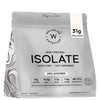 Whey Protein Isolate 31g | 1kg | 4B CFU Probiotics | Unflavoured
₹6,399 – ₹12,399
Whey Protein Isolate 31g | 1kg | 4B CFU Probiotics | Unflavoured
₹6,399 – ₹12,399
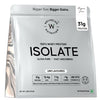 Whey Protein Isolate 31g | 2kg | 4B CFU Probiotics | Unflavoured
₹12,399 – ₹24,798
Whey Protein Isolate 31g | 2kg | 4B CFU Probiotics | Unflavoured
₹12,399 – ₹24,798