Protein is one of those nutrients that is easy to associate with muscle and forget about everything else.
Yes, your muscles need it. But so does almost every part of your body. Protein provides amino acids that help build and repair tissues, support enzymes and hormones, maintain muscle and contribute to normal immune function.
And unlike fat and carbohydrates, your body does not have a dedicated storage system for excess protein. That makes your regular daily intake important.
This is also why protein is not something you need to think about only after a workout.
Your breakfast, lunch, snack and dinner all contribute to your daily protein intake. If most of your meals are low in protein and you try to compensate with one protein-heavy dinner, you may still struggle to reach your overall requirement.
This is where protein powder can be useful. It gives you a convenient way to add protein when your meals are not quite getting you there.
But that brings us to the question almost everyone asks:
How many scoops of protein powder do you actually need per day?
The answer depends less on your shaker and more on your body weight, age, activity level and existing diet.
Start with your daily protein requirement
For healthy adults, the standard Recommended Dietary Allowance for protein is 0.8 g per kg of body weight per day. This is the baseline intake established to meet the needs of most healthy adults. [NIH]
People who exercise regularly generally need more. Sports nutrition research commonly supports approximately 1.2 to 2.0 g/kg/day for physically active adults, with around 1.4 to 2.0 g/kg/day often used for people doing resistance training. [NIH]
Here is a practical way to look at it:

These are reference ranges, not individual prescriptions. Your training, body composition, calorie intake and health status can change what is appropriate for you.
Your protein target comes from your whole diet
This is the part that gets lost when we start talking about protein powder.
If you weigh 70 kg and regularly strength train, a target of 1.4 to 1.6 g/kg would put you at roughly 98 to 112 g of protein per day.
That does not mean you need four scoops of protein powder.
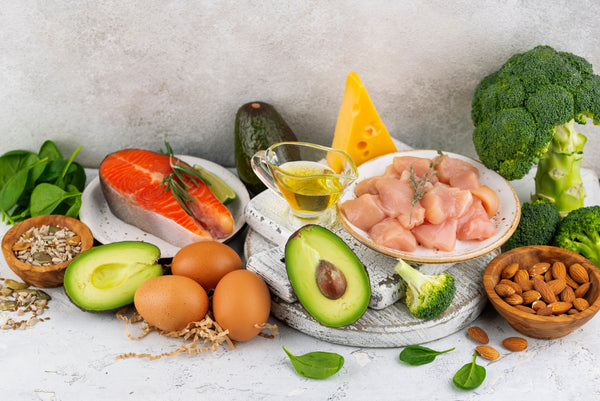
A large part of your requirement can come from everyday foods such as eggs, curd, paneer, milk, dal, beans, tofu, soy, chicken and fish.
For example:

For this 70 kg strength-training adult, the day's food already provides most of the required protein, with one scoop helping to make up the difference.
That is the key idea: protein powder should fit into your diet, not dictate it.
So, how many scoops of protein powder a day?
For many adults, zero to two scoops per day is a practical range.
A typical serving can provide around 22 to 32 g of protein, depending on the product and serving size.
So approximately:
1 scoop: 22 to 32 g protein
2 scoops: 44 to 64 g protein
Always check the nutrition label because scoop size and protein concentration vary between products.
If you already get 90 g of protein from food and your target is around 100 g, one scoop may be enough.
If your meals provide only 50 to 60 g and your target is closer to 100 g, one to two servings could be useful.
If your diet already meets your requirement, there may be no nutritional reason to add another scoop simply because you worked out that day.
When does one scoop make sense?
One scoop is particularly useful when there is a moderate gap between your dietary intake and your protein requirement.
Perhaps breakfast is usually low in protein. Maybe you have limited time to prepare a meal after training. Or you find it difficult to include enough protein while following a vegetarian or vegan diet.
A serving of protein powder can make that gap easier to close.
It also does not have to be consumed immediately after exercise. Your total daily intake matters more than obsessing over a narrow post-workout window.
When could two scoops be useful?
Two servings can be practical for adults with higher protein requirements who consistently struggle to meet them through food.
For example, a 70 kg person doing regular strength training may target around 100 to 110 g per day. If their meals provide only about 55 to 65 g, two servings of a powder providing 25 g each could contribute around 50 g.
But if the same person already gets 90 to 100 g from food, two additional servings would probably be unnecessary.
More is not automatically better.
Food first, powder when needed
A varied diet can provide much more than protein.
Eggs provide protein along with nutrients such as choline. Dairy contributes protein and calcium. Fish can provide protein and omega-3 fatty acids. Pulses provide protein and fibre. Soy foods provide protein along with several micronutrients.
That is why whole foods should form the foundation of your diet.
Protein powder becomes useful when convenience, appetite, dietary preferences or a busy routine make it difficult to consistently reach your target.
Think of it as a convenient protein source, not a replacement for proper meals.
Which protein powder should you choose?
The best option depends on your dietary preferences, tolerance and nutritional goals.
Whey protein
Whey protein is a complete dairy protein containing all nine essential amino acids and is particularly rich in leucine, an amino acid involved in stimulating muscle protein synthesis. [NIH]
It can be a convenient option for active adults, especially those doing resistance training.
Whey protein isolate
If you are sensitive to lactose, whey protein isolate can be worth considering because it generally contains less lactose than whey protein concentrate.
It is still a dairy-derived protein, so it is not suitable for people avoiding dairy completely.
Plant protein/ Vegan protein
For vegans and people who prefer plant-based nutrition, a well-formulated plant protein can help fill daily protein gaps.
Soy, pea and multi-source plant proteins are commonly used. Choosing a product with a meaningful protein content per serving is more important than simply choosing something labelled "plant protein."
Does age affect protein needs?
Yes, particularly in older adulthood.
Maintaining muscle becomes increasingly important with age, and some expert groups recommend protein intakes of at least 1.2 g/kg/day for older adults, particularly those who are active. Individual needs can vary. [NIH]
For an older adult who finds larger protein-rich meals difficult to manage, a protein shake can be a convenient way to add protein without substantially increasing meal volume.
What about men versus women?
Protein requirements are not determined simply by sex.
Body weight and physical activity are generally more useful starting points. A 70 kg man and a 70 kg woman with similar activity levels can have broadly similar protein requirements.
Age, training status, body composition and health conditions can then influence the appropriate range.
How many calories are in one scoop?
If you are wondering how many calories are in 1 scoop of whey protein, there is no universal answer.
Many servings provide roughly 100 to 150 calories, but the actual number depends on the protein concentration, carbohydrates, fats, flavouring and other ingredients.
When comparing protein powders, look at both protein per serving and calories per serving. A powder providing 25 g protein in 110 calories is nutritionally different from one providing the same protein in 180 calories.
The simple answer
So, how many scoops of protein powder a day should you take?
For many adults, zero to two scoops is a sensible practical range.
A sedentary adult who meets their needs through food may not require protein powder.
A regularly active adult may find one scoop convenient.
Someone with higher protein requirements, such as a person doing regular strength training, may use one to two scoops when their diet falls short.
The right amount is ultimately determined by the gap between your protein requirement and your dietary intake.
Start with food. Know your target. Then use protein powder where it genuinely makes your diet easier.
Key Takeaways
-
Protein supports muscle, tissue maintenance, enzymes, hormones and immune function, making daily intake important.
-
The adult protein RDA is 0.8 g/kg/day, while active adults may require approximately 1.2 to 2.0 g/kg/day depending on activity. [NIH]
-
One serving of protein powder commonly provides around 22 to 32 g of protein.
-
One to two scoops can help close a dietary protein gap, but protein powder does not need to provide most of your daily protein.
-
Choose between whey, whey isolate and plant protein based on your dietary pattern, tolerance and nutritional needs.
FAQs
1. How many scoops of protein powder a day should I take?
For most adults, zero to two scoops can be practical. The amount depends on your body weight, activity and how much protein your meals already provide.
2. How many scoops of whey protein a day are recommended?
There is no fixed recommendation. One scoop may be enough for an active adult, while two can be useful when dietary intake is insufficient.
3. How much protein is in 1 scoop of whey protein?
A typical serving provides around 22 to 32 g of protein, although this varies between products.
4. How many scoops of protein per day are needed for muscle building?
For resistance-trained adults, around 1.4 to 2.0 g/kg/day of total protein is commonly recommended. Protein powder can contribute towards that amount. NIH/PMC review on protein and exercise
5. How many scoops of protein a day should I take if I don't work out?
You may not need protein powder if your regular diet meets your protein needs. The baseline adult RDA is 0.8 g/kg/day. [NIH]
6. How many whey protein scoops a day are too many?
There is no universal scoop limit. Consider your total protein intake, calorie intake, diet quality and individual health needs.
7. How many calories are in 1 scoop of whey protein?
Many servings contain around 100 to 150 calories, but the exact amount depends on the product. Check the nutrition label for the precise figure.
8. Is whey protein isolate better than whey protein concentrate?
Not necessarily. Whey isolate generally contains less lactose and a higher proportion of protein by weight, which can make it useful for people who are sensitive to lactose.
9. Can vegans use protein powder?
Yes. Plant proteins such as soy, pea and multi-source formulas can help vegans and vegetarians meet their daily protein needs.
10. Should I take protein powder if I already eat enough protein?
Not necessarily. If your meals consistently meet your protein requirement, an additional serving may not be needed.

Recommended Products
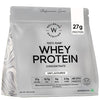 Whey Protein Concentrate 27g | 1kg | 4B CFU Probiotics | Unflavoured
₹4,749 – ₹9,498
Whey Protein Concentrate 27g | 1kg | 4B CFU Probiotics | Unflavoured
₹4,749 – ₹9,498
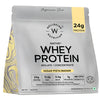 Whey Protein Isolate + Concentrate 24g | 1kg | 4B CFU Probiotics | Kesar Pista Badam
₹6,174 – ₹12,348
Whey Protein Isolate + Concentrate 24g | 1kg | 4B CFU Probiotics | Kesar Pista Badam
₹6,174 – ₹12,348
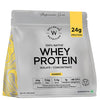 Whey Protein Isolate + Concentrate 24g | 1kg | 4B CFU Probiotics | Mango Flavoured
₹6,174 – ₹12,348
Whey Protein Isolate + Concentrate 24g | 1kg | 4B CFU Probiotics | Mango Flavoured
₹6,174 – ₹12,348
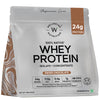 Whey Protein Isolate + Concentrate 24g | 1kg | 4B CFU Probiotics | Swiss Chocolate
₹6,174 – ₹12,348
Whey Protein Isolate + Concentrate 24g | 1kg | 4B CFU Probiotics | Swiss Chocolate
₹6,174 – ₹12,348
 Whey Protein Isolate 26g | 1kg | 4B CFU Probiotics | Bourbon Vanilla
₹7,599 – ₹15,199
Whey Protein Isolate 26g | 1kg | 4B CFU Probiotics | Bourbon Vanilla
₹7,599 – ₹15,199
 Whey Protein Isolate 26g | 1kg | 4B CFU Probiotics | Dark Chocolate
₹7,599 – ₹14,724
Whey Protein Isolate 26g | 1kg | 4B CFU Probiotics | Dark Chocolate
₹7,599 – ₹14,724
 Her Superfood Plant Protein | Chocolate Peanut Butter
₹1,529 – ₹3,058
Her Superfood Plant Protein | Chocolate Peanut Butter
₹1,529 – ₹3,058
 Plant Protein 22g | 500g | 3B CFU Probiotics | Belgian Dark Chocolate
₹1,529 – ₹3,058
Plant Protein 22g | 500g | 3B CFU Probiotics | Belgian Dark Chocolate
₹1,529 – ₹3,058
 Plant Protein 22g | 500g | 3B CFU Probiotics | Canadian Mixed Berry
₹1,529 – ₹3,058
Plant Protein 22g | 500g | 3B CFU Probiotics | Canadian Mixed Berry
₹1,529 – ₹3,058
 Plant Protein 22g | 500g | 3B CFU Probiotics | Italian Cafe Mocha
₹1,529 – ₹3,058
Plant Protein 22g | 500g | 3B CFU Probiotics | Italian Cafe Mocha
₹1,529 – ₹3,058
 Plant Protein 22g | 907g | 3B CFU Probiotics | Belgian Dark Chocolate
₹2,889 – ₹5,778
Plant Protein 22g | 907g | 3B CFU Probiotics | Belgian Dark Chocolate
₹2,889 – ₹5,778